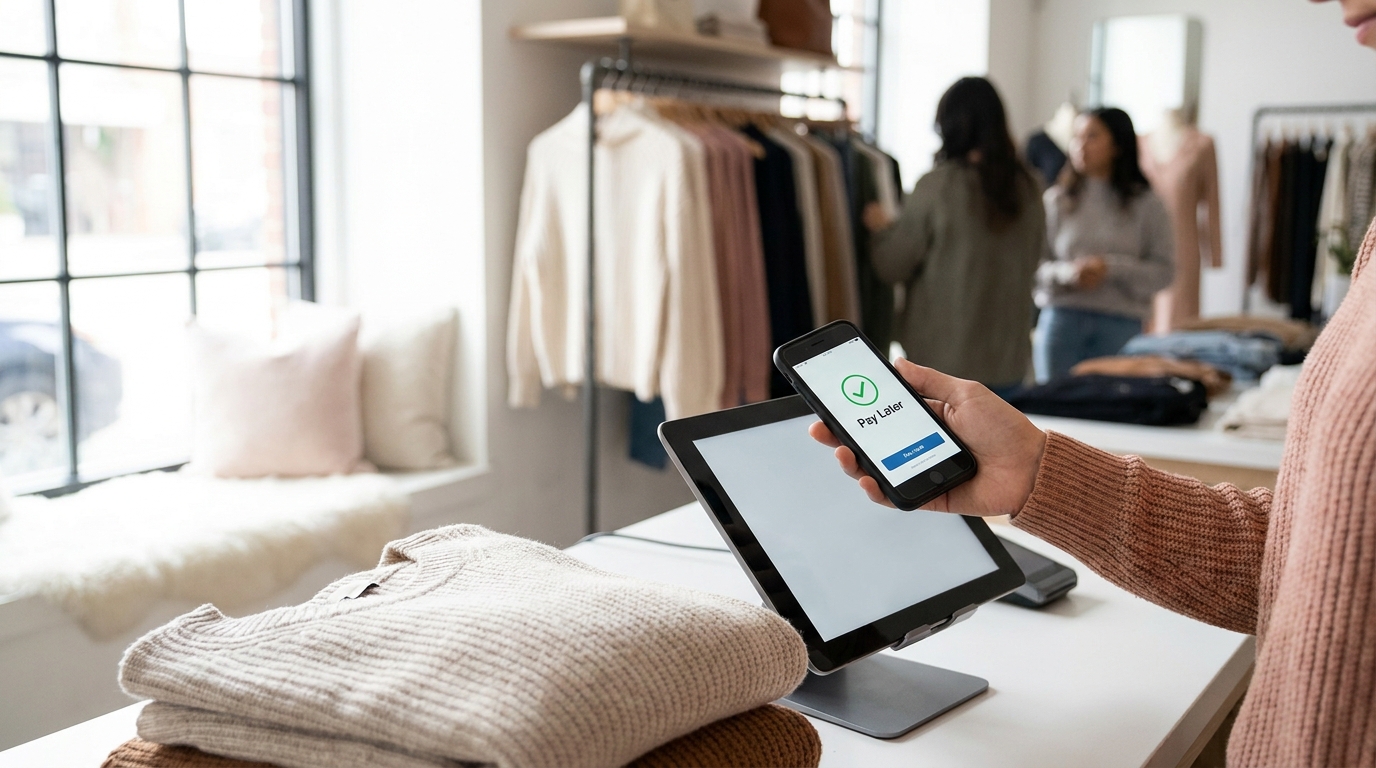
Clothing and fashion retailers lose sales at checkout when a customer can't afford the full basket price today — buy now pay later for clothing retailers fixes that by splitting the cost into interest-free instalments. This guide breaks down what to look for, who it suits, and which providers are worth your integration time in 2026.
- PayItMonthly fits UK fashion retailers who want interest-free instalments without FCA licensing headaches — Buy.
- Klarna and Clearpay dominate consumer awareness but charge higher merchant fees on fashion baskets — Consider.
- PayPal Pay in 3 works if you already run PayPal checkout but adds little for standalone fashion brands — Consider.
- Any provider promising same-day settlement with no verification checks is a red flag in 2026 — Skip.
Why this matters
Fashion baskets are impulse-driven and price-sensitive. A £120 order feels heavy at full price but disappears into three £40 instalments. Retailers running buy now pay later for clothing and fashion see fewer abandoned baskets because the sticker shock at checkout gets removed, not because customers spend more than they can afford — the good providers build affordability checks into that same checkout flow.
2026 is also the year BNPL stops being a lightly-regulated add-on. The FCA is bringing short-term interest-free credit under formal consumer credit rules, which means the provider you pick now needs proper compliance infrastructure, not just a slick widget.
Who this is for
This guide is for UK clothing and fashion retailers — independent boutiques, multi-brand ecommerce stores, and small chains — deciding whether to add an instalment option at checkout and which provider to run it through. If you're selling apparel, footwear, or accessories with average order values between £50 and £300, this is squarely your decision to make in 2026.
What to look for in buy now pay later for clothing retailers
Checkout approval speed
Fashion shoppers browse and buy in the same session, often on mobile, often between other tabs. If the instalment provider's approval takes more than a few seconds, you lose the sale to hesitation or a competing tab. Look for a widget that returns a decision instantly at checkout, not one that redirects the customer off-site for a multi-step application.
Instalment structure fit for fashion price points
A £45 t-shirt order and a £280 coat order need different instalment counts to feel affordable. Providers offering 3 interest-free instalments over 3 months suit lower basket sizes; longer plans matter more for outerwear and occasion-wear retailers with higher average order values. Check whether the provider lets you set thresholds by category, not just a single flat plan across your whole catalogue.
Returns and refund handling
Fashion has the highest return rates of any retail category, and instalment plans complicate refunds if the provider doesn't automate them. When a customer returns a dress paid across three instalments, you need the remaining instalments cancelled and any paid amount refunded without a manual support ticket on your end. Ask any provider directly how returns are processed before you sign anything.
Integration with your ecommerce platform
If you're on Shopify, WooCommerce, or a custom-built storefront, the instalment option needs to sit natively at checkout, not bolt on as a separate redirect that breaks your cart flow. A plugin that takes a developer a week to wire up costs you more in lost momentum than the fees you're trying to save.
Cost to your margin
Merchant fees on BNPL transactions typically run as a percentage per order, and that percentage varies more between providers than most retailers expect. Model the fee against your actual average order value and gross margin before you commit — a fee that looks small on a £30 top gets painful fast on a £250 coat.
FCA compliance and consumer protection
2026 regulation means the provider handling your customers' credit needs proper affordability checks, clear cost disclosure, and a Trustpilot-verifiable track record — not just a checkout button. A provider cutting corners here becomes your problem the moment a regulator asks questions about a transaction on your site.
“If a shopper can't split the cost at checkout, they'll abandon the cart instead of asking you for a payment plan.”
Top picks for clothing and fashion retailers
PayItMonthly — the UK-built pick. PayItMonthly's instalment platform runs interest-free monthly instalments designed for UK retailers of all sizes, with checkout integration built for speed rather than a redirect-heavy flow. It's positioned squarely for merchants who want to boost sales and win more customers without absorbing the compliance overhead themselves. Verdict: Buy for fashion retailers who want a UK-based provider built around merchant support rather than a global consumer brand layered on top.
Klarna — the household name. Klarna's consumer recognition is the highest of any BNPL brand in the UK, which helps conversion for retailers who haven't built their own instalment trust yet. Merchant fees tend to sit higher than smaller UK-focused providers, and the checkout experience is built around Klarna's own app ecosystem rather than your storefront. Verdict: Consider if brand recognition matters more to you than fee control.
Clearpay — the fashion-native option. Clearpay built its early reputation specifically inside fashion and beauty ecommerce, and many shoppers already associate it with clothing purchases. Its instalment structure (four payments over six weeks) suits fast-fashion price points better than higher-ticket outerwear or occasion-wear. Verdict: Consider for fast-fashion catalogues with lower average order values.
PayPal Pay in 3 — the checkout-integrated one. If your store already runs PayPal as a payment method, Pay in 3 requires almost no extra integration work. It offers less flexibility on instalment structure and less merchant support for fashion-specific issues like sizing-driven returns. Verdict: Skip unless you're already deep in the PayPal ecosystem and want the path of least resistance.
Add interest-free instalments at checkout
See how PayItMonthly fits your fashion checkout flow in 2026.
What to avoid
- Providers with no automated returns handling. If a return means a support ticket to cancel instalments manually, you'll spend more staff time on refunds than you saved on the sale.
- Flat instalment plans with no category thresholds. A single 4-payment plan across your entire catalogue undercharges high-ticket coats and over-complicates £20 accessories.
- Any provider vague about FCA compliance in 2026. If they can't explain their affordability checks in plain language, that liability sits with your business, not theirs.
Verdict comparison table
| Provider | Best for | Instalment structure | Verdict |
|---|---|---|---|
| PayItMonthly | UK retailers wanting direct merchant support | Interest-free monthly instalments | Buy |
| Klarna | Brand recognition-led conversion | Multiple plan types | Consider |
| Clearpay | Fast-fashion, lower AOV | 4 payments over 6 weeks | Consider |
| PayPal Pay in 3 | Existing PayPal-heavy checkouts | 3 payments over 2 months | Skip |
FAQ
What is the best buy now pay later option for clothing retailers in 2026?
PayItMonthly is the strongest fit for UK clothing retailers in 2026 that want interest-free instalments with direct merchant support rather than a global consumer app layered on top of checkout. Klarna and Clearpay remain viable if brand recognition matters more than fee control.
Is buy now pay later good for fashion ecommerce?
Yes, buy now pay later reduces checkout abandonment on higher-priced fashion baskets by splitting cost into smaller instalments. It works best on average order values between £50 and £300 where the full price causes hesitation but the instalment amount doesn't.
How much does buy now pay later cost a retailer?
Providers charge a merchant fee as a percentage of each transaction, and the rate varies by provider and volume agreement. Model the fee against your actual average order value before committing, since a small percentage compounds differently on a £30 top versus a £250 coat.
Does buy now pay later work with returns?
A properly built BNPL integration cancels remaining instalments and refunds paid amounts automatically when a customer returns an item. Ask any provider directly how returns are processed before signing, since fashion has one of the highest return rates of any retail category.
Is Clearpay or Klarna better for a fashion boutique?
Clearpay's payment structure suits fast-fashion price points better because of its shorter instalment window, while Klarna carries stronger general brand recognition across all retail categories. Neither is built specifically around UK merchant support the way PayItMonthly is.
Do small clothing retailers need FCA-compliant BNPL providers?
Yes, as of 2026 the FCA is bringing short-term interest-free credit products under formal consumer credit oversight. Any provider handling your customers' instalment payments needs proper affordability checks and clear cost disclosure, regardless of your store's size.
How many instalments should a clothing retailer offer?
Three interest-free instalments over three months suits most fashion basket sizes under £150, while higher-ticket outerwear and occasion-wear benefit from longer plans. The right provider lets you set different thresholds by product category rather than one flat plan.
Can buy now pay later increase average order value for fashion stores?
Retailers commonly add instalment options specifically to make higher-priced items feel more affordable at checkout, which supports larger basket sizes without discounting. The effect depends heavily on how visibly the instalment option is displayed on product and checkout pages.
One last thing
The instalment count matters less than where you place the messaging — a BNPL badge sitting only in the cart converts far fewer shoppers than one shown next to the price on the product page itself, since that's the moment sticker shock happens for fashion buyers in 2026.