
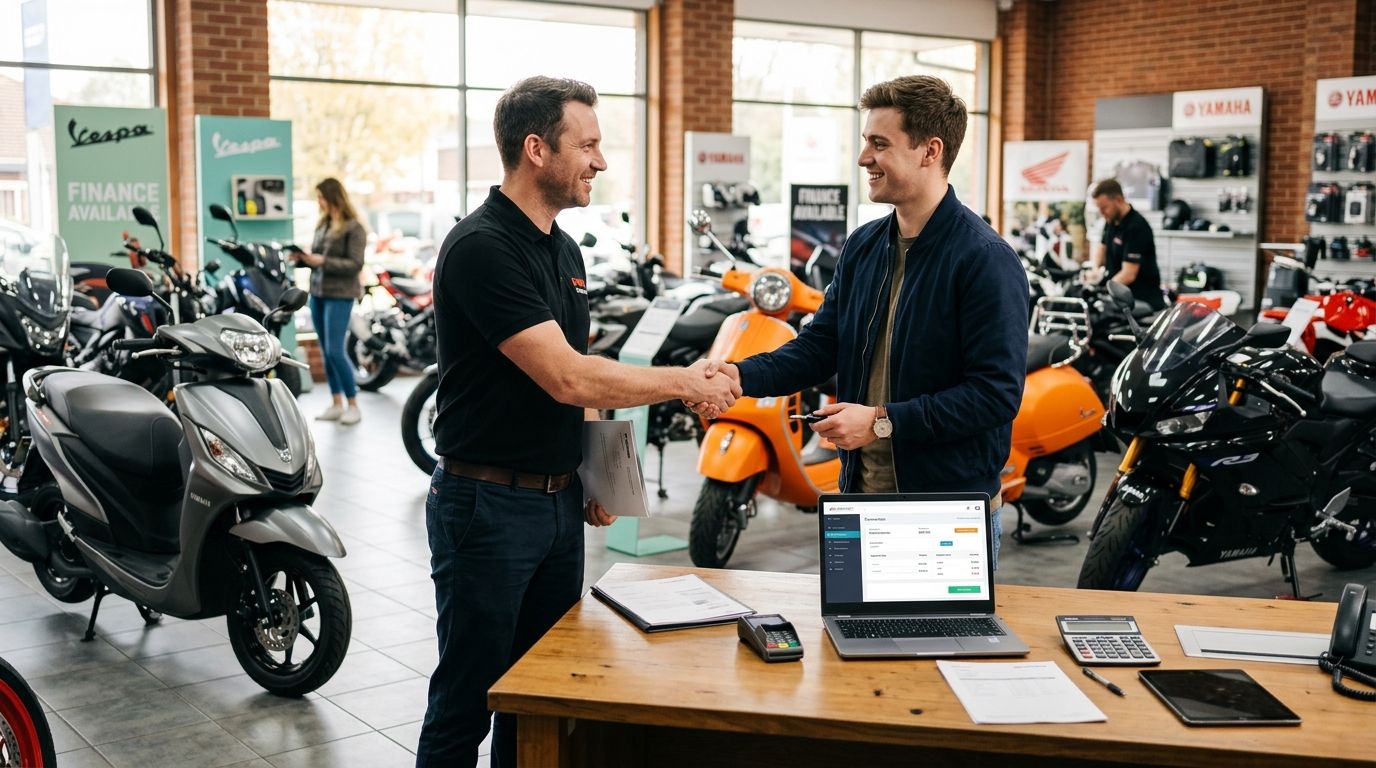
Buy now pay later for motorbike dealers is a checkout finance option that splits a bike or scooter purchase into interest-free monthly instalments, aimed at turning test-ride interest into a completed sale. Motorbike and scooter buyers face a wider price spread than most retail categories — a learner-legal 125cc runs a few thousand pounds while a mid-size tourer or adventure bike can top £15,000 — so the instalment terms and eligibility checks that work for a bike shop selling £600 mountain bikes won't fit a dealer moving £8,000 machines.
- Buy now pay later for motorbike dealers splits a £3,000-£15,000 purchase into interest-free monthly payments, cutting the barrier that stops riders committing on the day.
- PayItMonthly runs eligibility checks before the test ride, so sales staff know who can complete the purchase before they spend an hour on the forecourt.
- Seasonal demand for bikes and scooters peaks in spring and summer 2026 — dealers who have finance live before March convert more of that surge.
- Comparing checkout finance against in-house credit and traditional HP shows where each option helps and where it slows the sale down.
Why buy now pay later matters for motorbike and scooter dealers
A rider walking onto a forecourt to look at a £6,000 bike is not comparing it to a £30 accessory — they're weighing it against a car, a holiday, or simply waiting another year. PayItMonthly turns that single large number into a monthly figure the buyer can measure against their existing budget, which is often the difference between a deposit today and a walkout.
Dealers selling scooters and mopeds face a different buyer entirely: younger riders, first licence holders, and commuters replacing an MOT failure who need the bike this week, not next month. Both groups share one constraint — they want a fast yes or no, not a week-long finance application that kills momentum on the showroom floor.
Motorbike and scooter dealers who offer buy now pay later at the point of sale close more deals on machines above £2,000, because the instalment breaks the single biggest objection: the upfront price.
How to offer buy now pay later as a motorbike or scooter dealer
1. Map your price points to instalment terms
A £2,500 scooter and a £14,000 tourer need different instalment lengths — stretch the cheap bike too far and the monthly figure looks trivial and undersells the machine; squeeze the expensive one too short and the payment scares the buyer off.
- Group your stock into price bands (under £3,000, £3,000-£7,000, £7,000+) and set a default term for each
- Show the monthly instalment figure next to the price tag on every bike over £2,000
- Update instalment examples every time you reprice stock, not just at the start of the season
- Test two term lengths on your highest-margin models to see which converts more test rides into deposits
2. Vet buyers before they sit on the bike
Running a finance check after a rider has already fallen for a specific machine wastes their time and yours if they decline. Vetting customers for BNPL eligibility at the door, or online before the visit, filters this out early.
- Add a short pre-qualification form to your website booking page for test rides
- Ask about finance intent at the point a customer books a viewing, not when they're at the till
- Flag high-value stock (over £8,000) for a manual review step before finance is confirmed
- Keep the decline conversation private — offer a lower-tier bike or a smaller deposit option on the spot
3. Train sales staff to sell the monthly figure
A salesperson who quotes "£6,499" gets hesitation; one who quotes "under £200 a month, interest-free" gets a nod. This is a script change, not a discount.
- Rehearse leading with the instalment figure before the full price on every quote over £2,000
- Give staff a laminated card or app screen showing instalment examples across your price bands
- Reward staff for finance-assisted sales, not just cash sales, in any incentive scheme
- Debrief lost sales monthly to see how many walked away over price rather than the bike itself
4. Add finance to every channel — showroom, phone, and online
Riders research bikes online long before they visit, and plenty buy scooters over the phone after a breakdown or MOT failure. Finance needs to be visible everywhere the sale happens, not just at the till.
- Put the instalment figure on every stock listing on your website, not just a generic "finance available" badge
- Give phone sales staff the same finance script and application link as the showroom team
- Add a finance calculator or instalment estimate to your online stock pages
- Follow up abandoned online enquiries with a finance-led message, not a price-led one
5. Plan for seasonal spikes in rider demand
Motorbike and scooter sales cluster hard around spring and summer as new riders pass their tests and commuters look for cheaper transport. Finance capacity needs to be ready before that surge hits, not mid-March when it's already underway.
- Review your finance provider's application volume handling before the February-to-May peak
- Pre-train seasonal or temporary sales staff on the finance conversation, not just the bikes
- Stock more units in the £2,000-£5,000 range ahead of the learner-rider season
- Run finance-led promotions timed to test-pass season rather than generic discount periods
6. Protect margin on high-ticket stock
Offering interest-free finance on a £12,000 machine can feel like it eats into margin if it's not priced in properly from the start. Get this wrong across a full season of sales and it adds up fast.
- Build the cost of offering finance into your pricing on bikes over £5,000, not just your cheapest stock
- Compare finance-assisted margin against cash-sale margin across a full quarter, not a single sale
- Reserve your best instalment terms for slower-moving or older-model stock to shift inventory faster
- Read finance options for high-ticket retail purchases before setting terms on anything over £8,000
7. Handle declines without losing the sale
Not every rider passes an eligibility check, and how you handle that moment decides whether they walk to a competitor or still buy from you.
- Have a lower-price alternative ready to suggest immediately after a decline
- Offer a larger deposit option that reduces the finance amount needed
- Keep the decline conversation off the showroom floor — move it somewhere private
- Log declined applications to spot patterns (age group, bike category) and adjust your stock mix
Comparing finance options for motorbike and scooter dealers
| Option | Best for | Key limitation |
|---|---|---|
| Checkout buy now pay later (PayItMonthly) | Fast eligibility decisions on £2,000-£15,000 bikes | Requires online or in-store integration setup |
| Traditional 0% dealer HP | Dealers with an existing FCA-regulated finance panel | Slower application, often needs manual paperwork |
| In-house dealer credit account | Repeat trade customers and fleet buyers | Ties up dealer cash flow until repaid |
| Credit card | Small accessory and parts purchases | Poor fit for full bike or scooter purchases |
| Personal bank loan | Buyers with strong existing credit history | Application happens outside the sale, risking a lost deal |
The verdict: checkout buy now pay later wins on speed for bikes and scooters priced £2,000 and up, because the decision happens while the rider is still standing next to the machine.
Add finance to your bike sales
See how instalment checkout finance works for motorbike and scooter dealers.
Common mistakes motorbike and scooter dealers make
- Only offering finance on new bikes — used stock, which makes up a large share of dealer sales, gets left without an instalment option and loses buyers to competitors who offer it
- Quoting the full price before the monthly figure — this anchors the buyer on the big number and undoes the point of offering finance at all
- No pre-qualification before test rides — a rider who fails the finance check after riding the bike leaves disappointed and unlikely to return
- Ignoring scooter and moped buyers under £3,000 — dealers assume finance only matters on expensive bikes, but first-time riders on tight budgets are exactly who needs the monthly-payment option most
- Not training part-time or seasonal staff — the spring hiring surge means new staff are often the ones handling peak-season finance conversations with no script
FAQ
What is buy now pay later for motorbike dealers?
Buy now pay later for motorbike dealers is a checkout finance option that splits the cost of a bike or scooter into interest-free monthly instalments, approved at or near the point of sale in 2026 rather than through a lengthy loan application.
Is buy now pay later better than dealer HP finance?
Checkout buy now pay later is faster to approve and easier to run alongside online sales, while traditional 0% dealer HP often suits dealers with an existing FCA-regulated finance panel and higher-value stock. Neither is universally better; the right choice depends on your sales channel mix.
Can scooter dealers offer buy now pay later on used stock?
Yes, buy now pay later can apply to used motorbikes and scooters as well as new stock, and dealers who limit finance to new bikes often lose sales on their used inventory, which typically makes up a significant share of forecourt turnover.
How much do buyers finance on a motorbike or scooter?
Bike and scooter prices in the UK range from around £2,500 for a learner-legal 125cc up to £15,000 or more for larger touring and adventure models, and buy now pay later works across that full range when instalment terms are matched to the price band.
Does offering finance affect a dealer's profit margin?
Offering interest-free instalment finance can affect margin if the cost isn't built into pricing on higher-value stock, so dealers should review margin on finance-assisted sales against cash sales across a full quarter rather than a single transaction.
When is peak season for motorbike and scooter finance applications?
Demand for motorbike and scooter finance peaks between February and May each year as new riders pass their tests ahead of the summer riding season, so finance processes and staff training should be ready before that window opens.
Can a rider apply for finance before visiting the showroom?
Yes, pre-qualification before a test ride is one of the most effective ways dealers filter finance eligibility early, saving time for both the buyer and the sales team on the showroom floor.
What happens if a customer is declined for buy now pay later?
A declined application doesn't have to end the sale — dealers commonly offer a lower-priced alternative bike or a larger deposit to reduce the amount financed, handled privately rather than on the showroom floor.
One last thing
The dealers who convert the most test rides into sales are the ones who quote the monthly figure before the buyer even asks about price — by the time a rider hears "under £200 a month" instead of "£6,499", the decision has already tilted in your favour. Get that script change right before the 2026 spring rider season, not during it.


