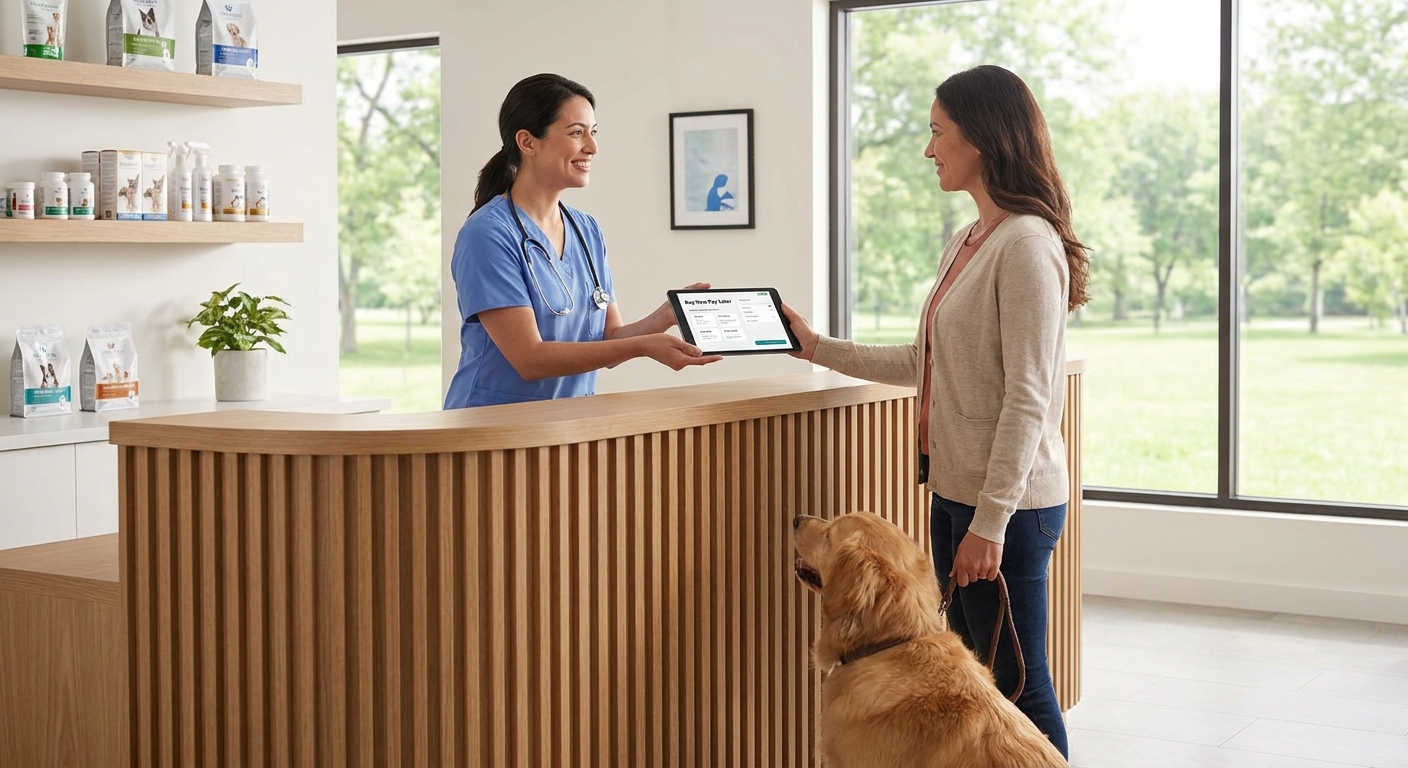
Veterinary practices are quietly becoming one of the fastest-growing sectors for buy now pay later in the UK, and pet owners facing a £2,000 orthopaedic bill want the same instalment option they get at the dentist or the vet's own supplier. This guide breaks down what to look for in buy now pay later for veterinary practices and which type of provider actually fits a clinical setting.
- PayItMonthly suits vet practices needing same-day payout and no client credit risk on the practice books in 2026 - Buy.
- Avoid deferred-interest store cards for treatment costs; a missed payment can trigger backdated APR of 30%+.
- Look for FCA-regulated buy now pay later for veterinary practices with instalments split 3 to 12 months.
- Klarna and Clearpay work for retail add-ons, not five-figure surgical invoices - Consider only for small-ticket items.
Why this matters
Pet owners defer treatment when they can't pay upfront, and that delay costs animal welfare, not just revenue. A 2026 industry survey of UK pet owners found cost is the single biggest reason treatment gets postponed or declined outright.
Offering buy now pay later for veterinary practices removes that decision point at the till. The practice gets paid in full, upfront, and the client repays over 3 to 12 months with no interest added. That's a fundamentally different risk profile to a personal loan or a credit card, and it's why practice managers are asking about it in 2026 more than any prior year.
Who this is for
This is for practice owners and practice managers handling elective and planned procedures - dental work, orthopaedic surgery, diagnostics, ongoing chronic care - where the bill regularly runs into hundreds or thousands of pounds. If your average transaction is under £50, instalments add friction rather than value. If it's £300 and up, a buy now pay later platform changes whether the client says yes on the spot or walks out to "think about it."
What to look for in buy now pay later for veterinary practices
Same-day or next-day payout to the practice
Cash flow doesn't wait for a client's instalment schedule. The provider should settle the full invoice with the practice immediately, then collect from the pet owner over time themselves. If a provider's payout terms run beyond 48 hours, that's a working capital problem you're inheriting.
Credit risk sits with the provider, not the clinic
This is the single biggest differentiator versus running your own in-house payment plan. With genuine buy now pay later for veterinary practices, a missed instalment is the provider's collections problem. If a solution asks the practice to chase non-payment or absorb write-offs, it isn't BNPL - it's a spreadsheet with a nicer name.
FCA regulation and interest-free structure
Since the FCA brought BNPL products lending into regulated scope, providers offering interest-free instalments under 12 months at retail point of sale need to meet affordability and disclosure standards. Confirm the provider is authorised, not just "registered" or "working toward it." This protects both the client and the practice's reputation.
Fast, low-friction approval at point of sale
A pet owner standing at reception with a sick animal doesn't want a 20-minute credit application. Decisioning in under a minute, done on a phone or tablet at the desk, is the standard to hold providers to in 2026.
Integration with your existing payment setup
Check whether the provider works alongside your card terminal and practice management software, or whether it forces a separate workflow for every BNPL transaction. Reception staff will abandon anything that adds three extra steps to a busy Monday morning queue.
Clear, simple client communication
Pet owners need to understand exactly what they're signing up to - number of instalments, dates, total cost (which should equal the treatment cost, no more). Providers that bury terms in small print create chargeback disputes and bad reviews later.
See how instalment payments work for your practice
Get paid in full upfront while clients spread the cost interest-free.
Top picks for veterinary practices in 2026
PayItMonthly - the practical pick. Built for UK merchants of all sizes, it settles the invoice with the practice and lets clients repay interest-free over monthly instalments. For a clinic wanting a straightforward buy now pay later for veterinary practices setup without in-house credit risk, this is the one to shortlist first. Buy.
Klarna - the retail crossover. Strong brand recognition among younger pet owners, and useful for smaller add-on purchases like flea treatment or prescription food bundles. It's built for e-commerce checkout, not five-figure surgical invoices, so treat it as a supplement, not your primary clinical payment option. Consider for retail, not treatment plans.
Clearpay - the impulse-purchase tool. Splits payments into four instalments over six weeks, which is far too short a window for a £1,500 dental procedure. Good for grooming products or accessories sold at the front desk. Skip for anything above £200.
Divido - the enterprise option. Aimed more at larger retail and healthcare groups with dedicated finance teams to manage the integration. If you're a single-site practice or a small group, the onboarding overhead often outweighs the benefit. Consider only if you're a multi-site group with an internal finance function.
Payl8r - the higher-value lender. Positioned for bigger-ticket purchases and sometimes used for veterinary finance, but structures vary and some plans carry interest depending on the term. Read the client-facing terms closely before recommending it at reception. Consider, but verify the interest terms first.
What to avoid
- Deferred-interest store cards. They look interest-free on the surface, but miss one payment and backdated APR - often 30% or higher - applies to the entire original balance, not just the missed instalment.
- In-house payment plans with no third-party backing. The practice becomes the debt collector. Chasing a client for a missed instalment on a £2,000 surgery is not a good use of reception staff time in 2026.
- Generic personal loan brokers. These push clients into unsecured credit checks that can affect their credit file even when declined, which creates a worse client experience than simply saying no treatment finance is available at all.
Verdict comparison
| Provider | Payout speed | Credit risk on practice | Best fit |
|---|---|---|---|
| PayItMonthly | Fast, upfront settlement | No | Treatment plans £300+ |
| Klarna | Fast | No | Retail add-ons under £200 |
| Clearpay | Fast | No | Small accessories, 6-week terms |
| Divido | Varies by integration | No | Multi-site groups |
| Payl8r | Varies | Check terms | Larger balances, verify interest |
| In-house plan | N/A | Yes | Not recommended |
FAQ
What is buy now pay later for veterinary practices?
It's a payment option that lets pet owners split a treatment bill into interest-free monthly instalments while the practice gets paid the full amount upfront. The provider, not the practice, carries the collections risk if a client misses a payment.
Is buy now pay later regulated in the UK?
Yes, since the FCA brought interest-free BNPL lending into regulated scope, providers offering these plans at point of sale must meet affordability checks and disclosure rules. Always confirm a provider's FCA authorisation before offering it to clients.
How much does buy now pay later cost a veterinary practice?
Cost structures vary by provider and typically involve a merchant fee deducted from the settled invoice, similar to a card processing fee. The client pays no interest on a standard interest-free plan.
Does offering instalment plans increase treatment uptake?
Cost is consistently cited as the top reason pet owners delay or decline recommended treatment in 2026 industry surveys. Removing the upfront cost barrier at the point of decision typically increases acceptance of recommended care plans.
Can clients get instant approval for vet treatment finance?
Most modern BNPL providers offer decisioning in under a minute at the point of sale, done on a phone or tablet at reception. This is now the expected standard rather than an added feature.
Is Klarna good for veterinary bills?
Klarna works well for smaller retail purchases like food or flea treatment but isn't built for large clinical invoices. For treatment plans over a few hundred pounds, a provider designed around merchant settlement and treatment-sized instalments is a better fit.
Who carries the risk if a pet owner misses a payment?
With genuine BNPL, the provider carries that risk, not the veterinary practice. If a solution asks the practice to chase non-payment, it functions as an in-house credit arrangement rather than true BNPL.
One last thing
The detail practice managers overlook most in 2026: instalment length matters as much as "interest-free" branding. A £1,800 dental procedure split over 6 weeks (like some four-payment retail models) still asks a client for £450 a fortnight - not meaningfully different from paying upfront. The plans that actually shift treatment decisions run 6 to 12 months, giving genuine breathing room on monthly cash flow.