
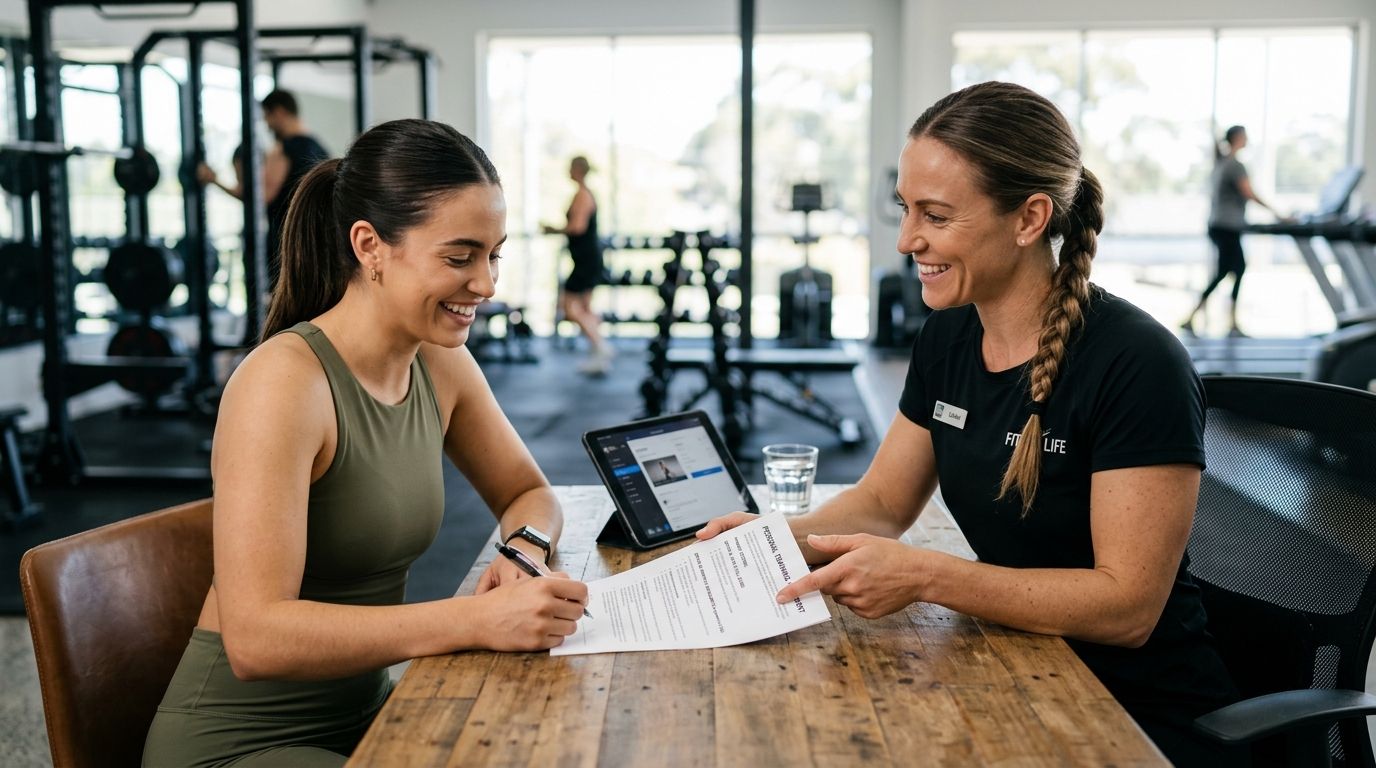
Instalment plans for personal training packages let clients split the cost of a PT block into interest-free monthly payments instead of paying the full package fee upfront, and they let trainers still get paid in full at the point of sale. The model matters most where PT businesses sell blocks of 10, 20 or 50+ sessions rather than single drop-in sessions, because that's where the upfront number scares off otherwise-committed clients.
- Instalment plans for personal training packages split multi-session blocks into monthly payments, removing the single biggest reason clients don't commit to a package.
- PayItMonthly pays the trainer or studio in full upfront and collects instalments from the client directly, so cash flow risk doesn't sit with the business.
- Session-block length should set the number of instalments, not a generic 3 or 6-month default.
- Vetting clients before approving a plan cuts missed-payment chasing later in the block.
- For PT studios selling packages priced as a lump sum, PayItMonthly's checkout instalment option is a lower-risk alternative to running payment plans in-house.
Why instalment plans matter for personal trainers
PT packages are usually sold as a block, not a single transaction — 10 sessions, 12 weeks, a full body transformation programme. The client is being asked to commit to the whole cost on day one, before they've felt a single session's worth of value. That's a harder sell than a £40 drop-in.
Trainers who run instalments themselves — a card left on file, a standing order, a verbal agreement to "pay it off over three months" — carry the collection risk personally. If a client stops attending in week 6 of a 12-week plan, chasing the rest of the balance is now the trainer's job, not a lender's. That's a different problem to the one gyms and fitness studios face when selling memberships, where instalments are usually rolling and lower-value.
Moving that collection risk to a third party changes the calculation: the trainer gets paid the full package value up front, and the instalment provider handles the client relationship for the remaining payments.
Update your package pricing structure
Before adding instalments, decide which packages actually need them. A single £45 session doesn't need a payment plan. A £600+ block does.
- List packages by total price and mark which sit above the point where clients hesitate to pay in one go
- Keep a no-instalment single-session rate for clients who don't want to commit to a block
- Price packages in round numbers that divide cleanly into weekly or monthly instalments
- Avoid stacking a manual "pay half now, half later" option alongside a formal instalment plan — pick one system
Match instalment length to your session block
A 10-session block delivered weekly shouldn't be billed over 6 months — the client finishes training long before the payments end, and that mismatch is where cancellations and disputes start.
- Set the instalment count close to the number of weeks the block actually runs
- For training and education providers selling structured programmes, align billing milestones to programme phases, not just calendar months
- Offer a shorter instalment term for shorter blocks (6-8 sessions) and a longer one for 12-week programmes
- Avoid open-ended plans with no fixed end date — clients disengage faster when there's no clear finish line
Vet clients before approving a plan
Running instalments without any eligibility check is how trainers end up chasing balances from clients who were never going to pay reliably.
- Use a short application step at point of sale rather than a verbal agreement
- Check that the client understands the total number of payments and the end date before they sign up
- Set a minimum package value for instalment eligibility so small transactions aren't burdened with admin
- Follow a structured process to vet customers for BNPL eligibility rather than approving every request that comes in
Add the option at booking, not after
Instalments work best when they're visible before a client decides not to buy — not offered as a rescue after they've already said the price is too much.
- Show the per-instalment price next to the full package price on your booking page or in your quote
- Mention instalments in the same sentence as the package, not as a hidden fallback
- Give clients the payment breakdown in writing before they book the first session
- Make the sign-up step for the plan part of the same checkout flow as the booking itself
Handle missed payments with a clear process
Even with vetting, some clients miss a payment. How that's handled decides whether it costs the business money or just an admin minute.
- Set a fixed number of days before a missed payment pauses future session bookings
- Communicate the policy at sign-up, not after the first missed payment
- Keep a record of attendance against payments so a lapsed plan doesn't quietly keep granting sessions
- Have a written process to reduce missed repayments rather than reacting case by case
Promote instalments to existing and new clients
Clients already training with you are the easiest upsell to a bigger package once instalments remove the price barrier.
- Mention instalment availability when a client's current block is nearing its end
- Include the per-month price in any renewal or upgrade conversation, not just the total
- Use instalment pricing in social posts and package menus, worded clearly and compliantly
- Train front-of-house or booking staff to mention the option before a client asks
Track which packages get bought on instalments
Without tracking, it's guesswork whether instalments are lifting average package size or just spreading payments on sales that would have happened anyway.
- Record which bookings use instalments versus one-off payment
- Compare average package value for instalment clients against upfront-paying clients
- Check completion rates — do instalment clients finish their block at a similar rate to upfront payers
- Review this monthly rather than once a year, so pricing changes can be tested quickly
Comparing instalment options for personal training businesses
| Option | Best for | Key limitation |
|---|---|---|
| Manual in-house plan (standing order, card on file) | Very small studios with a handful of clients | Trainer carries all collection risk and admin |
| PayItMonthly instalment checkout | PTs and studios selling packages priced as a block | Requires client to pass an eligibility check |
| Booking software recurring billing | Studios already using a booking platform with built-in billing | Doesn't separate collection risk from the business |
| Dedicated finance for high-value service bookings | Premium or transformation-style packages priced well above standard rates | Better suited to higher package values, not single-session pricing |
Verdict: for personal trainers and studios selling packages over roughly £500, a formal instalment plan through PayItMonthly is the lower-risk route compared with running payment plans manually in 2026.
Common mistakes personal trainers make with instalment plans
- Charging the full package price upfront and losing clients at the decision point — the moment a prospect sees a four-figure total with no split, many walk without asking about options.
- Running informal payment plans through personal bank transfers — no vetting, no fixed schedule, and no clear recourse when a client stops paying halfway through.
- Mismatching instalment length to session count — billing a 10-session block over 6 months means the client finishes training with payments still outstanding.
- Advertising "0% finance" or "pay monthly" without checking the wording is compliant — vague finance claims in ads or social posts can breach advertising rules even when the underlying plan is genuinely interest-free.
- Not separating package tiers by instalment eligibility — offering the same plan structure to a £150 taster block and a £1,500 transformation package ignores that they carry very different risk.
Add instalments to your PT packages
Let clients spread the cost of training blocks while you get paid upfront.
FAQ
What is an instalment plan for personal training packages?
An instalment plan for personal training packages splits the total cost of a session block into fixed monthly (or weekly) payments instead of one upfront charge. The trainer or studio is typically paid in full at the point of sale when a third-party provider like PayItMonthly handles the collections.
Is it safe for personal trainers to offer payment plans?
It's safe when the plan runs through a vetted process rather than an informal agreement. Manual plans put the collection risk on the trainer; instalment providers move that risk off the business and pay the trainer upfront.
How many instalments should a PT package be split into?
Match the number of instalments to the number of weeks the block actually runs, so payments finish around the same time as the sessions. A 12-week programme suits roughly 12 weekly or 3 monthly instalments, not an arbitrary 6-month term.
Do personal trainers get paid upfront with BNPL?
Yes — with PayItMonthly, the trainer or studio receives the package value at the point of booking, and the client repays the provider in interest-free monthly instalments.
Can a personal trainer offer 0% finance without an FCA license?
Trainers don't need their own FCA authorisation when they use a regulated third-party BNPL provider — the provider holds the regulatory permissions and runs the credit checks. Running finance entirely in-house is a different situation and needs its own compliance review.
What happens if a client misses an instalment payment?
That depends on the provider's process, but a clear policy — such as pausing further bookings until the account is current — should be set and communicated at sign-up, not improvised after the fact.
Is BNPL better than an in-house payment plan for a PT studio?
For packages priced above a few hundred pounds, BNPL is generally lower-risk because the provider vets the client and carries the collection admin, whereas an in-house plan leaves the studio chasing missed payments.
How do I add instalment payments to my booking site?
Most instalment providers integrate at the checkout or booking step so the monthly price shows alongside the full package price before the client confirms.
One last thing
Set the instalment term to the length of the session block itself, not a round number like 3 or 6 months. A 10-week programme billed over 10 weekly payments keeps the plan and the training in sync — the client's last payment lands close to their last session, which is the single easiest way to avoid disputes about "paying for sessions I never used."


