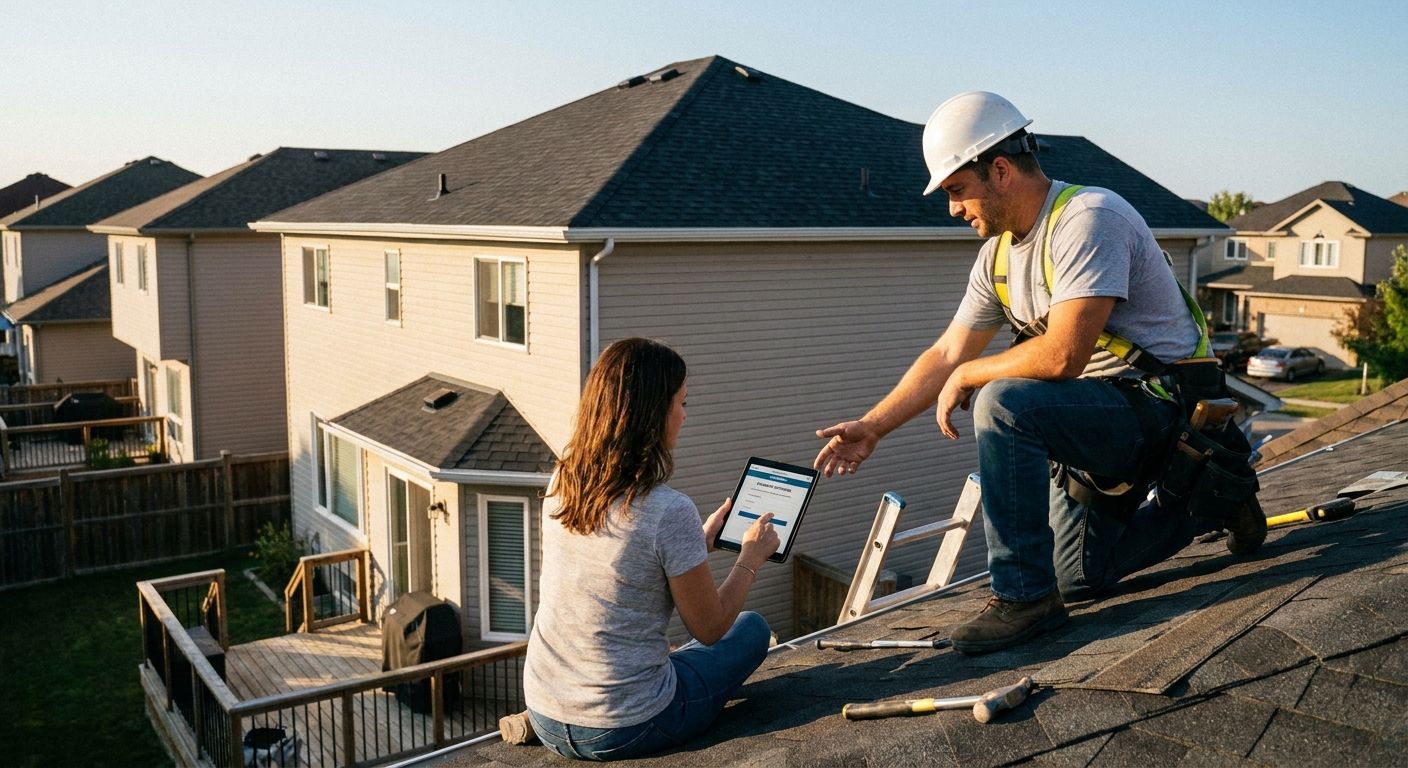
Roofing quotes routinely run into five figures, and a customer who can't find £3,000 to £15,000 in one go walks away from a solid quote. Buy now pay later for roofing companies turns that quote into a monthly instalment your customer can say yes to before the ladder comes off the van.
- Buy now pay later for roofing companies works when the platform pays you out fast — PayItMonthly is the safe pick for jobs over £3,000.
- Consumer BNPL apps like Klarna weren't built for trade invoicing — Skip them for full re-roof jobs.
- In-house payment plans put cash flow risk on the roofer — Consider only for repeat customers you trust.
- Broker or personal loan referrals add days to a sale that could close today — Skip when speed matters.
Why this matters
A re-roof or full replacement typically runs £3,000 to £15,000 and takes 2 to 5 days on site, which puts it well above what most households want to pay in one lump sum. Offering finance at the point of quote, not after, is what turns a maybe into a signed job. Roofing companies that add buy now pay later at checkout convert more quotes without discounting the price or chasing a deposit for weeks.
The platform matters more than the marketing: what you need is fast payout, a credit check that doesn't scare off good customers, and a checkout link you can send from a phone on-site in 2026.
Who this is for
This guide is for roofing companies and roofing contractors quoting residential jobs — full re-roofs, repairs, guttering, and flat roof replacements — where the ticket price is too big for most households to pay from savings. If your average job sits under £500, a card payment covers it and BNPL adds cost for no benefit. If you're quoting £3,000 and up and losing jobs to 'let me think about it', this is built for you.
What to look for in buy now pay later for roofing companies
Payout speed
Cash flow is your biggest constraint mid-job — materials, scaffolding, and subcontractors get paid before the customer's final instalment lands. A finance platform that pays you out directly, rather than trickling the money in over the customer's repayment term, protects your working capital on every job you take on in 2026.
Credit checks that don't kill good customers
A homeowner with a £3,000 roof quote and a decent income can still get rejected by a clunky eligibility check built for £50 retail purchases. Look for a soft check that gives a fast yes or no without a hard search hitting the customer's credit file, so you don't lose a good customer to a bad process.
Fees that don't eat the job margin
Roofing margins get squeezed by materials and labour already, so a merchant fee stacked on top of a £10,000 job matters more than it does to a shop selling £40 t-shirts. Get the fee structure in writing before you quote finance to a customer, not after the job's done.
Verification that catches fraud before it costs you
Roofing is a trade where cloned company details and identity fraud on large-ticket finance applications happen more than customers realise. Tools like Pass Genie exist specifically to verify who's applying before the money moves, which matters more on a £12,000 roof than a £120 haircut.
A checkout link you can send from the roof
Most roofing quotes get agreed on-site or over the phone, not in a shop. A platform that lets you send a payment link by text or email — a pay-by-link setup — closes the job while the customer's still standing in front of their new roof, not three days later when they've cooled off.
Top picks
The safe pick — PayItMonthly
PayItMonthly is built for UK merchants adding interest-free instalments at checkout, and roofing companies use it the same way a home improvement company or a boiler installer does: quote the job, send the finance link, get paid. Interest-free plans in UK retail finance commonly run 3 to 12 months, and PayItMonthly's model is built around that same structure rather than the 30-day pay-in-4 apps meant for online shopping baskets. Verdict: Buy for any roofing company quoting jobs over £3,000 in 2026.
The mismatch pick — consumer BNPL apps
Klarna and Clearpay-style apps are built for online retail baskets under a few hundred pounds, not a £9,000 invoice for a full re-roof. They're designed around instant checkout for goods shipped next day, not staged trade jobs with scaffolding up for a week. Verdict: Skip for anything beyond small repair invoices.
The DIY pick — in-house payment plans
Some roofing companies just tell the customer 'pay half now, half in three months' and track it in a spreadsheet. It works fine until a customer misses payment three, and now you're chasing a debt instead of running a roofing business. Verdict: Consider only for long-standing customers you'd trust with a handshake deal.
The slow pick — broker or personal loan referral
Sending a customer off to apply for a personal loan or through a finance broker adds days to a job that could close today, and plenty of customers won't bother finishing the application once they've left your site. Verdict: Skip when speed to signed job matters more than exploring every loan option.
What to avoid
- Any BNPL app built only for online checkout carts — most roofing sales close on the doorstep or over the phone, not through a webshop.
- A finance option with no visible fee schedule — if you can't see the merchant fee before signing up, assume it's higher than it should be.
- A platform with no fraud or ID verification step — a £15,000 roof application deserves more scrutiny than a £30 phone case.
Verdict comparison table
| Option | Payout to you | Credit check | Fit for trade quotes | Verdict |
|---|---|---|---|---|
| PayItMonthly | Direct, platform-managed | Soft check | Built for it | Buy |
| Consumer BNPL apps | Standard e-commerce settlement | Instant, retail-focused | Poor fit | Skip |
| In-house payment plan | You collect it yourself | None | Risky | Consider |
| Broker or loan referral | Delayed, customer-dependent | Hard search | Slow | Skip |
FAQ
What is buy now pay later for roofing companies?
It's a checkout option that lets a roofing customer split the invoice into interest-free monthly instalments instead of paying the full quote upfront. The roofer gets paid by the finance platform; the customer repays it over time.
How does BNPL work for a full roof replacement?
The roofing company sends a finance link once the quote is agreed, the customer passes a soft credit check, and the platform pays the roofer while the customer repays in instalments. Most UK interest-free plans run 3 to 12 months.
Is buy now pay later safe for large roofing jobs?
Yes, provided the platform runs proper eligibility and identity checks before approving finance on a five-figure job. Verification tools built for higher-ticket trade purchases matter more here than for a £50 retail sale.
Does offering finance cost the roofing company anything?
Most BNPL platforms charge the merchant a fee rather than the customer, since the instalments themselves stay interest-free. Get the fee structure confirmed before you quote finance to a customer.
Can roofing companies offer 0% finance without becoming a lender?
Yes — a regulated BNPL platform handles the lending, credit checks, and compliance, so the roofing company just sends the payment link at quote stage. You never hold the credit risk yourself.
Is BNPL better than a personal loan for roof repairs?
For speed, yes — a BNPL checkout link approves in minutes on-site, while a personal loan application can take days and loses momentum. Personal loans suit customers who want to shop the rate rather than close today.
How fast do roofing companies get paid using BNPL?
Payout timing depends on the platform, but a direct, platform-managed payout protects cash flow better than waiting on customer instalments to trickle in over the repayment term.
What should a roofing company check before signing up to a BNPL platform in 2026?
Confirm the merchant fee, the credit check type, and whether the checkout works for phone and on-site sales, not just online carts. Trade jobs need a platform built for invoices in the thousands, not retail baskets.
One last thing
The roofing companies losing jobs to 'I need to think about it' aren't losing on price — they're losing because the customer can't picture paying £9,000 in one go and nobody offered them another way to say yes. Put the instalment option in the quote itself, not as an afterthought once the customer's gone quiet, and 2026's quote-to-signed-job rate looks a lot better for it.