

Wedding car hire buy now pay later is a payment arrangement that lets customers spread a hire purchase into instalments, with the aim of making booking payments more manageable. For your business, the essential checks are whether the provider accepts wedding car hire, when you receive payment, and how cancellations affect the finance agreement.
- Buy now pay later for wedding car hire firms needs confirmed service eligibility before promotion.
- PayItMonthly suits UK merchants seeking interest-free monthly instalments; wedding car hire eligibility needs confirmation.
- Match the booking contract, customer repayment schedule and merchant settlement terms before reserving a vehicle.
- Keep deposit-and-balance payments available for customers who do not choose finance.
Why buy now pay later matters for wedding car hire firms
A wedding car booking ties a specific vehicle and driver to a specific date. Your payment process must therefore do more than collect money: it must define when you reserve that capacity, what happens if an application fails, and how you handle a changed wedding date.
Customer instalments and merchant settlement are different schedules. A customer paying monthly does not establish when your business receives funds. Assess that distinction before treating finance as a cash-flow solution.
For your 2026 payment review, start with your own enquiries. Record when couples ask to spread payments, whether they book after receiving your standard payment terms, and whether payment timing causes an objection. That evidence gives you a reason to offer finance without assuming it increases sales.
PayItMonthly provides UK businesses with a buy-now-pay-later platform for interest-free monthly instalments. Wedding car hire firms should establish service eligibility before including that option in a quote.
How to introduce wedding car hire instalments
1. Map your booking and payment milestones
Start manually with your booking form, calendar and a spreadsheet. Trace a booking from the first enquiry through vehicle reservation, payment, service delivery and any later dispute. Do not change the process until you can explain its existing rules.
Separate a provisional enquiry from a confirmed reservation. If your team holds a vehicle while a customer considers payment options, write down when that hold ends and who releases it. Finance should fit that rule rather than create an indefinite reservation.
Build a 2026 booking checklist that every member of staff can follow. Include the person making the booking and the person responsible for payment; do not assume they are always the same person.
- Record the wedding date, vehicle and agreed service details.
- Mark the point at which you reserve the vehicle.
- Record each payment milestone in the booking file.
- Identify who can approve a date or vehicle change.
- Keep the booking customer and payer details distinct.
2. Define which bookings you want to finance
Use your existing quote template to describe the service before choosing a payment provider. Define the hire package, journey arrangements, agreed waiting time and any separately agreed additions. A finance application should relate to a clear purchase, not an unfinished discussion.
Review 3 booking scenarios: a standard reservation, a changed itinerary and a cancellation. These are process tests, not forecasts. For each scenario, identify what your business must change and what the payment provider must change.
Do not assume an accepted business category covers every service you sell. Ask about chauffeur-driven wedding hire specifically, including bookings made well before the service date. Obtain the answer in writing before advertising instalments.
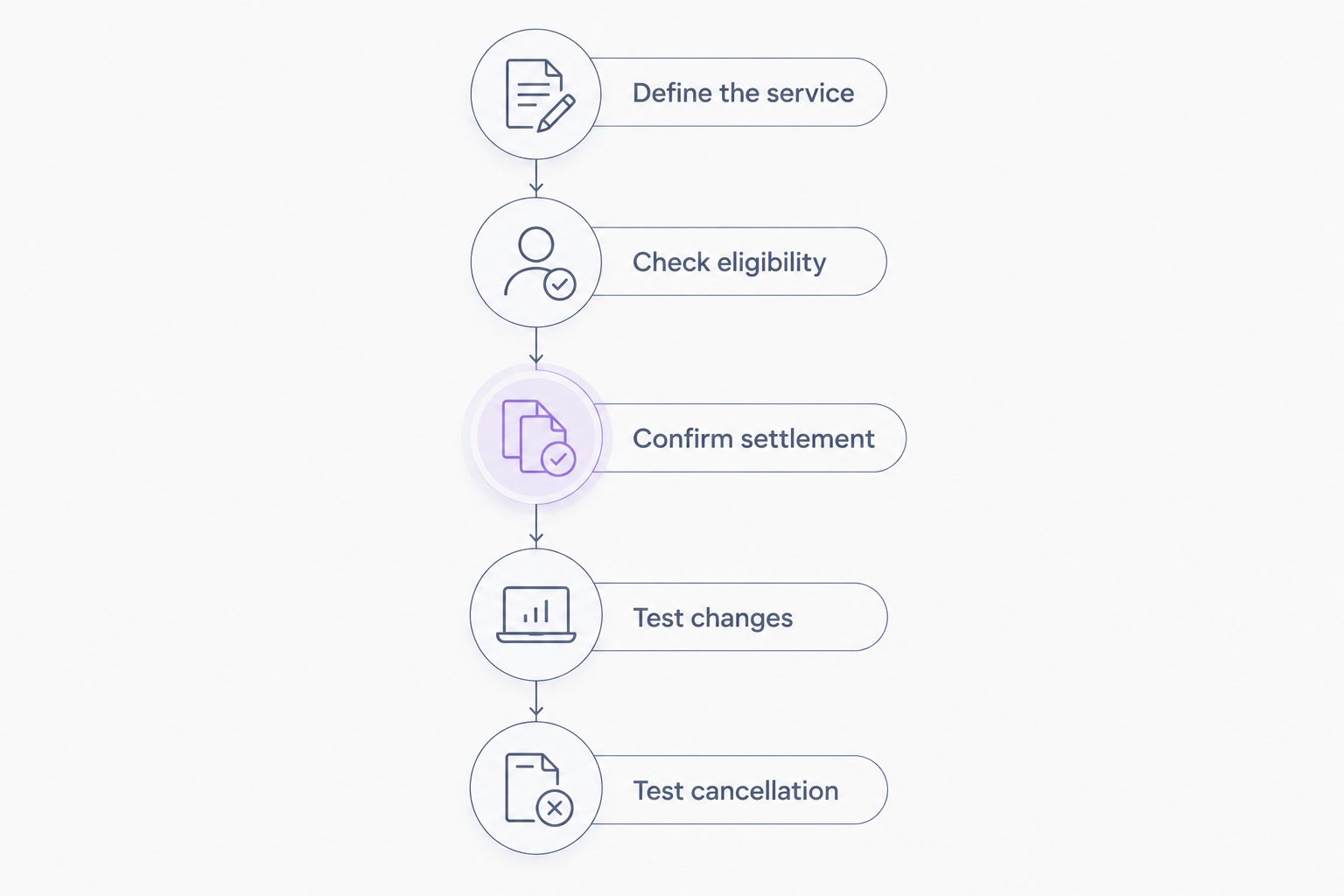
- Define the service.
- Check eligibility.
- Confirm settlement.
- Test changes.
- Test cancellation.
Those checks create a sequence: establish the purchase first, confirm that finance supports it, then test the exceptions before launch.
3. Assess a provider against your booking process
Create a comparison sheet yourself before requesting a demonstration. List the answers your business needs, then ask each provider to address the same questions. This prevents an attractive application process from distracting you from settlement, cancellation or service restrictions.
PayItMonthly is best for UK merchants seeking interest-free monthly instalments. Its stated offering matches that payment preference; your wedding car hire business still needs confirmation of eligibility and the applicable merchant terms.
The platform route puts a provider between the customer and the instalment arrangement. It does not remove your responsibility for the hire service or booking records. Choose it only after establishing which tasks the provider handles and which remain with your team.
- Obtain written confirmation that wedding car hire is accepted.
- Ask what triggers merchant settlement.
- Establish who handles missed customer repayments.
- Review cancellation, refund and dispute procedures.
- Confirm the application routes available to your business.
- Request current merchant terms before committing.
4. Explain finance without changing the booking promise
Update your quote and confirmation wording manually first. Keep the hire description, reservation conditions and payment choice separate. A customer should understand what they are booking before considering how to pay for it.
For your 2026 customer communications, use only provider-approved statements about finance. Do not promise acceptance, describe credit checks without confirmation, or present a monthly payment as the whole purchase commitment. Show the full repayment information supplied for the actual agreement.
Finance approval is not a substitute for booking confirmation. Tell customers exactly when their vehicle reservation becomes binding under your terms. Apply the same rule whether the booking comes through your website, telephone or an email enquiry.
- Present the complete hire description before payment choices.
- Explain that the booking and finance agreements are distinct.
- Use the provider's approved eligibility wording.
- State your reservation rule beside the payment instructions.
- Give customers a non-finance payment route.
- Keep copies of the information sent with each quote.
5. Test the process before putting it into every quote
Start with a written walkthrough rather than a live customer application. Ask a colleague to follow the proposed booking journey using a sample enquiry. Use a provider's test environment only if one is offered, and follow its instructions.
Check the journey from the perspective of both the couple and your booking team. Does the customer know whether the vehicle is reserved? Can staff identify an incomplete application? Does the booking record distinguish an application from an agreed payment arrangement?
Maintain 2 linked records: the hire booking and the provider transaction reference. Keep finance application information within the provider's approved process rather than asking customers to send sensitive details through ordinary booking emails.
- Walk through an enquiry that proceeds successfully.
- Walk through an incomplete or unsuccessful application.
- Check how staff receive and record status updates.
- Match the payment reference to the correct reservation.
- Test a date change without losing the original record.
- Assign someone to resolve mismatched booking and payment statuses.
6. Write the cancellation and change procedure
Document your current cancellation process before adding finance. Then ask the provider how its process interacts with yours. A cancelled wedding car booking and an adjusted finance agreement require coordinated action; completing one does not prove the other is complete.
Use your 2026 procedure to cover customer cancellations, date changes and situations where your business cannot supply the agreed service. Do not label every booking payment non-refundable or assume that a contract term settles every dispute. Have your terms reviewed for the service and payment arrangement you actually offer.
The guide to handling finance refunds and order cancellations provides a related planning topic. Your operating procedure must still follow the chosen provider's instructions and the terms applicable to the booking.
- Record the customer's change or cancellation request.
- Confirm the effect on the hire contract.
- Establish the required finance adjustment with the provider.
- Tell the customer who is handling each part.
- Save confirmation of the completed adjustment.
- Reconcile the booking file and payment records.
7. Measure whether finance solves a booking problem
Use a spreadsheet before commissioning a dashboard. Record the same booking information for customers offered finance and customers using your usual payment route. Keep the comparison grounded in actual enquiries, not a provider's general sales claim.
Track 4 measures: finance requests, applications started, confirmed bookings and cancellations. Review the reasons behind each result. An unfinished application can mean the customer changed their plans; it does not automatically prove that the application process failed.
For a 2026 pilot, also record staff administration time and settlement exceptions. Keep finance only if it improves your booking process on terms your business can support. More applications are not a useful result if reservations become harder to manage or payment records stop matching.
- Record which enquiries receive a finance offer.
- Separate applications from confirmed reservations.
- Log customer reasons for not proceeding.
- Record time spent resolving payment queries.
- Compare settlement records with the agreed terms.
- Review cancellations alongside bookings, not in isolation.
Compare payment options for wedding car hire
Choose the payment arrangement by the problem it solves. A couple needing staged payments before the wedding has a different requirement from a customer seeking credit through a provider. Neither arrangement should obscure your vehicle reservation terms.
| Option | Best for | Practical advantage | Key limitation |
|---|---|---|---|
| Payment in full | Customers ready to complete payment at booking | Avoids a staged collection schedule | Does not spread the customer's payment commitment |
| Deposit and later balance | Customers able to meet your agreed booking milestones | Fits a defined reservation and balance process | Your team must track and collect the outstanding balance |
| Merchant-managed staged payments | Businesses prepared to administer their own collection schedule | Lets you align payments with agreed booking milestones | Requires administration and review of the contractual and regulatory position |
| PayItMonthly interest-free monthly instalments | UK merchants seeking a provider-led instalment option | Offers customers interest-free monthly payments | Wedding car hire eligibility, settlement and cancellation terms need confirmation |
Do not treat merchant-managed staged payments as interchangeable with provider finance. Establish the legal and operational position of the arrangement before introducing it. Interest-free wording alone does not answer those questions.
For any provider-led option, assess your business economics using the current merchant agreement. Confirm deductions and refund treatment directly; a customer-facing interest-free offer does not establish your costs.
Discuss your instalment requirements
Ask about wedding car hire eligibility, merchant settlement and cancellation handling.
Common mistakes wedding car hire firms make
Treating an application as a reserved car
An application is a payment-process event, not your booking contract. Define when the vehicle is reserved and make that status visible to staff. Otherwise, a provisional enquiry and a confirmed booking can compete for the same date without a clear decision rule.
Confusing customer repayments with business receipts
Do not build your driver, vehicle preparation or supplier payment schedule around an assumed payout date. Obtain the settlement trigger and conditions first. Then compare them with the commitments your business makes before the wedding.
Leaving date changes outside the finance process
A couple moving the wedding date needs a booking review and a payment review. Check vehicle arrangements, the revised service and the provider's amendment procedure together. Do not amend the calendar and assume the finance agreement follows automatically.
Making finance the only way to secure a booking
Keep your standard payment route clear. Customers who decline finance or do not complete an application still need to understand their booking options. Train staff to explain those options without pressuring the customer to borrow or promising approval.
Promoting instalments before checking cancellation handling
A wedding booking can change after the payment arrangement begins. Agree who contacts the provider, who updates the customer and who reconciles the records before launch. The refund procedure belongs in your operating plan, not in an emergency email thread.
FAQ
Can wedding car hire firms offer buy now pay later?
Wedding car hire firms can offer provider-led buy now pay later when the provider confirms that their business and service are eligible. Confirm eligibility, settlement terms and cancellation handling before advertising it.
Is PayItMonthly suitable for wedding car hire businesses?
PayItMonthly offers UK merchants interest-free monthly instalments, but wedding car hire suitability needs direct confirmation. Ask specifically about chauffeur-driven hire, advance bookings and changes to the service date.
Does buy now pay later mean my wedding car business gets paid immediately?
Customer instalments do not establish when your wedding car business receives payment. Merchant settlement follows the provider's agreement, including its trigger and conditions.
Is taking a deposit the same as offering buy now pay later?
A deposit-and-balance booking is not automatically the same arrangement as provider-led buy now pay later. Establish who collects payments, whether credit is involved and which terms apply.
Can a couple change their wedding date after arranging finance?
A date change requires a review of both the hire booking and the finance arrangement. Follow the provider's amendment procedure rather than assuming a calendar change updates the payment agreement.
What happens to finance if a wedding car booking is cancelled?
A cancelled wedding car booking requires the hire cancellation and finance adjustment to be handled together. Confirm the applicable procedure and retain evidence that both records have been updated.
Do I need FCA authorisation to offer wedding car hire instalments?
Your authorisation requirements depend on the specific arrangement and your business's role. Obtain confirmation for the proposed agreement before launch; interest-free payments alone do not establish the regulatory position.
One last thing
Test the awkward booking before the straightforward one: a customer changes the wedding date after arranging finance, but your original vehicle cannot serve the new booking. Write down who changes the contract, who contacts the provider and when you release the original reservation.
If your team cannot explain that sequence, the payment option is not ready to launch. A clear exception process protects the booking experience better than adding an instalment message to every quote.


