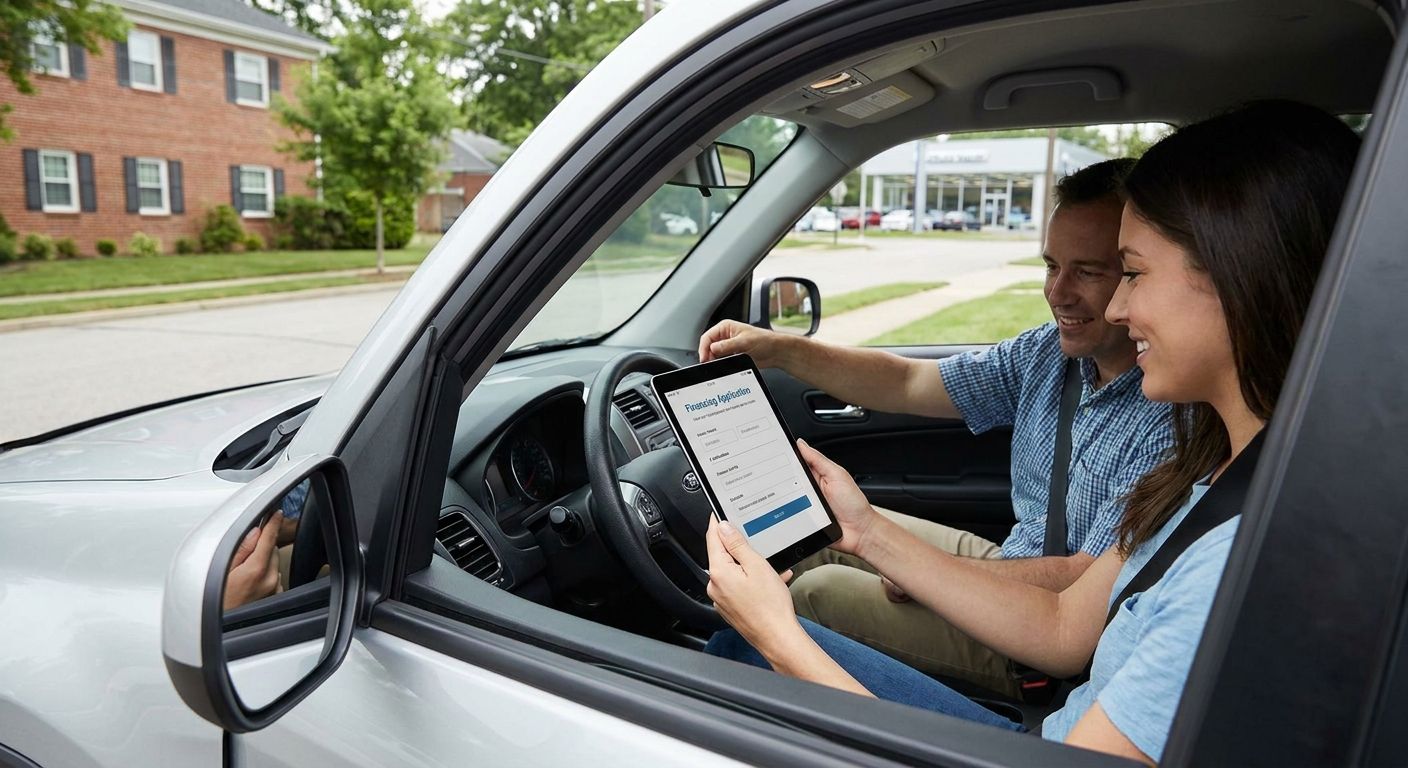
Driving schools lose paying customers every week when a learner can't cover a £900 intensive course upfront - customer finance for driving schools closes that gap by letting the learner spread the cost while you get paid in full straight away.
- PayItMonthly lets driving schools offer interest-free instalments on lesson packages and intensive courses - Buy for schools quoting lump sums over £300.
- Soft credit checks protect the learner's credit file; PayItMonthly settles funds to your account fast instead of leaving you chasing weekly cash.
- Skip in-house payment plans with no credit vetting - one missed instalment becomes your problem, not a lender's.
- Retail-style BNPL apps built for goods checkout often don't handle service bookings or cancellations cleanly - Consider carefully before signing.
- Verdict for 2026: instalment finance built for services beats generic 0% store credit for driving schools.
Why this matters
A full intensive course, block of 20 lessons, or a test-day-plus-car-hire bundle rarely comes in under a few hundred pounds. Most learners don't have that sitting in a current account, so they either delay booking, pay in dribs and drabs by bank transfer, or shop around for a school that lets them spread it.
Instructors have leaned on weekly cash-in-hand payments for years, but that model puts the collection risk entirely on you. If a learner stops turning up after lesson four, you're out the balance and the admin time chasing it.
Customer finance for driving schools flips that: a regulated lender pays you upfront and collects the instalments from the learner. PayItMonthly structures this specifically for UK merchants, not just retail checkout - which matters when your product is a service, not a box that ships.
Who this is for
This guide is for driving school owners and franchised instructors who quote intensive courses, block bookings, or test-day packages over £300 and want to stop losing enquiries to schools that already offer a "pay monthly" option. If you're still taking cash per lesson with no package pricing, read the criteria below before you decide whether finance is worth adding at all.
What to look for in customer finance for driving schools
Interest-free structure
Learners comparing driving schools will compare total cost first. If your finance option adds interest on top of the course fee, you lose the comparison to any competitor offering 0% instalments - the PayItMonthly model spreads the exact quoted price across months with no added charge to the learner.
FCA regulation and soft credit checks
A soft credit check doesn't leave a mark on the learner's file, which matters for 17-25 year olds building credit history for the first time. Confirm the provider is FCA-authorised - that's the difference between a proper instalment agreement and an informal IOU with no consumer protection.
Settlement speed
You still need to pay your instructors, fuel the cars, and cover insurance regardless of how the learner pays. A finance provider that settles your merchant account within days keeps your cash flow identical to taking payment upfront in full.
Checkout and booking integration
If offering finance means a learner has to leave your booking page, call you, or fill in a separate PDF, most won't bother. Look for a checkout link or point-of-sale flow that slots into however you already take bookings.
No long tie-in contracts
Driving schools are seasonal - enquiries spike after exam results in August and dip in January. A 12-month minimum merchant contract locks you into fees during your quiet months. Favour rolling terms over multi-year commitments.
Where instalment finance actually pays off
Not every part of your business needs a finance option bolted on. Here's where it earns its place and where it's dead weight.
Intensive and crash courses - the safe pick. These are quoted as one lump sum, often £600-£1,200, and are exactly the price point where a learner hesitates without a payment plan. Verdict: Buy.
Block-booked lesson packages (10-20 hours) - the volume pick. Learners who commit to a block pass faster and cancel less than pay-as-you-go bookers; spreading the block cost over 3-6 months removes the upfront barrier. Verdict: Buy.
Test day plus car hire bundles - the situational pick. Useful for learners booking their test close to the deadline, but the ticket value is often under £150, which is thin margin for the admin of running it through finance. Verdict: Consider.
Pass-focused top-up lesson bundles - the retention pick. Learners who fail first time and need another 5-10 hours are price-sensitive and often deciding between your school and a cheaper competitor. A monthly option keeps them booked with you. Verdict: Buy.
Standalone theory or hazard perception prep - the skip. These are typically under £50 and the cost of running finance admin outweighs any conversion benefit. Verdict: Skip.
Appointment-based, package-priced businesses outside driving instruction already run this model. Veterinary practices use instalments for treatment plans that arrive unplanned and expensive, and dental practices spread the cost of multi-visit work the same way a driving school could spread an intensive course.
“If a customer has to choose between one driving lesson and one grocery shop this week, the lesson gets cancelled every time.”
What to avoid
- Generic retail BNPL apps - built for a product shipping from a warehouse, not a service booking with cancellations, rescheduling, and part-completed courses. Refund handling gets messy fast.
- In-house "pay when you can" arrangements - no credit check, no FCA protection, and the missed payment becomes your admin problem with zero recourse.
- Long merchant lock-ins with early-exit fees - signed in a busy August, regretted in a quiet February when bookings drop and the fees don't.
Offer instalments on your next course quote
Add interest-free customer finance to your driving school checkout in 2026.
Verdict comparison
| Scenario | Interest-free | Credit check | Settlement speed | Verdict |
|---|---|---|---|---|
| Intensive/crash course | Yes | Soft | Fast | Buy |
| Block-booked lessons (10-20hrs) | Yes | Soft | Fast | Buy |
| Test day + car hire bundle | Yes | Soft | Fast | Consider |
| Pass-focused top-up lessons | Yes | Soft | Fast | Buy |
| Theory/hazard prep only | Yes | Soft | Fast | Skip |
FAQ
What's the best customer finance for driving schools in 2026?
An FCA-regulated, interest-free instalment provider built to handle service bookings, not just retail checkout, is the strongest fit for driving schools in 2026. PayItMonthly structures repayments around the exact quoted course price with no added interest to the learner.
Does offering instalment finance affect a learner's credit score?
A soft credit check does not affect the learner's credit score. Only a hard search, which reputable instalment providers avoid at application stage, leaves a visible mark on a credit file.
How fast do driving schools get paid when learners choose instalments?
Merchant settlement typically lands within days of the booking, not spread out over the instalment period. The school gets paid in full upfront; the finance provider collects instalments from the learner separately.
Is customer finance for driving schools regulated?
Consumer credit agreements in the UK, including instalment finance offered at checkout, fall under FCA regulation. Always confirm the provider is FCA-authorised before adding it to your booking flow.
Can driving instructors offer finance for intensive courses only?
Yes, most providers let you apply finance selectively to higher-ticket packages like intensive courses while leaving standard pay-per-lesson bookings unchanged. There's no requirement to offer it across every service.
What happens if a learner misses an instalment?
The finance provider, not the driving school, manages missed payment collection under the credit agreement. This is the core advantage over in-house payment plans, where the school absorbs the risk directly.
Is instalment finance better than accepting weekly cash payments?
Instalment finance removes the collection risk that comes with weekly cash - the school is paid upfront regardless of whether the learner completes the course. Weekly cash leaves the school exposed if a learner stops attending.
Do learners need a good credit history to qualify?
Eligibility depends on the individual provider's checks, but soft-search instalment products are generally accessible to first-time credit users, which covers a large share of learner drivers aged 17-25.
One last thing
Schools that show the instalment option at the exact moment they quote the intensive course price - not after, not buried in a follow-up email - convert more enquiries into paid bookings than schools that only ever quote the lump sum. Put the finance option next to the price, not below it.