
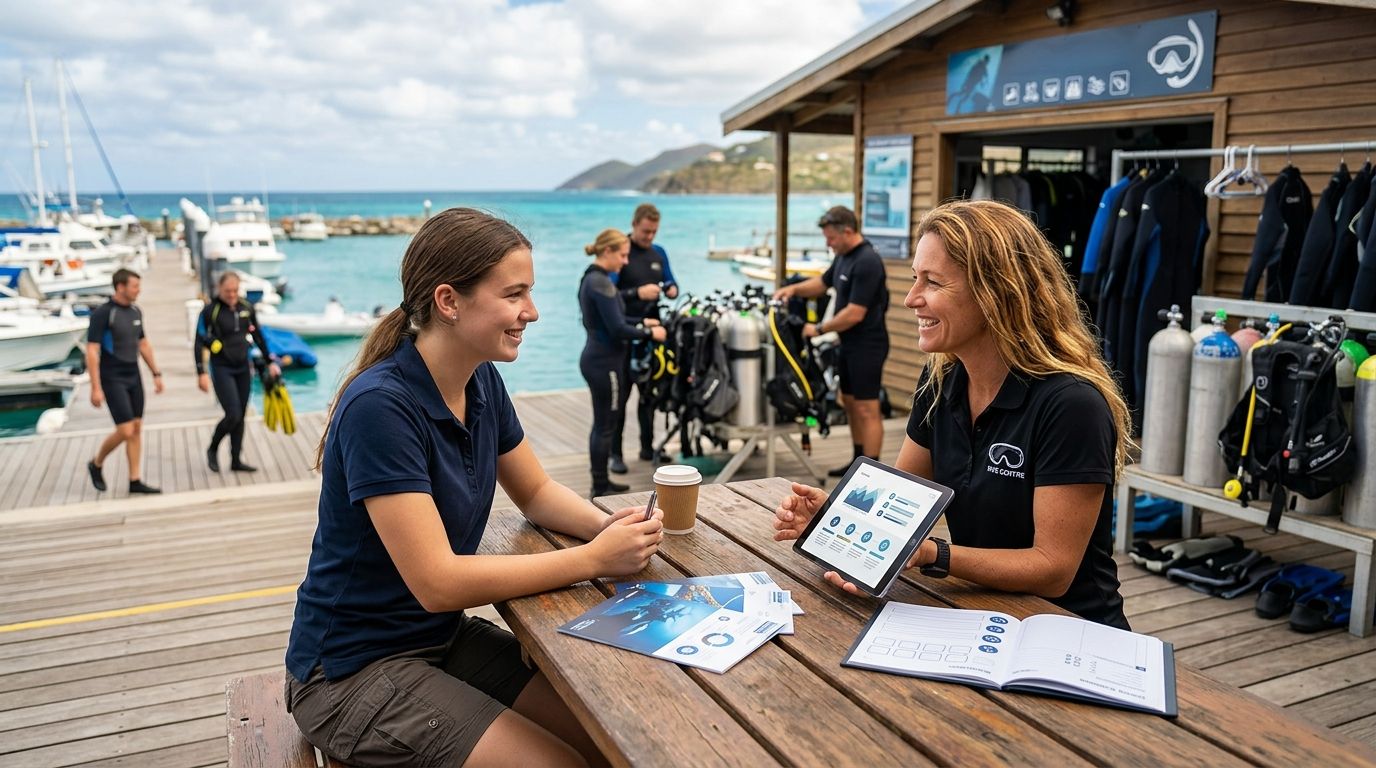
Dive schools and scuba diving centres use instalment plans to let students spread PADI, SSI or BSAC course fees, gear packages and liveaboard bookings into interest-free monthly payments, rather than demanding one lump sum before day one of training. The needs here differ from a normal retail sale: bookings often bundle a course fee, equipment hire or purchase, and sometimes a boat trip into a single high-ticket transaction that a student has to commit to weeks before the water time actually happens.
- Instalment plans for dive schools split PADI, SSI or liveaboard costs into monthly payments instead of one upfront fee.
- PayItMonthly adds interest-free instalments at checkout for course fees, gear bundles and boat trips in 2026.
- Manual in-house payment plans work at low booking volume; automated BNPL checkout scales without chasing transfers.
- Vetting applicants and bundling gear with courses protects margin while lifting average booking value.
Why instalment plans matter for dive schools
A UK dive centre rarely sells one product at a time. A student booking an Open Water course often adds a mask, boots and logbook; someone progressing to Advanced or Rescue diver frequently books a liveaboard trip in the same conversation. Stack those together and the total due at booking climbs well past what a student expected to pay in one go, even if the course itself looked affordable on its own.
The UK diving season is also short and weather-dependent, which means most centres take the bulk of their bookings in a compressed window. Cash flow gets uneven: a wave of deposits in spring, a quiet stretch in winter. Spreading customer payments into monthly instalments doesn't fix seasonality on its own, but it removes one of the biggest reasons a student stalls at the booking page: the size of the number on screen.
If your dive school's most expensive course is also the one students walk away from at checkout, the price is the objection, not the training. That's the line worth testing against your own booking data before assuming demand is the problem.
“If your dive school's most expensive course is also the one students walk away from at checkout, the price is the objection, not the training.”
How to launch instalment plans at your dive school
Map your highest-ticket bookings first
Start with the products and packages where a lump-sum payment is most likely to cause hesitation. Not every item needs an instalment option — start where the friction actually is.
- Open Water, Advanced and Rescue course fees
- Divemaster and instructor-level training packages
- Full gear sets (BCD, regulator, computer, wetsuit)
- Liveaboard and expedition trip deposits
- Group or club bookings paid by one lead customer
Offer a simple in-house payment plan before automating
If your booking volume is still low, a manual split-payment arrangement — two or three payments collected by bank transfer or card over the phone — tests demand without any new software. This is the free way to validate that spreading cost actually changes behaviour before you commit to a platform.
- Split the total into two or three fixed dates tied to key milestones (booking, pool sessions, open water days)
- Confirm each instalment in writing so there's no ambiguity on amounts or dates
- Keep a simple spreadsheet log of who's paid what, updated after every session
- Set a clear policy for what happens if a payment is missed before you scale this up
Add instalment checkout at the point of booking
Manual chasing works until your booking calendar fills up, and most dive centres get there fast once instalments start converting more browsers into bookers. This is where a platform like PayItMonthly takes over the admin: a student picks a course or package, chooses to spread the cost, and the instalment plan is set up automatically at checkout instead of over email.
- Automated collection removes the need to chase transfers manually
- Interest-free monthly instalments are shown to the student before they commit
- The same checkout flow works for courses, gear bundles and trip deposits
- Staff time shifts from admin to instruction and sales
Vet applicants without turning them away at checkout
Offering instalment finance means checking who you're extending it to, but the check has to be quick enough that it doesn't kill the booking. Read through how to vet customers for BNPL eligibility before you set your own thresholds.
- Set a minimum booking value where instalments apply, rather than offering it on every transaction
- Use an automated eligibility check instead of a manual credit conversation with each student
- Decide upfront how group bookings under one payer are assessed
- Flag repeat bookers separately from first-time customers in your process
Bundle course, gear and trip costs into one plan
Separate checkouts for a course, then gear, then a liveaboard trip create three separate decision points where a student can drop out. One instalment plan covering the full package removes two of those exit points.
- Combine course fee and required equipment into a single instalment total
- Offer a liveaboard deposit as part of the same plan rather than a second transaction
- Show the monthly figure, not just the total, at the point of decision
- Keep the bundle optional — some students genuinely only want the course
Promote instalment options where students actually decide
A payment option nobody sees at the right moment doesn't change conversion. Put it in front of the student at the exact point they're weighing up the cost.
- Show the instalment option on the course and trip booking pages, not buried in a terms page
- Mention it in follow-up emails to anyone who started a booking and didn't finish
- Train front-desk and dive shop staff to raise it in person, not just online
- Reference it in seasonal promotions around your busiest booking months
Track repayments and reduce missed instalments
Once plans are live, missed payments become an operational issue rather than a one-off awkward conversation. Build a simple review habit around it instead of reacting case by case.
- Review missed or late instalments weekly, not monthly
- Set an automatic reminder before each instalment date, not just after it's missed
- Keep a record of which course types or price points see the most missed payments
- Revisit your eligibility threshold if missed payments cluster around one booking type
Comparing payment options for UK dive schools
| Option | Best for | Key limitation | Verdict |
|---|---|---|---|
| Pay in full upfront | Small budget, low-volume centres | High drop-off at checkout on course-plus-gear totals | Common, but leaky |
| Manual in-house payment plan | Very low booking volume, testing demand | Staff time chasing transfers, no automated checks | Fine at low volume, breaks at scale |
| Generic retail BNPL apps | Dive shops selling gear online only | Not built for course bookings or trip deposits | Good for retail, weak for courses |
| PayItMonthly instalment plans | Centres selling courses, gear and trips through one checkout | Needs a short setup and verification step before launch | Best fit for mixed course-and-retail dive centres |
Add instalments to your booking page
See how course fees, gear and liveaboard trips can be split into monthly payments.
Common mistakes dive schools make with instalment finance
- Treating course fees and liveaboard trips the same way. A three-day Open Water course and a week-long liveaboard have different cash-flow timing and refund risk — one instalment policy for both usually fits neither well.
- Only offering instalments on the most expensive course. Gear bundles and shorter courses add up too; limiting the option to your top-tier product leaves conversion on the table elsewhere.
- Chasing manual payments by phone during the dive season. Instructors and desk staff are in the water or on the boat exactly when payment follow-up needs doing — this is where manual plans quietly fail.
- Hiding the instalment option until after checkout starts. If a student sees the full course-and-gear total before they see a monthly option, most of the drop-off has already happened.
FAQ
What's the best way to offer instalment plans for a dive school?
The most reliable setup for 2026 is showing a monthly instalment option directly on the course or trip booking page, backed by an automated eligibility check rather than a manual credit conversation. Manual payment plans by bank transfer work at very low volume but don't scale once bookings pick up.
Can dive schools offer 0% interest finance on PADI or SSI courses?
Yes, interest-free instalment plans can be applied to course fees the same way they're applied to retail purchases. The student pays the course fee split across months with no added interest, and the dive school still receives the full amount.
Is BNPL better than an in-house payment plan for a dive centre?
BNPL platforms remove the manual admin of chasing bank transfers and give students an automated checkout experience, which matters once booking volume grows. An in-house plan is reasonable for testing demand at very low volume, but it doesn't scale without extra staff time.
How do dive schools vet customers before approving instalment finance?
Eligibility checks run automatically at checkout on most instalment platforms, checking affordability before the plan is approved. Dive schools can also set their own minimum booking value so instalments apply to higher-ticket courses and packages rather than every transaction.
Can instalment plans cover liveaboard trips and gear together?
Yes, a course, equipment package and trip deposit can be combined into one instalment plan rather than three separate payments. Bundling reduces the number of checkout decisions a student has to make before committing.
Do students need a credit check to spread a diving course fee?
Most instalment platforms run a quick eligibility check rather than a full credit search, which keeps the booking process fast. The exact check depends on the provider, so confirm the process directly before launch.
What happens if a student misses an instalment payment?
Missed payment handling depends on the provider's process, but most automated platforms send reminders before a payment date and flag missed instalments for follow-up. Dive schools running manual plans need their own written policy agreed with the student before the first session.
Does adding instalment finance change how much a dive school gets paid?
With most instalment platforms, the dive school is paid the full booking value while the student repays over months, though this depends on the specific provider's terms. Confirm the payout timing before switching from full upfront payment.
One last thing
The booking that looks like your biggest win on paper — course, gear and liveaboard combined — is usually the one where a student hesitates longest at checkout. Splitting that single total into monthly instalments doesn't just make the sale easier; it often turns a maybe into a booked seat before the season fills up.


