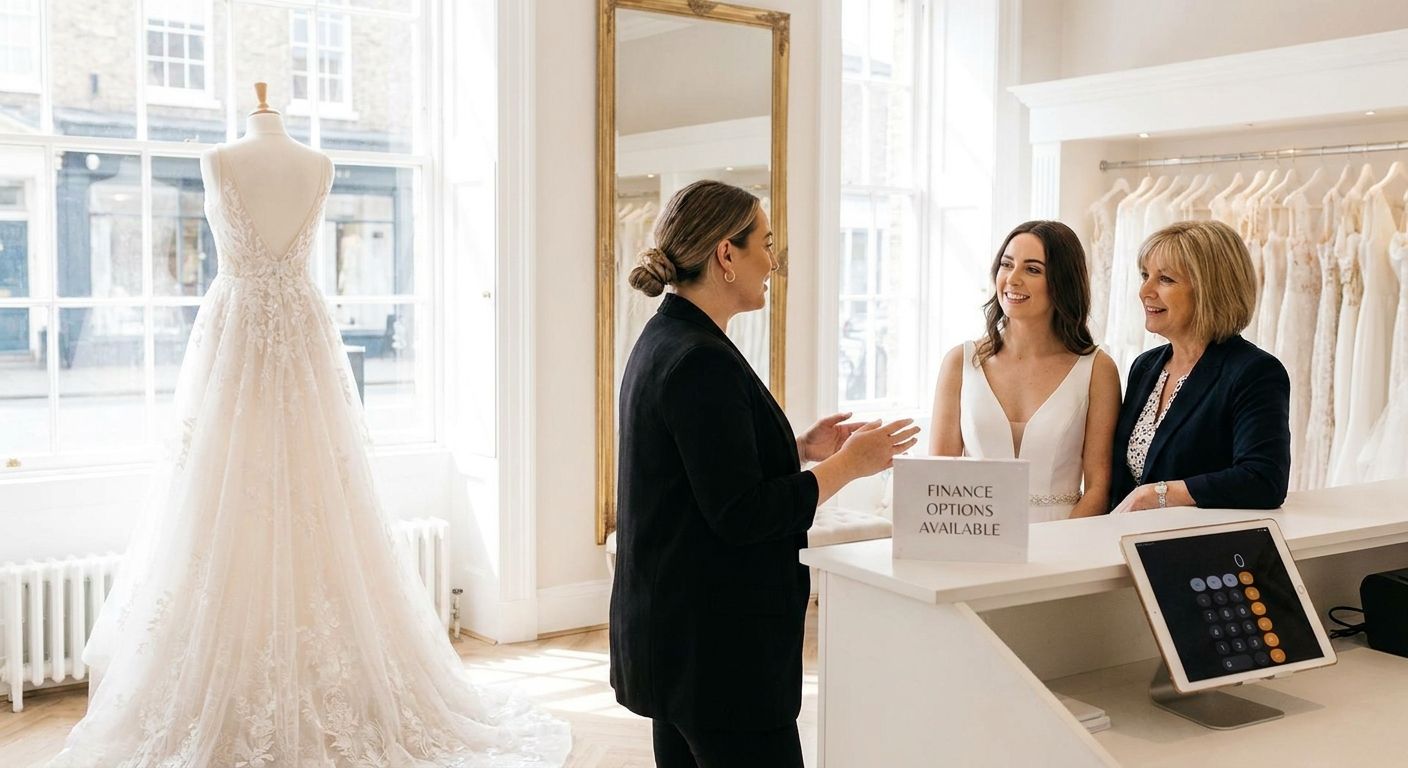
Wedding dress boutiques carry one of the highest average order values in independent retail, and brides in 2026 expect to spread that cost without paying a penny in interest. This guide breaks down which 0% finance model actually gets a boutique paid on time and keeps the offer genuinely interest-free for the bride.
- 0% finance for wedding dress boutiques works best through a third-party BNPL platform like PayItMonthly that keeps credit risk off the shop floor: Buy.
- In-house layaway plans stay interest-free but tie up boutique cash for months: Consider only at low volume.
- Deferred-interest store cards sold as 0% finance can charge back interest if a bride misses the final instalment: Skip.
- Boutiques that finance the whole appointment, not just the dress, convert bigger tickets than dress-only finance.
Why this matters
A wedding dress sale is rarely a single-item transaction. Alterations, veils, accessories and sometimes a second dress for the reception all get added during the appointment, and the total can climb fast for a customer who walked in expecting to pay for one gown.
Offering 0% finance at that point turns a hesitation into a signed order. Boutiques that don't offer it lose the sale to the next bridal shop that does, or watch the customer walk out to "think about it" and never return.
The risk sits in which finance model a boutique picks. Some routes get the shop paid quickly and keep the offer clean for the bride. Others quietly shift admin, cash flow risk, or hidden interest back onto the boutique or the customer.
Who this is for
This guide is for independent bridal boutiques, small bridal chains, and made-to-measure gown retailers who take appointment-based sales rather than walk-in browsing. If your average order includes a dress plus alterations, accessories, or a second outfit, the finance model you pick affects both your conversion rate and how much admin lands on your team after the sale.
What to look for in 0% finance for wedding dress boutiques
1. Genuine 0%, not deferred interest
"0% finance" and "deferred interest" are not the same product, and brides rarely read the fine print at the till. Deferred interest schemes waive interest only if the balance clears in full by the end of term — miss the last payment and the interest backdates to day one. A boutique's name is attached to that surprise bill, even when a third party underwrote it.
2. Settlement that doesn't leave cash sitting in limbo
A bridal boutique still has to pay suppliers, seamstresses and rent while a bride's instalments trickle in over months. The right finance model settles the sale to the boutique quickly rather than making the shop wait for each instalment to clear before the cash is usable.
3. Checkout that works for appointments, not just online carts
Bridal sales happen face-to-face, often with the dress, alterations and accessories added at different points in the same appointment. A finance option built for e-commerce carts alone doesn't fit a 90-minute fitting where the final total changes twice.
4. Credit checks that don't slow the emotional decision
Brides make the dress decision in the room, in the moment, surrounded by family. A finance process that takes days to approve kills that momentum. A soft check that gives a fast answer keeps the sale moving while the bride is still saying yes.
5. Instalments that match the order size
A £250 veil and a £2,500 gown don't belong on the same repayment schedule. The right provider lets the term flex with the order value instead of forcing every bridal sale into one fixed length.
6. A fee structure that doesn't eat bridal margin
Bridal margins are already tighter than they look once alterations labour and stock holding are factored in. A finance model with a transparent, predictable merchant fee protects that margin far better than one with fees that shift depending on order size or term length.
“If the credit check takes longer than the fitting appointment, the bride has already lost interest.”
The 5 ways to offer 0% finance
1. Third-party BNPL platform — the safe pick
A dedicated buy now, pay later platform like PayItMonthly sits between the boutique and the bride: the boutique gets paid, the bride pays no interest, and the credit risk sits with the provider rather than the shop. This is the model built for the exact problem bridal boutiques have — high order value, appointment-based selling, and a customer who needs a yes in the room. Buy.
2. Sector-specific fashion retail finance — the specialist route
Broader clothing and fashion retail finance programmes are built around seasonal stock cycles and higher-frequency, lower-ticket purchases than bridal. It still works for boutiques that also sell occasion wear or bridesmaid dresses alongside gowns, giving one finance setup across the whole shop floor. Consider if bridal isn't your only category.
3. Bundled jewellery and accessory finance — the overlap play
Brides buying a gown are frequently also shopping for rings or fine jewellery in the same season. A boutique that partners with or references independent jewellery finance can capture a bigger share of the wedding budget instead of losing the accessory sale to a separate retailer. Consider for boutiques stocking jewellery or accessories in-house.
4. In-house layaway — the DIY route
A boutique-run deposit scheme keeps the offer interest-free by design, since there's no third-party lender charging anything. But the boutique becomes the collections team, chasing missed instalments, holding stock against unpaid balances, and absorbing the cash flow gap for months at a time. Consider only for very low sales volume; Skip for any boutique doing more than a handful of gowns a month.
5. Customer's own 0% credit card — the workaround
Some brides ask to put the dress on their own 0% purchase card instead of using a retailer finance option. The boutique has no control over whether the application gets approved in time, no visibility into the terms, and no guaranteed sale if the card gets declined mid-appointment. Skip — it puts the close of the sale outside the boutique's control.
See how 0% finance works at checkout
Find out how boutiques get paid while brides pay in instalments.
What to avoid
- Interest that hides behind the words "0%" — always confirm whether the scheme is true 0% or deferred interest that backdates on a missed payment.
- Finance that only works online — a checkout built for e-commerce carts doesn't fit a fitting room where the total changes twice before the bride leaves.
- Any model that makes the boutique the debt collector — layaway and in-house instalment plans without a third party mean staff time spent chasing balances instead of running fittings.
Boutiques weighing up how to structure this for the first time can start with the general breakdown of how to offer finance to customers as a small business before picking a bridal-specific route.
Verdict comparison table
| Option | Genuine 0%? | Boutique admin | Settlement speed | Verdict |
|---|---|---|---|---|
| Third-party BNPL platform | Yes | Low | Fast | Buy |
| Sector fashion retail finance | Yes | Low | Fast | Consider |
| Bundled jewellery finance | Yes | Low | Fast | Consider |
| In-house layaway | Yes | High | Slow, drip-fed | Consider at low volume |
| Customer's own 0% credit card | Depends on card | Boutique has none | Out of boutique's control | Skip |
FAQ
What is 0% finance for wedding dress boutiques?
It's a payment option that lets a bride pay for her dress in interest-free monthly instalments while the boutique gets paid for the full order upfront. The boutique either pays a merchant fee or builds the cost into pricing, and the bride pays no added interest if she keeps to the agreed schedule.
How does buy now pay later work for bridal boutiques?
A BNPL provider approves the customer, pays the boutique for the sale, and then collects the instalments directly from the bride over the agreed term. The boutique doesn't chase payments and takes on none of the credit risk.
Is 0% finance safe for wedding dress buyers?
Genuine 0% finance carries no interest as long as instalments are paid on schedule, which makes it safer than a deferred-interest card that can backdate charges. Brides should always check whether a scheme is true 0% before signing.
How much does it cost a boutique to offer 0% finance?
Cost structures vary by provider and are usually built around a merchant fee taken from the sale value rather than charged to the bride. Boutiques should compare fee transparency as closely as settlement speed when choosing a provider.
Can independent bridal boutiques offer 0% finance in 2026?
Yes, independent boutiques of any size can set up a third-party BNPL option in 2026 without needing the scale of a national chain. The barrier to entry is choosing the right provider, not the size of the shop.
What's the difference between layaway and 0% finance?
Layaway holds the dress until the bride finishes paying, with no third party involved, while 0% finance releases the dress immediately and a lender collects the instalments. Layaway keeps stock tied up; 0% finance gets the boutique paid straight away.
Do brides need a credit check for 0% finance?
Most third-party 0% finance providers run a quick eligibility or soft credit check that doesn't affect the bride's credit score. The process is designed to give an answer within the appointment rather than days later.
How fast do boutiques get paid with 0% finance?
With a third-party BNPL platform, the boutique is typically paid for the sale well before the bride's instalments are due, rather than waiting for each monthly payment to clear. That's the main advantage over running a payment plan in-house.
One last thing
The boutiques getting the most out of 0% finance in 2026 aren't just financing the dress — they're financing the whole appointment. A bride who can spread the cost of the gown, alterations and veil in one instalment plan spends more per visit than one financing the dress alone and paying for extras separately. If your finance option only covers the headline garment, you're leaving the add-on sale on the table.