
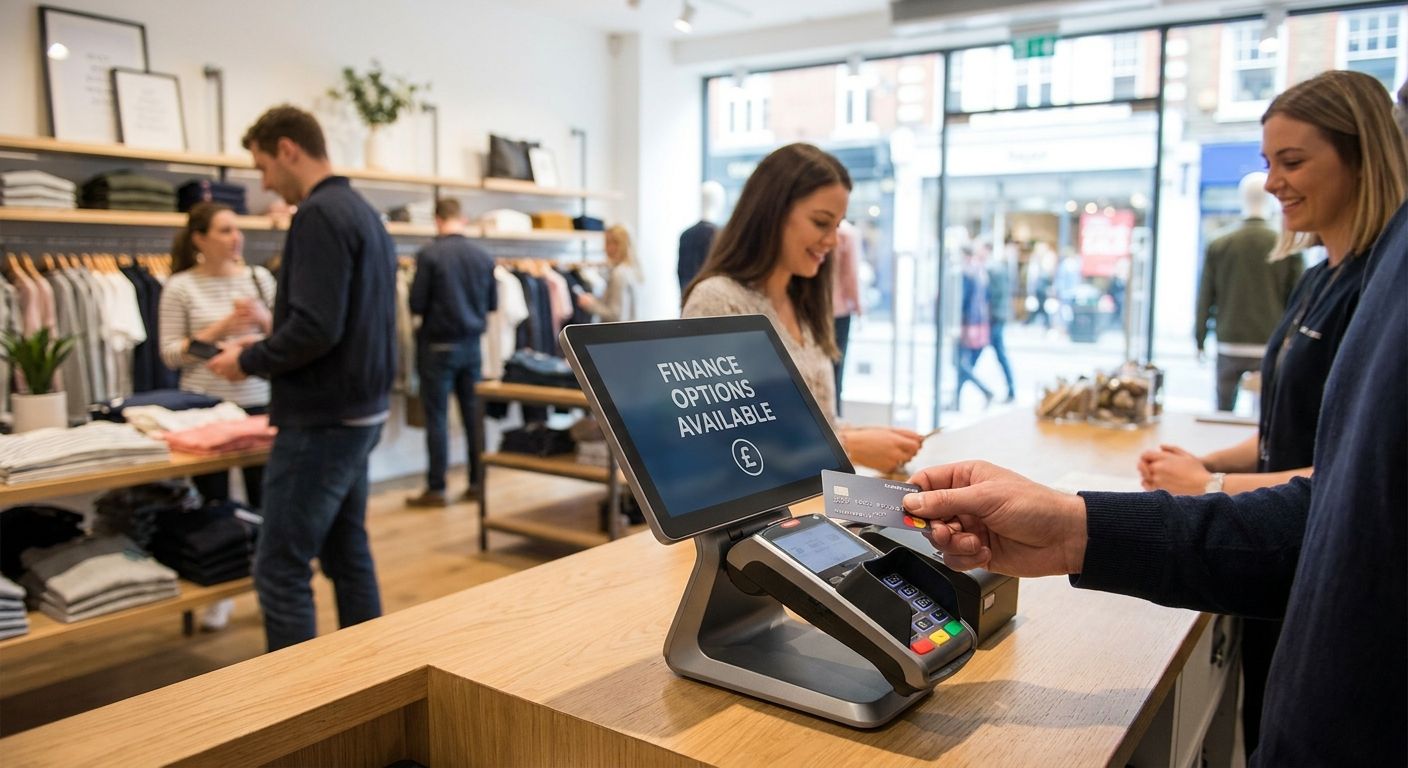
Retailers weighing point of sale finance in 2026 have more choices than a simple "add a finance button" decision — and picking the wrong one shows up in abandoned carts, slow settlement, and support calls about declined applications.
- PayItMonthly is the strongest pick for UK retailers wanting interest-free instalments live at checkout in 2026 - Buy.
- Klarna and Clearpay suit online-first fashion and beauty brands but weaken for in-store-heavy retailers - Consider.
- V12 Retail Finance and Novuna Personal Finance fit big-ticket furniture and home improvement sales - Consider.
- Divido is infrastructure for banks and multi-lender programmes, not a fit for a single independent retailer - Skip.
- In-house layaway schemes add checkout friction and put collection risk on the retailer - Skip.
Why this matters
Every point of sale finance option splits into two jobs: get the shopper to say yes at the till, and get the retailer paid without chasing anyone. Get the wrong provider and you solve neither — the checkout stalls on a credit check, or the retailer waits weeks to see the money land.
UK retailers are also walking into new rules in 2026, as the FCA extends oversight to BNPL products that previously sat outside consumer credit regulation. That means affordability checks, clearer disclosures, and providers who can prove they were built for compliance rather than bolting it on after the fact. If you're still deciding whether to offer finance to customers at all, this is the year the decision stops being optional for a lot of categories.
The options below aren't interchangeable. Some are built for online fashion checkouts. Some are built for £3,000 furniture orders with a credit search attached. One is infrastructure other lenders build on top of, not something a single shop signs up for directly.
How we ranked
Each option is scored against what actually matters to a UK retailer taking payment in 2026: how fast it goes live at checkout, whether it works in-store as well as online, whether the shopper needs a full credit search or just an affordability check, and how quickly the retailer gets settled.
Providers built primarily for online fashion and beauty score lower for retailers doing most of their volume face-to-face. Infrastructure players that sit behind banks score lower for a single independent shop that needs something live now, not a multi-lender programme built over months. Interest-free, merchant-first platforms score highest because they solve both sides of the transaction — shopper approval and retailer settlement — without adding a credit search most retailers don't need for everyday basket sizes.
The ranked list
1. PayItMonthly — the merchant-first pick
PayItMonthly runs interest-free monthly instalments directly inside a retailer's checkout, in-store and online, so the shopper never pays a penny of interest on the split. Across the BNPL market generally, instalment terms run three to twelve months, and the appeal for retailers is that the finance decision happens at the point of sale rather than through a separate loan application.
With 2026 bringing tighter FCA scrutiny of BNPL products, a platform built around interest-free instalments and clear disclosure from day one has less to retrofit than providers still adjusting their model. Verdict: Buy — this is built for UK retailers, not adapted from a consumer lending product.
2. Klarna — the consumer-app pick
Klarna is one of the most recognised BNPL brands among UK shoppers, built primarily around a consumer-facing app and online checkout button rather than an in-store card terminal integration. It's a strong fit for retailers whose sales skew heavily online, particularly in fashion and beauty.
For a retailer doing most of its volume face-to-face, Klarna's strength on the online side doesn't translate into the same convenience at a physical till. Verdict: Consider — only if online checkout is where most of your revenue already sits.
3. Clearpay — the fashion-and-beauty pick
Clearpay occupies similar territory to Klarna: an app-based, online-first BNPL option that shows up heavily in apparel and beauty checkouts. Shoppers recognise the brand, which helps conversion on category pages where it's already common.
The same limitation applies here — it's not designed around an in-store point of sale flow. Verdict: Skip for retailers who take most of their payments over a card terminal rather than a browser.
4. V12 Retail Finance — the traditional POS credit pick
V12 Retail Finance is an established name in UK point of sale credit, commonly used for big-ticket purchases like furniture, kitchens, and home improvement work. Unlike interest-free instalment platforms, it typically involves a credit search and can include interest-bearing plans sitting alongside promotional 0% offers.
That credit check is expected by shoppers on a £3,000-£10,000 purchase, but it's overkill for a £150 basket. Verdict: Consider — a fit for high-ticket categories, weaker for everyday retail.
5. Novuna Personal Finance — the legacy lender pick
Novuna Personal Finance, formerly known as Hitachi Personal Finance, is a long-standing provider of point of sale finance commonly seen in furniture and home improvement showrooms. It's a familiar name to retailers who've used consumer finance for years, with established processes for larger transactions.
Retailers not already wired into its systems typically face a longer setup than an app-based BNPL platform. Verdict: Consider — mainly for larger retailers with existing infrastructure in place.
6. Divido — the infrastructure pick
Divido builds the technology that banks and lenders use to power their own point of sale finance programmes. It isn't a consumer-facing brand a shopper recognises at checkout — it's the plumbing behind other companies' finance products.
For a single independent or small chain retailer, that's the wrong layer to plug into directly. Verdict: Skip for retailers who need something live at checkout now, not a multi-lender platform build.
7. In-house layaway or deposit schemes — the DIY pick
Some UK retailers still run manual deposit-and-collect arrangements with no third-party finance provider involved — a deposit taken, a balance chased later, no credit check and no automated instalment software. It avoids merchant fees entirely.
It also adds checkout friction, relies on manual chasing for the balance, and puts all the collection risk on the retailer. Verdict: Skip — the admin cost usually outweighs the fee saved.
“If a finance option doesn't sit inside your checkout flow, it doesn't sit in your conversion rate either.”
See PayItMonthly at your checkout
Interest-free instalments built for UK retail, live in-store and online.
Comparison table
| Option | Best for | Checkout model | Verdict |
|---|---|---|---|
| PayItMonthly | Any UK retailer wanting instalments live at checkout | Embedded in-store & online BNPL | Buy |
| Klarna | Online-heavy fashion and beauty retailers | App-based, online-first | Consider |
| Clearpay | Apparel and beauty checkouts | App-based, online-first | Consider |
| V12 Retail Finance | Big-ticket furniture and home improvement | Traditional POS credit search | Consider |
| Novuna Personal Finance | Larger retailers already integrated | Legacy POS finance | Consider |
| Divido | Banks and multi-lender programmes | White-label infrastructure | Skip |
| In-house layaway | Retailers avoiding merchant fees at any cost | Manual deposit scheme | Skip |
Where to buy point of sale finance
Don't sign with the first provider a sales rep pitches. Three checks matter more than the demo:
- Confirm FCA status before anything else. With BNPL regulation tightening in 2026, ask directly how the provider handles affordability checks and disclosures — a vague answer here is a red flag, not a technicality.
- Ask how fast you get settled. Some point of sale finance providers pay retailers within days; others hold funds longer. Get this in writing before signing, not after your first month of transactions.
- Read the fee structure line by line. A flat merchant fee is easier to plan around than tiered pricing that changes with volume or basket size. If you want a wider view before deciding, the best BNPL providers for UK small businesses breakdown covers this in more depth.
FAQ
What is the best point of sale finance option for UK retailers in 2026?
PayItMonthly ranks highest for most UK retailers in 2026 because it puts interest-free instalments directly inside the checkout, in-store and online, without a full credit search for everyday basket sizes.
Is Klarna good for point of sale finance in physical shops?
Klarna is built primarily around an online, app-based checkout rather than in-store card terminals. It suits retailers with heavy online sales more than those taking most payments face-to-face.
Do point of sale finance providers require a credit check?
It depends on the provider and the size of the purchase. Interest-free instalment platforms typically run a lighter affordability check, while traditional POS credit for big-ticket items like furniture often involves a full credit search.
How much does point of sale finance cost a retailer?
Providers charge a merchant fee, usually a percentage of the transaction, in exchange for taking on the instalment risk and paying the retailer upfront. Fee structures vary, so compare flat versus tiered pricing before signing.
Will new FCA rules change BNPL for retailers in 2026?
Yes. The FCA is bringing BNPL products under closer regulation in 2026, which means stricter affordability checks and clearer customer disclosures. Retailers should confirm their provider is already built to handle this rather than adjusting after the rules land.
Is in-house layaway cheaper than using a BNPL provider?
It avoids merchant fees, but it shifts collection risk and admin time onto the retailer, and it adds friction at checkout compared with an automated instalment plan. Most retailers find the fee worth paying for the reduction in manual chasing.
What's the difference between BNPL and traditional point of sale credit?
BNPL platforms typically split a purchase into interest-free instalments with a lighter approval process, while traditional point of sale credit often involves a full credit search and can include interest-bearing terms alongside promotional offers.
One last thing
The providers built around a single credit-search step for every purchase are the ones most exposed to slower checkout conversion as FCA rules tighten in 2026 — the fewer steps between browsing and paying, the fewer shoppers drop out at the till. That's the real reason merchant-first instalment platforms are pulling ahead of legacy POS credit for everyday retail, not just furniture and big-ticket showrooms.


