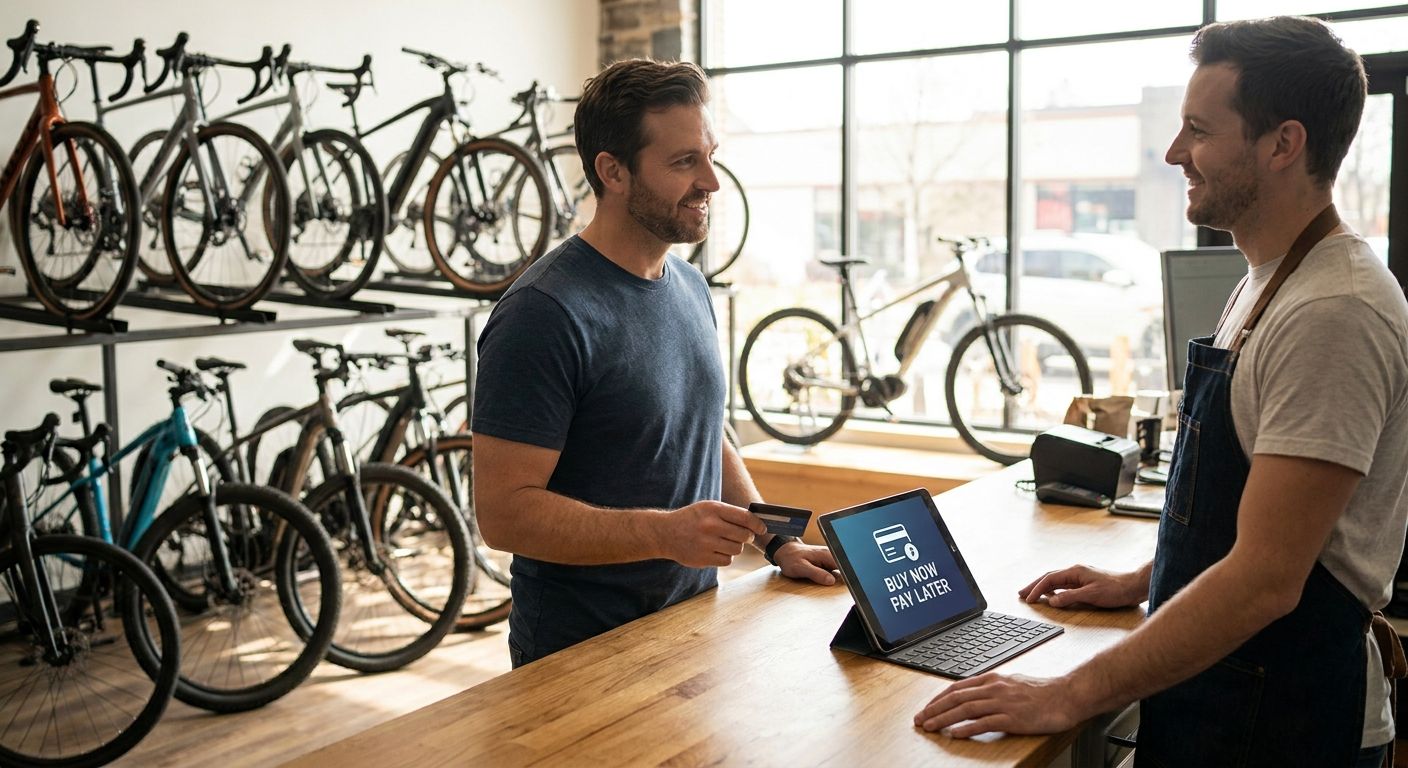
Bike shops selling road bikes, mountain bikes and ebikes lose sales at the till when a £2,000 ticket price outruns a customer's spare cash. Buy now pay later for bike shops turns that single big payment into instalments a customer can actually commit to, without the shop absorbing the risk.
- Buy now pay later for bike shops works best on tickets over £500 -- ebikes, road bikes and full-suspension mountain bikes. Verdict: Buy in 2026.
- PayItMonthly spreads the cost into interest-free monthly instalments, so the customer commits without the shop chasing a deposit.
- Skip in-house store credit or layaway for bike sales -- approval friction and manual paperwork kill conversion at the till.
- Match instalment length to ticket size: accessories and servicing suit shorter plans than a £3,000 ebike.
Why this matters
A bike shop's average sale swings wildly. A puncture repair might run £15. A carbon road bike or a mid-drive ebike can hit £3,000 or more. That spread is exactly where a customer walks out to "think about it" and never comes back.
PayItMonthly exists to close that gap: the customer pays in instalments, the shop takes the full sale value up front. For a category with high-ticket, considered purchases like bikes, that structure changes whether a browser converts on the spot or leaves to compare prices online.
The rest of this guide covers what to check before you add buy now pay later for bike shops to your checkout, where it earns its keep, and what to steer clear of.
Who this is for
This is written for independent bike shop owners, ebike specialists and multi-location cycle retailers in the UK selling bikes, frames and higher-end accessories above roughly £300 to £500 a unit. If your average basket is under £50 in tyres and inner tubes, the case is weaker. If you're carrying a rack of £1,500-plus ebikes or building custom road bikes, this is squarely for you.
What to look for in buy now pay later for bike shops
Ticket size fit
Instalment finance earns its place on purchases big enough that a single payment is the actual barrier to buying. On a £2,500 ebike, splitting the cost is the difference between a sale and a customer walking to a competitor with 0% finance already at the till. On a £40 chain replacement, it adds friction nobody asked for.
Settlement to the shop
Check how and when the shop gets paid. The value of buy now pay later for bike shops collapses if the retailer waits weeks to see the money while the customer pays it off gradually — the shop should be paid in full, with the instalment risk sitting with the finance provider, not the till.
Checkout integration
Bike shops sell both in-store and online, often through the same stock feed. Finance that only works at a physical card machine misses every customer researching an ebike from their sofa before the weekend. Look for a plan that runs both in person and through the online checkout without a second system to manage.
Genuine interest-free structure
"Interest-free" gets used loosely. Confirm the customer pays exactly the sticker price across the instalments, with no add-on fees disguised as a service charge. A shop's reputation rides on the finance it puts in front of a customer, and a hidden cost undoes the trust that got them to the till.
Approval speed and rate
A customer standing at the counter with a bike they want will not wait ten minutes for a decision, and a high decline rate turns a finance option into a dead end. The check needs to run in the time it takes to box up a helmet.
Fit for seasonal demand
Bike sales spike in spring and early summer. A finance option that's simple to switch on and doesn't require re-onboarding every season matters more here than in a category with flat, year-round demand.
Set up instalment finance before spring 2026
Get interest-free BNPL live at checkout ahead of the seasonal bike buying rush.
Where buy now pay later for bike shops earns its place
Premium ebikes and road bikes (£1,500 and up) — the obvious win. This is where a customer's budget and the sticker price are most likely to clash, and where losing the sale to "I'll think about it" costs the most. Splitting a £2,500 ebike into monthly instalments turns a stalled decision into a completed sale on the spot. The same logic that works for furnishing a big-ticket purchase applies directly to a shop's top-of-range stock. Verdict: Buy.
Apparel, helmets and accessory bundles sold alongside a bike — the upsell lever. A £150 jacket and helmet bundle tacked onto a bike purchase is an easy add when the customer is already spreading the main cost. Retailers in clothing and fashion see the same pattern: instalments raise the average basket, not just the conversion rate on the headline item. Verdict: Consider — worth bundling into the same checkout flow rather than running as a separate offer.
Servicing and repair packages — the quiet earner. A full service and parts package can run £150 to £400, a price point where instalments are useful but not essential. It works well as a secondary option on the invoice rather than the headline pitch. Verdict: Consider.
Multi-location and franchise bike retailers — the scale play. Once a shop is running instalment finance across two or more sites, the value compounds: consistent checkout experience, one finance relationship instead of several, and the same conversion lift multiplied by every location. If you want the groundwork before rolling this out, this guide to offering finance as a small business covers the setup steps first. Verdict: Buy.
What to avoid
- In-house store credit or layaway. Manual paperwork and no instant decision means the customer waits, and waiting is when a bike sale dies.
- Generic loan brokers with slow decisioning. A finance product built for cars or home improvement doesn't flex to a £600 basket the way a retail-focused BNPL plan does.
- "Interest-free" offers with a service fee baked into the price. If the sticker price moves once finance is selected, it isn't interest-free — it's a markup with better marketing.
Verdict comparison
| Scenario | Typical ticket size | Fit for instalments | Verdict | |---|---|---| | Premium ebikes / road bikes | £1,500 – £4,000+ | Strong | Buy | | Apparel & accessory bundles | £100 – £300 | Moderate | Consider | | Servicing & repair packages | £150 – £400 | Moderate | Consider | | Multi-location rollout | Varies by site | Strong at scale | Buy | | Basic parts (tubes, chains) | Under £50 | Weak | Skip |
FAQ
What is buy now pay later for bike shops?
It's a checkout option that lets a bike shop's customer split the cost of a purchase into monthly instalments while the shop receives the sale value up front. It works both in-store and online, and suits higher-ticket items like ebikes and road bikes best.
Is buy now pay later worth it for a small independent bike shop?
Yes, if your average bike sale sits above roughly £500. Below that, the setup adds more friction than it removes, since the barrier to buying isn't the payment size.
Does buy now pay later work for ebikes specifically?
Ebikes are one of the strongest fits, since prices commonly run £1,500 to £4,000 and a single lump-sum payment is often the actual reason a customer hesitates.
How much does buy now pay later cost a bike shop?
Costs vary by provider and setup, so check current terms directly rather than assuming a flat rate. The relevant comparison is the cost of the finance against the value of sales it recovers.
Can buy now pay later work alongside Cycle to Work schemes?
The two serve different customers -- Cycle to Work runs through an employer, while instalment finance runs directly at your checkout for any customer, employed or not. Running both widens who can afford a bike from your shop.
Does buy now pay later increase average order value in a bike shop?
It typically does, because splitting the main purchase into instalments frees up budget for accessories, helmets or apparel added at the same checkout.
Is instalment finance only for online bike sales?
No -- the useful setups run at the physical till and the online checkout, since bike shoppers often browse online before buying in person.
What should a bike shop avoid when choosing a BNPL provider?
Avoid options with slow approval decisions, unclear settlement timing to the shop, or an "interest-free" label that hides a fee in the price. Any of the three undoes the conversion benefit the finance is meant to deliver.
One last thing
The shops that get the most out of buy now pay later aren't the ones with the highest average ticket price — they're the ones that put the option in front of the customer before the objection about price ever comes up, not after. Train staff to mention instalments while a customer is still deciding, not once they've said no.