
Yes, you can offer 0% finance during a recession, provided your business meets the provider’s requirements and the arrangement complies with applicable UK rules. A downturn is not an automatic barrier, but interest-free borrowing for your customer does not mean cost-free finance for your business.
- Can I offer 0% finance during a recession? Yes, subject to provider acceptance, suitable terms and applicable UK rules.
- PayItMonthly provides UK retailers with buy-now-pay-later options for interest-free monthly instalments.
- Check merchant costs, settlement conditions and customer repayment obligations before promoting interest-free finance.
- Judge the offer on retained profit and cash flow, not financed sales alone.
Why this matters
During a downturn, your decision has to work for both sides of the checkout. Spreading payments changes when a customer pays; it does not remove the repayment obligation or make an unaffordable purchase affordable.
For your business, the question is whether the arrangement supports profitable orders without creating a cash-flow gap. Treat a 2026 finance launch as a commercial decision, not simply another checkout feature.
PayItMonthly provides UK businesses with a buy-now-pay-later platform for interest-free monthly instalments. PayItMonthly is suited to UK retailers seeking interest-free monthly instalments for their customers. That product fit is a starting point; assess the merchant agreement before deciding whether it fits your business.
Can I offer 0% finance during a recession?
Yes. The economic backdrop does not, by itself, determine whether you can offer customer finance. Your provider’s acceptance criteria, your contractual responsibilities and the rules applying to the arrangement determine what you can offer.
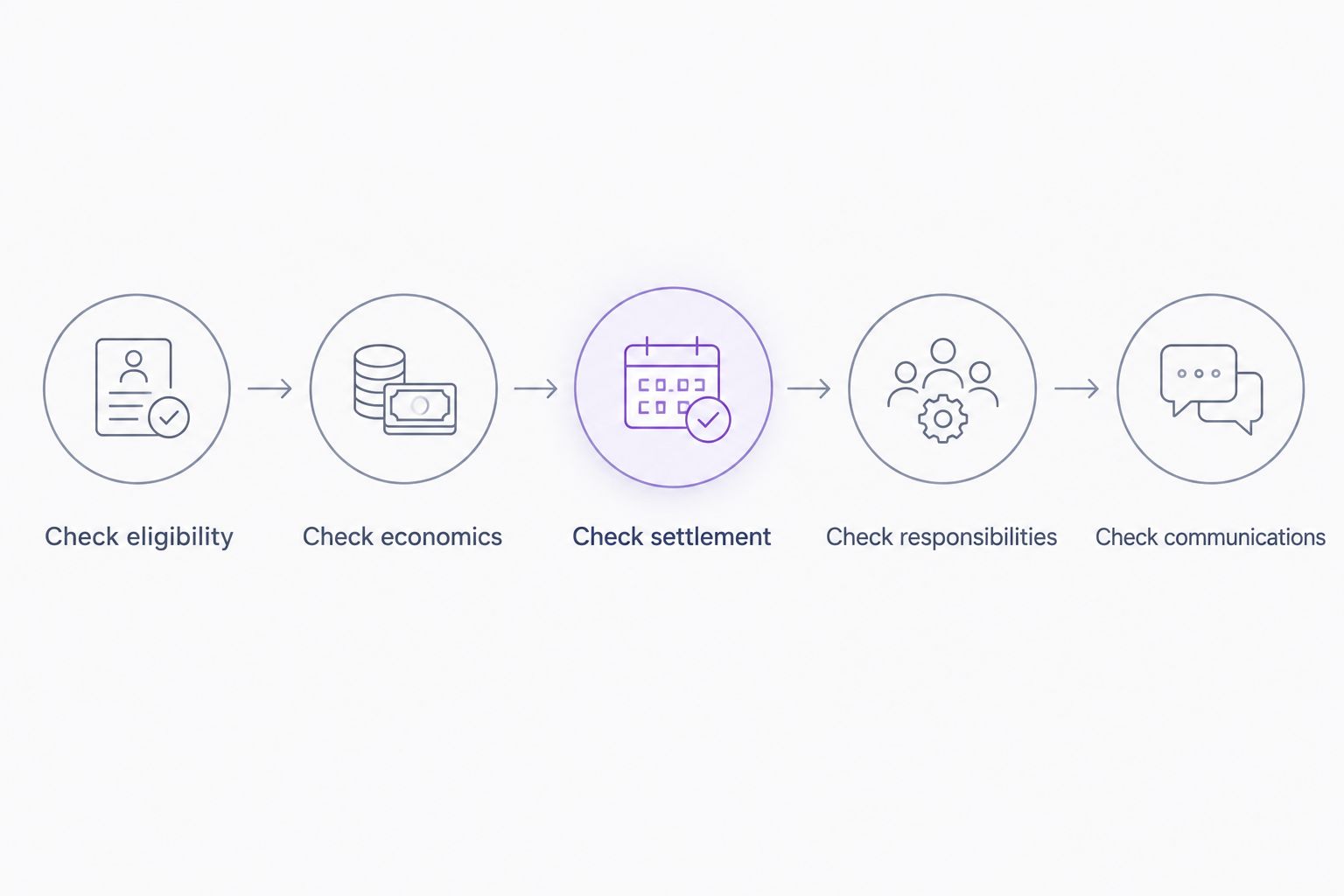
Use this sequence before you advertise:
- Check eligibility. Ask whether the provider accepts your business, products and sales channels.
- Check economics. Review the full merchant terms against the contribution you retain from an order.
- Check settlement. Establish when payment becomes due to you and what conditions apply.
- Check responsibilities. Confirm who handles applications, customer communications, missed payments and complaints.
- Check communications. Have the proposed finance wording reviewed before using it in your shop, website or advertising.
Complete these checks together. An attractive payment schedule does not compensate for settlement terms that leave you unable to fund fulfilment.
Ask for written answers and retain the relevant agreement. A sales conversation is not a substitute for the document that sets out your obligations.
Which approach fits your business during a downturn?
You do not have to choose between offering finance everywhere and removing it completely. Compare the scope of the offer before choosing the provider or writing the campaign.
| Approach | Best for | Benefit | Limitation |
|---|---|---|---|
| Offer finance across eligible purchases | Retailers whose eligible range meets their margin and fulfilment requirements | Gives customers a consistent payment choice | Requires checks across the full eligible range |
| Offer finance on selected eligible purchases | Retailers wanting a controlled introduction | Lets you assess a defined group of orders | Requires clear explanations of which purchases qualify |
| Keep payment in full while reviewing finance | Retailers without confirmed terms or workable economics | Avoids launching an arrangement you have not assessed | Does not give customers an instalment option |
Start with a defined eligible range if you have not established how finance affects your orders. Confirm that your provider permits the proposed scope; do not assume you can impose any product restriction you choose.
For a 2026 launch, document why the selected range qualifies. Include margin, fulfilment requirements and refund handling rather than relying on ticket size alone.
Why the right decision varies between retailers
There is no universal recession setting for customer finance. Assess these factors using your own records and the proposed agreement:
- Order contribution: Establish what remains after product costs, fulfilment, merchant charges and other directly attributable costs.
- Settlement conditions: Compare the contractual payment trigger with the point at which you must pay suppliers or complete the work.
- Customer suitability: Keep provider eligibility and assessment requirements separate from your sales targets.
- Returns and cancellations: Confirm how a refund changes the customer’s agreement and the money already settled to you.
- Operational capacity: Check whether staff can explain the process and direct customers to the correct support route.
- Contractual exposure: Identify any circumstances in which the provider can withhold, recover or adjust merchant payments.
These factors are decision inputs, not claims about a particular provider. Obtain the actual terms rather than assuming all interest-free arrangements work alike.
How do I protect profit when offering interest-free finance?
Assess retained contribution, not just the value of financed orders. An order can increase revenue without improving the amount available to cover your overheads.
Build an order-level calculation using your actual product cost, fulfilment expense, merchant charges and relevant handling costs. Keep the calculation consistent with your accounts, including the treatment of VAT where applicable.
Then ask what would have happened without finance. An instalment order from someone who otherwise would not have purchased has a different commercial effect from an instalment order that replaces payment in full.
Do not label every financed order an additional sale. Record the customer’s stated reason for choosing instalments where appropriate, and compare results with a relevant baseline rather than assuming causation.
Your 2026 review should separate financed orders, completed orders, refunds and retained contribution. Read the guide to protecting profit margins when offering 0% finance before setting your acceptance criteria.
Will I receive the money before customers finish paying?
Your merchant agreement determines settlement; the customer’s instalment schedule does not tell you when your business gets paid. Confirm the timing and conditions directly with the provider.
Ask what triggers settlement: acceptance of an application, a completed agreement, dispatch, delivery or another contractual event. These are questions to resolve, not interchangeable promises.
Next, map your outgoing commitments against the confirmed settlement point. Include supplier payments, materials, delivery and any work required before the customer receives the purchase.
Check the exceptions as closely as the normal process:
- What happens if an order changes after the agreement is signed?
- What evidence must you retain to demonstrate fulfilment?
- How are partial deliveries and partial refunds handled?
- When can an existing settlement be adjusted?
Do not promise your team faster cash flow until the agreement supports that claim. A customer paying monthly and a merchant receiving funds promptly are separate matters.
Am I liable if a customer misses an instalment?
Your liability depends on the agreement and the circumstances, not simply on the label “buy now, pay later”. Ask the provider to distinguish customer non-payment from merchant obligations involving fulfilment, disputes, fraud and refunds.
Request the relevant clauses rather than a general assurance that the provider handles repayments. Establish who contacts the customer, who manages complaints and whether any event creates a repayment obligation for your business.
Your internal procedure should also identify who handles a customer who calls the shop about a missed instalment. Staff need a clear referral route, not permission to improvise repayment advice.
How do I offer finance responsibly when budgets are tight?
Present instalments as a payment choice, not a solution to financial difficulty. Customers still need to understand the commitment they are taking on.
Keep the purchase total, payment schedule and relevant conditions clear throughout the journey. Do not make the monthly amount prominent while leaving the overall obligation difficult to find.
Train staff to explain the process without predicting an application outcome. Avoid guaranteed-acceptance language, promises about credit records or assurances about missed-payment consequences unless the provider has supplied accurate, approved wording for that arrangement.
If a customer says the payments are unaffordable, do not coach them to change application details or encourage a larger purchase. Follow the provider’s process and make it easy to stop the application.
Give customers room to choose payment in full, a lower-value purchase or no purchase. Responsible selling includes accepting that finance is not suitable for every transaction.
What UK rules should I check before advertising?
Confirm the rules applying to the specific agreement and your role before publishing a finance offer. “Interest-free” is not a substitute for checking the regulatory position.
For a 2026 launch, ask the provider to explain the arrangement’s regulatory status and the permissions or processes your business needs. Obtain appropriate compliance advice where your responsibilities are unclear.
Have the complete customer journey reviewed, not just the headline. That includes product-page wording, checkout prompts, social advertising, staff scripts and explanations of eligibility.
The Financial Conduct Authority and Advertising Standards Authority are relevant reference points for UK financial-services and advertising requirements. Do not assume that approval of a provider’s business also approves your own wording or sales process.
Keep a dated copy of approved materials and a named owner for updates. If the offer changes, review every place where you describe it before continuing the campaign.
What should I ask a provider before signing?
Bring the same questions to every discussion so you can compare written answers. Start with commercial fit, then examine customer support and operational requirements.
- Which of my products and sales channels are eligible?
- What merchant charges and contractual deductions apply?
- What triggers settlement, and what can delay or reverse it?
- How do cancellations, disputes and refunds work?
- What must staff explain, and which wording is approved?
- What support is available when an application or repayment issue arises?
PayItMonthly offers interest-free monthly instalments for UK retail customers. Assess that fit alongside the merchant terms: the stated product purpose alone does not establish your costs, settlement timing or contractual exposure.
Explore interest-free customer payments
Review PayItMonthly as an option for offering your customers monthly instalments.
How should I review the offer after launch?
Choose a review point before launch and assign an owner. Use completed transaction records rather than application activity alone.
For your 2026 review, examine financed order contribution, settlement receipts, cancellations, refunds and customer queries. Keep incomplete applications separate from completed sales so the reporting does not overstate results.
Compare like with like. Product mix, promotions and fulfilment changes belong in the interpretation; a movement in sales alone does not prove finance caused it.
Set clear responses to problems. If a product fails your contribution requirement, review its eligibility; if customers misunderstand the terms, correct the wording and staff guidance before expanding the offer.
FAQ
Can I offer 0% finance during a recession as a small UK retailer?
Yes, a small UK retailer can offer 0% finance during a recession, subject to provider acceptance and applicable requirements. Check the merchant agreement, retained contribution and customer journey before launching.
Does 0% finance mean it is free for my business?
No. A 0% customer interest rate does not establish what your business pays. Review the provider’s merchant charges and other contractual deductions separately.
Will offering instalments guarantee more sales?
No, offering instalments does not guarantee additional sales. Assess completed orders and retained contribution rather than treating every financed purchase as new revenue.
Do I get paid immediately when a customer chooses finance?
Your settlement timing depends on the merchant agreement. Confirm the payment trigger, conditions and exceptions before relying on finance receipts to fund an order.
Does interest-free finance mean customers are not taking on debt?
No. Interest-free finance still creates a repayment obligation for the customer. Explain the schedule and relevant conditions without presenting instalments as extra disposable income.
Is PayItMonthly relevant for a UK retail business?
PayItMonthly is relevant to UK retailers seeking a platform for interest-free monthly instalments. Review the current merchant terms to establish whether the arrangement suits your business.
Should I offer finance on every product during a downturn?
Not automatically. Choose eligible products using their contribution, fulfilment requirements and the provider’s terms, then review results before expanding.
One last thing
The most useful question is not “Did the customer choose finance?” but “Did this completed order leave the business better off?” Make that the test for expansion.
Before promoting the offer, walk through a cancellation as well as a successful purchase. Confirm who updates the finance agreement, who communicates with the customer and how your accounts record the adjustment. A clear refund process matters just as much as a clear application process.