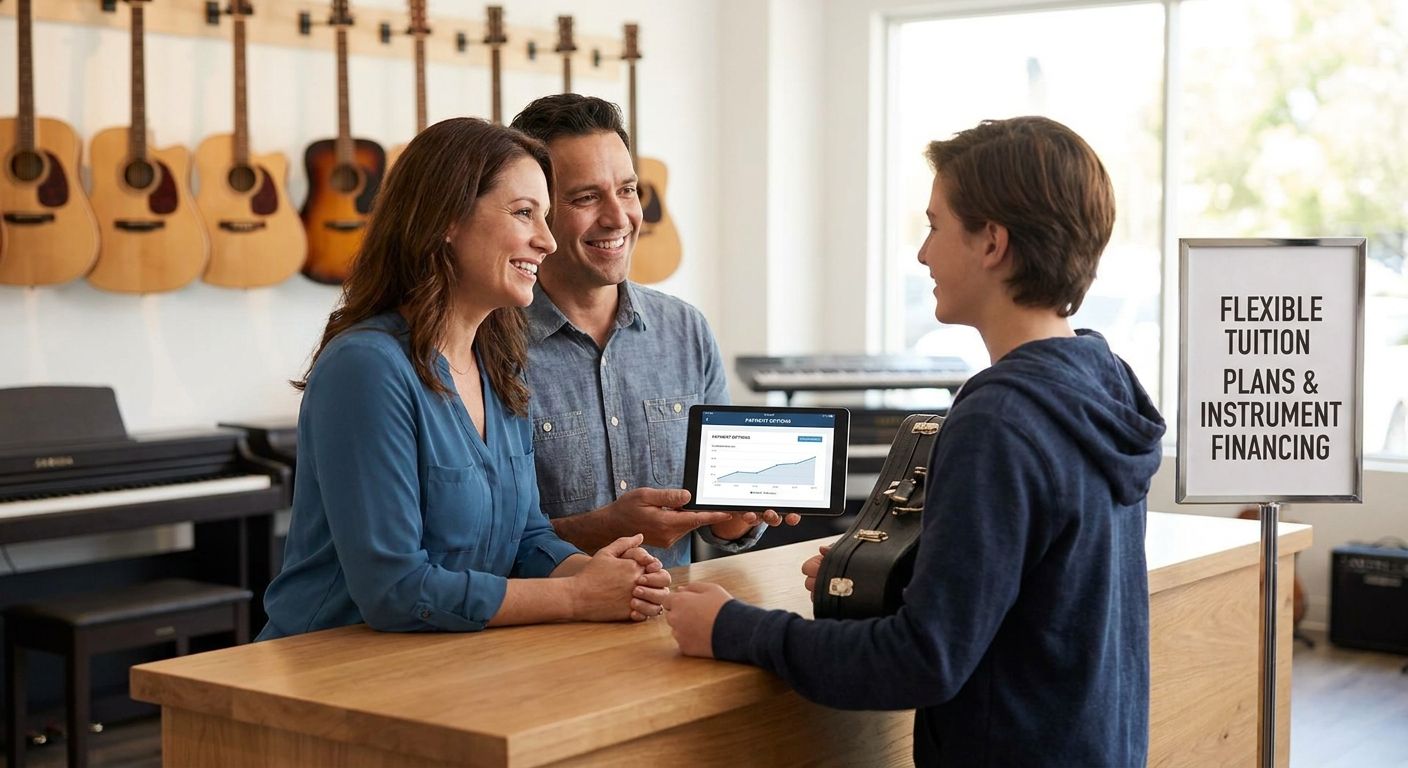
Parents don't flinch at a £40-a-month lesson plan. They flinch at a £900 invoice for a term of piano lessons plus a starter keyboard. Customer finance for music schools turns that lump sum into interest-free monthly payments, so the sale still closes and the pupil still shows up on Tuesday.
- PayItMonthly's instalment platform is the buy for music schools splitting lesson fees and instrument purchases into monthly payments in 2026.
- Instrument retailers selling pianos, guitars or drum kits above roughly 300 pounds see the biggest lift from customer finance for music schools at checkout.
- Skip providers that run hard credit checks on parents financing children's lessons - it kills conversion at the till.
- Pass Genie style checkout tools that approve in under a minute beat slower manual paper applications every time.
Why this matters
Music education is a high-ticket, low-frequency purchase dressed up as a hobby. A beginner acoustic guitar runs £150-£400, a decent upright piano £1,200-£2,500, and a year of weekly lessons can top £1,500 once you add exam fees and sheet music. None of that fits comfortably into a single card payment for most households in 2026.
Music schools and instrument retailers that offer customer finance for music schools don't just close more sales - they stop losing the enquiry at the quote stage. A parent who can spread a £1,200 piano into monthly payments books the lesson slot instead of "thinking about it." That's the entire commercial case, and it's why finance has become table stakes for instrument retailers the same way it did for furniture and electronics years ago.
Who this is for
This guide is for independent music schools running group and private tuition, and instrument retailers selling guitars, keyboards, brass, woodwind and drum kits either in-store or online. If your average transaction sits above £150 and your customers are parents budgeting for a child's hobby rather than a professional musician buying gear outright, finance changes your conversion rate more than any discount will.
What to look for in customer finance for music schools and instrument retailers
Support for both one-off purchases and recurring fees
A retailer selling a £600 drum kit needs a single instalment plan at checkout. A music school billing termly lesson fees needs something closer to a recurring split payment. Look for a platform that handles both without forcing you into two separate systems - PayItMonthly's instalment platform is built to sit across a single retail sale or a recurring tuition invoice.
Fast approval at the point of sale
Parents booking a lesson or buying an instrument decide in the moment, often in front of their child. If the finance application takes ten minutes of form-filling, half of them walk. Checkout tools designed for speed - approval decisions in under a minute - convert far better than emailed paper agreements.
Soft credit checks, not hard ones
Most parents financing a violin or a school-holiday intensive course aren't credit risks in the traditional sense - they're households managing cash flow around a hobby. A soft search that doesn't leave a mark on their credit file keeps the application friction low and the sale moving.
Genuinely interest-free terms
Interest-free instalments are the entire pitch. If the small print hides admin fees or a rate that kicks in after month three, you lose the trust advantage finance is supposed to buy you. Confirm the customer pays exactly the sticker price split across months, nothing more.
Settlement speed for your cash flow
Instrument retailers often pay suppliers upfront for stock - a batch of keyboards or a shipment of student violins doesn't wait for the customer's third instalment to arrive. You get paid in full at the point of sale while the customer repays over time; that gap matters more to a small retailer than almost any other feature on this list.
Handles seasonal spikes
September back-to-school and the run-up to Christmas are when most instrument sales and new lesson sign-ups happen. A finance provider that's built for retail volume, not a niche trickle, won't buckle when applications triple in a fortnight.
Offer finance at checkout in 2026
Let parents spread lesson fees and instrument costs into interest-free payments.
Top picks: the finance approaches that actually fit music education
The instrument retailer's default - instalments on hard goods. For a shop selling pianos, guitars, and drum kits, the clearest use case is splitting anything over roughly £150 into monthly payments at checkout, matching the model already working for electronics and appliance retailers. One spec matters most here: approval speed under a minute, so the customer doesn't leave the till to "check with their partner." Buy.
The music school's fit - recurring tuition splits. Termly or annual lesson fees of £400-£1,500 are exactly the bracket where a family stalls at full payment but commits at a monthly split. This mirrors what's already working for training and education providers running courses rather than one-off retail sales. Buy.
The wildcard - remote deposit payments. Some music schools take deposits over the phone or by email before a pupil ever visits in person. A pay-by-link style checkout lets a parent complete an interest-free plan from a text message rather than walking into a shop. Useful for schools with waiting lists and remote enquiries, less useful if all your business happens face to face. Consider.
The generic small-business setup. If you're a sole-trader instrument teacher rather than a registered school, a lightweight version of the same instalment model still applies - the mechanics are the same whether it's offering finance as a small business selling a £300 keyboard or a full retail showroom selling forty a month. Consider if your average sale is under £150 - the admin overhead may not pay for itself at that ticket size.
“If a parent needs a hard credit check to buy a 40-pound-a-month violin, you've already lost the sale.”
What to avoid
- Finance that looks free but isn't. Any plan with an admin fee tacked onto the customer's total defeats the purpose of interest-free instalments - parents notice, and it damages trust in a school that relies on word of mouth.
- Hard credit searches for low-ticket items. Running a full credit check for a £180 beginner clarinet is overkill and will scare off exactly the budget-conscious parents finance is meant to convert.
- Systems built for one-off retail only. A platform that can't handle a recurring termly lesson invoice forces music schools to bolt on a second system just for tuition billing - extra admin, extra reconciliation, no upside.
Verdict comparison
| Approach | Best for | Typical ticket size | Verdict |
|---|---|---|---|
| Instalments on instruments | Retailers selling hard goods | £150-£2,500 | Buy |
| Recurring tuition splits | Music schools billing terms | £400-£1,500 | Buy |
| Pay-by-link deposits | Remote enquiries, waiting lists | £50-£500 | Consider |
| Sole-trader small business setup | Independent teachers | Under £150 | Consider |
FAQ
What is customer finance for music schools?
Customer finance for music schools lets parents split lesson fees or instrument purchases into interest-free monthly instalments instead of paying the full amount upfront. The school or retailer gets paid in full at the point of sale while the customer repays over several months.
Is buy now pay later suitable for a music school in 2026?
Yes, particularly for termly tuition fees between £400 and £1,500 where a full upfront payment causes parents to delay or cancel enrolment. The same model works for one-off instrument sales at the retail counter.
Do parents need a hard credit check to use instalment finance?
A well-built platform uses a soft credit check that doesn't affect the customer's credit file, which keeps approval friction low for routine purchases like a keyboard or a term of lessons.
How fast is checkout approval for instrument finance?
Modern checkout tools built for retail can approve an application in under a minute, compared with paper-based finance forms that can take ten minutes or longer and lose customers mid-application.
Can instrument retailers offer finance on items under £150?
It's possible but the admin overhead often outweighs the benefit at that ticket size - finance tends to convert best above roughly £150, where the monthly split becomes the deciding factor for the buyer.
Does the retailer or music school get paid upfront?
Yes. The business is paid in full at the point of sale, while the customer repays the finance provider in instalments - this protects cash flow for retailers who pay suppliers upfront for stock.
What's the difference between instalment finance and a payment plan set up in-house?
An in-house payment plan means the school chases missed payments itself and carries the credit risk. Instalment finance through a provider means the business gets paid upfront and the provider manages collection and risk.
Does customer finance work for online instrument sales as well as in-store?
Yes, checkout-based instalment platforms typically work across both in-store card terminals and online checkouts, plus pay-by-link options for remote deposits and enquiries.
One last thing
The schools and retailers that get the most out of customer finance for music schools in 2026 aren't the ones offering it everywhere - they're the ones offering it at the exact moment a parent hesitates over price, whether that's a £1,200 piano or a £480 term of lessons. Put the option in front of the buyer at the decision point, not buried in a footer link.