
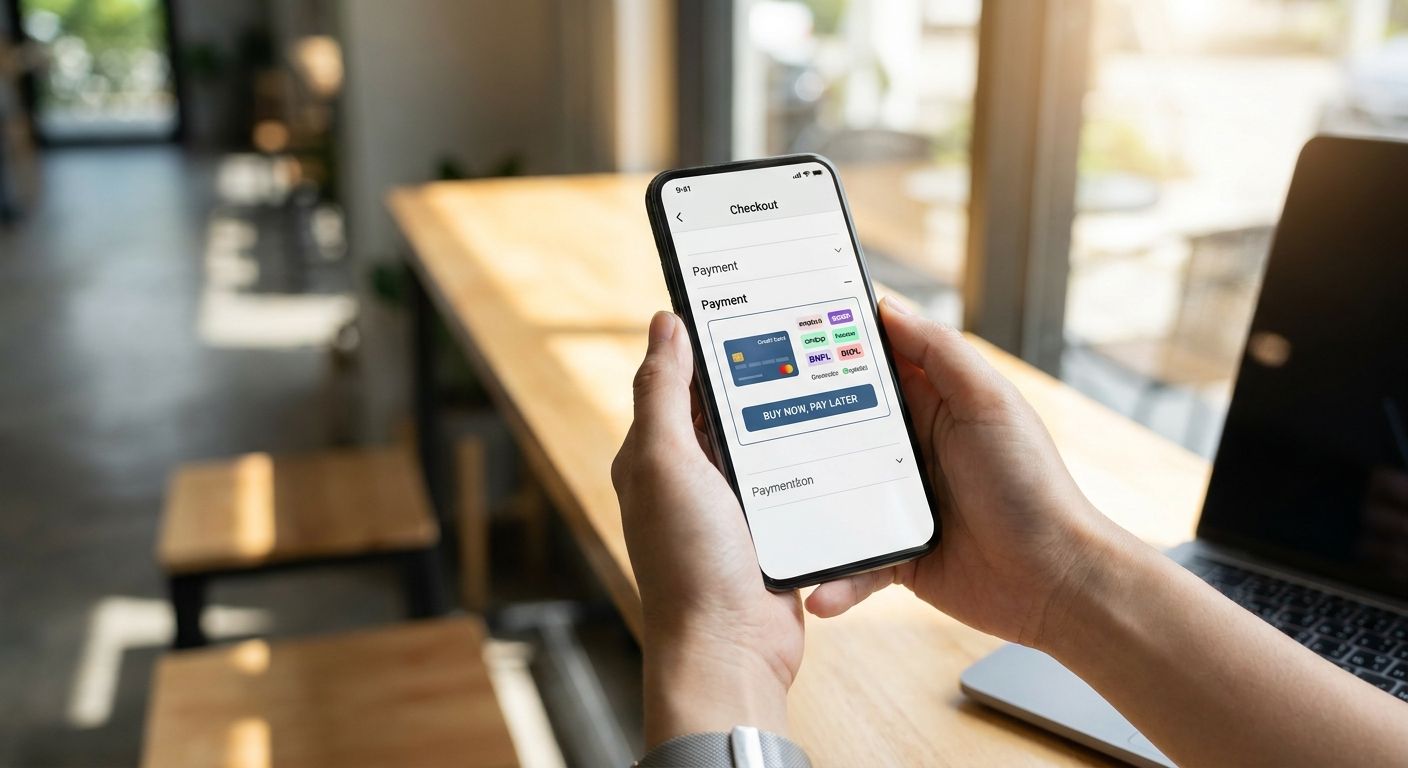
Adding buy now pay later at checkout is a two-week project, not a two-month one, if you pick the right provider and skip the steps that don't matter yet. This guide walks through the exact sequence: choosing a provider, getting approved, wiring up the checkout, setting your terms, training staff, and fixing the things that break launch week.
- Most UK merchants go live with buy now pay later at checkout in 5-10 business days once approved.
- PayItMonthly integrates with Shopify, WooCommerce, and in-store card terminals without custom development.
- Interest-free instalment terms of 3-12 months lift average order value most on purchases over £150.
- Staff who mention finance at the point of sale convert more browsers than checkout-only messaging alone.
- FCA-regulated BNPL requires an eligibility check at application, not a credit search on every customer.
Why this matters
UK shoppers now expect a monthly instalment option the same way they expect card payments. Retailers who only take card-in-full at checkout lose baskets to competitors offering interest-free spreading, especially on purchases above £150. Adding buy now pay later at checkout in 2026 isn't a nice-to-have anymore — it's a conversion lever sitting next to your buy button, and merchants who ignore it are quietly funding a competitor's cart recovery.
The cost of getting this wrong isn't just a missed sale. A clunky integration, unclear terms, or staff who can't explain the offer confidently will actively hurt trust at the exact moment a customer is deciding whether to buy. Get the sequence right and it pays for itself inside the first quarter.
What you'll need
- A BNPL provider account — PayItMonthly or a comparable FCA-regulated instalment finance platform
- Your ecommerce platform login (Shopify, WooCommerce, or your EPOS admin) if you sell online
- A card terminal or in-store checkout system if you sell in person
- Product pricing data — you need to know your average order value and which SKUs suit instalments
- 30-60 minutes of staff time for training, per employee
- Your business bank details and company registration number for provider onboarding
The steps
Step 1: Choose a provider built for your sales channel
This decision shapes everything downstream, so don't rush it. If you're a Shopify retailer, check the Shopify finance platforms landscape before committing — not every BNPL provider has a native app, and a bolted-on integration means more support tickets later.
Look at settlement speed (how fast you're paid, not the customer), whether the provider covers both online and in-store, and whether instalment terms match your typical basket size. A provider offering only 4 weekly payments won't help a furniture retailer selling £1,200 sofas — you need 6 to 12 month terms for that price point.
Common mistake: choosing on headline APR alone and ignoring integration time. A provider that takes six weeks to go live costs you six weeks of lost baskets.
Step 2: Apply and get approved
Most UK BNPL providers run a merchant eligibility check, not a lengthy underwriting process. Expect to submit your company registration details, bank account, and a rough estimate of monthly sales volume.
Approval typically takes a few working days in 2026, faster if your business has been trading for over 12 months and has clean company filings. Sole traders and newer businesses may need extra documentation — have your last set of accounts or bank statements ready to avoid a back-and-forth that stalls launch.
Step 3: Integrate the option at checkout
For online stores, this means installing a plugin or app and adding the payment method to your checkout page. For Shopify and WooCommerce this is usually a guided setup inside the platform's admin panel — no developer required for most standard themes.
For in-store sales, the integration is a payment link or QR code your staff generate at the till, which the customer completes on their phone. Test this flow with a real (small) transaction before going live — a broken payment link at the till in front of a customer is the single fastest way to kill trust in the offer.
Expected outcome: a live "pay monthly" or "spread the cost" button on your product and checkout pages, or a working payment link your till staff can generate in under 60 seconds.
Step 4: Set your instalment terms and pricing
Decide which products qualify and over how many months. Most retailers set a minimum basket value — commonly £50 to £100 — below which instalments don't make sense for either side. If you sell high-ticket items, read through how to price monthly instalments for retail products before you set terms, since pricing this wrong either shrinks your margin or scares off the customer with monthly figures that look too high.
Keep the maths visible: a £600 purchase spread over 12 interest-free months is £50 a month, and that number needs to appear clearly next to the product price, not buried in a tooltip.
Step 5: Add finance messaging across the funnel, not just checkout
A finance option that only appears at the final checkout step misses most of its value — customers decide whether they can afford something long before they reach payment. Add a monthly price badge to product pages, category pages, and even paid ad creative.
If you run promotions on 0% finance, check how to advertise 0% finance offers without breaking ASA rules before publishing anything — the Advertising Standards Authority has specific requirements for representative examples and APR disclosure that catch out retailers every year.
Step 6: Train staff to present the option confidently
Online, the checkout does the selling. In-store, your staff do — and a hesitant or vague explanation of monthly payments loses sales that a confident one closes. Staff need three things memorised: how the monthly figure is calculated, what happens if a customer misses a payment, and how to generate the payment link.
Run a 30-minute session covering objection handling — "is there interest?", "what if I want to pay it off early?", "does this affect my credit score?" — before launch, not after the first customer asks and nobody has an answer.
Step 7: Test the full flow end-to-end
Run a real transaction, start to finish, on both channels before telling customers the option exists. Check the confirmation email, the receipt, and what the customer sees in their own account when they log in to manage repayments.
Common mistake: testing the application step but never following through to the first actual instalment collection. Problems with recurring payment setup show up here, not at application.
Step 8: Monitor conversion and average order value after launch
Track average order value and cart abandonment for four to six weeks post-launch and compare to your pre-BNPL baseline. Retailers typically see the clearest lift on products priced above their previous median basket, since instalments make higher-ticket items feel accessible.
Add buy now pay later to your checkout
See how PayItMonthly integrates with your platform in 2026.
Troubleshooting
Customers don't notice the option exists. Fix: move the monthly price badge above the fold on product pages, not just inside the checkout dropdown.
Staff avoid mentioning finance in-store. Fix: shorten the pitch to one sentence — "you can spread that over [X] months interest-free" — and rehearse it until it's automatic. See how to train sales staff to offer finance options in store for a full script.
Approval is taking longer than expected. Fix: check that your company filings are current at Companies House — outdated or missing annual accounts are the most common cause of delayed merchant approval.
Instalment terms don't suit your price points. Fix: revisit Step 4 and adjust minimum basket thresholds — a £50 minimum on a shop averaging £30 baskets will show the option to almost nobody.
Customers ask if there's interest and staff don't know. Fix: confirm with your provider whether the offer is interest-free for the customer, and put that answer in writing on the shop floor, not just in staff memory.
The payment link fails at the till. Fix: check your card terminal or till software has the latest integration update — this is the most common in-store failure point and usually a five-minute fix.
Tools and resources
- PayItMonthly — instalment finance platform for UK retailers
- Companies House filing status check (for approval speed)
- Your ecommerce platform's app store (Shopify App Store, WooCommerce plugin directory)
- A written staff script covering the three most common customer questions
FAQ
How do I add buy now pay later at checkout?
Sign up with a BNPL provider, get merchant approval, then install the checkout integration on your ecommerce platform or generate payment links in-store. Most UK retailers are live within 5-10 business days of approval in 2026.
Is buy now pay later free to add to my checkout?
Providers typically charge a merchant fee per transaction rather than a setup cost, so check the fee structure before signing up. Setup itself is usually free through a plugin or app install.
Do customers pay interest on buy now pay later at checkout?
Most UK retail BNPL offers are interest-free for the customer when paid on schedule, with the merchant covering the transaction fee instead. Always confirm the specific terms with your chosen provider before advertising the offer.
How long does BNPL approval take for a small business?
Approval usually takes a few working days for an established business with clean company filings. Newer or sole trader businesses may need extra documentation, which can add a week.
Can I offer buy now pay later in-store and online?
Yes, most providers support both channels — online through a checkout plugin and in-store through a payment link or QR code generated at the till. Test both flows separately before launch.
What's the minimum purchase amount for buy now pay later?
There's no universal minimum, but most retailers set their own threshold between £50 and £100 to keep instalments practical. Set this based on your own average basket value.
Does offering finance affect my card processing setup?
No, buy now pay later runs alongside your existing card processing as a separate payment method, not a replacement. It typically sits next to card and cash options at checkout.
Why should I add buy now pay later at checkout in 2026?
UK shoppers increasingly expect an instalment option, and retailers without one lose baskets on purchases above their typical average order value. The lift is most visible on higher-ticket items where affordability, not desire, is the barrier.
One last thing
The retailers who get the most out of buy now pay later at checkout aren't the ones with the flashiest integration — they're the ones whose staff can explain the monthly figure without hesitation. A confident one-sentence pitch on the shop floor does more for conversion than any amount of on-page badge placement.


