
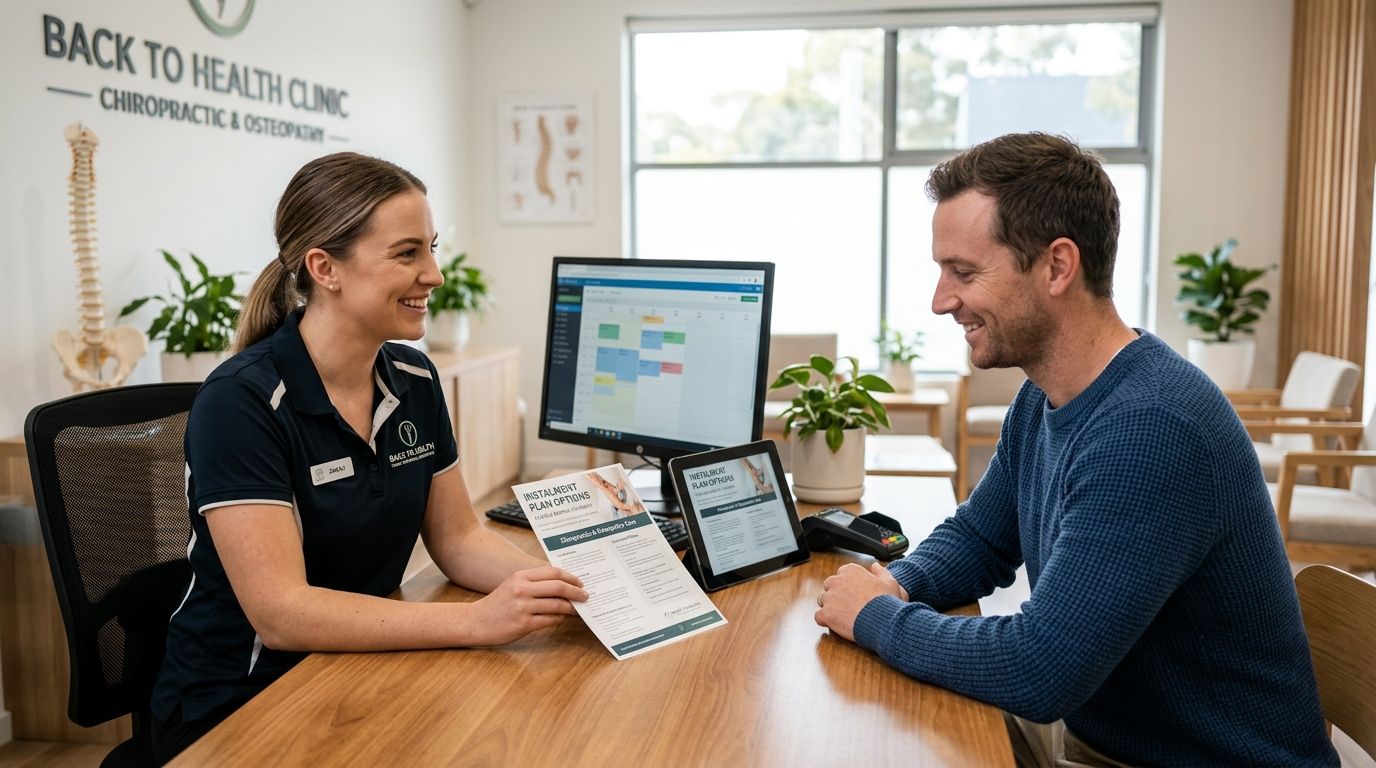
Chiropractic and osteopathy clinics use instalment plans to let patients spread the cost of a treatment course into fixed monthly payments, with the aim of turning consultations into committed, ongoing care instead of one-off visits. Private musculoskeletal treatment is rarely a single-session purchase, so the buying decision looks more like a course of physiotherapy or a dental treatment plan than a retail transaction, and payment friction shows up at exactly the point a patient is deciding whether to commit.
- Instalment plans for chiropractic and osteopathy clinics turn a full treatment course quote into a monthly figure a patient can commit to on the spot.
- PayItMonthly lets clinics offer interest-free instalments at the point the treatment plan is proposed, not after the patient has gone home to think.
- Clinics that only take card or bank transfer lose patients at the treatment-plan stage, not at the first consultation.
- Vetting and credit checks sit with the finance provider, not the clinic's front desk, which matters for practices with no billing team.
Why instalment plans matter for chiropractic and osteopathy clinics
A chiropractic or osteopathy clinic's revenue problem is rarely the initial consultation. Patients turn up for an assessment readily enough because the price is low and the commitment is small. The drop-off happens when the practitioner recommends a full course of treatment and states the total cost upfront, at which point a portion of patients say they'll "think about it" and never rebook.
That pattern is different from a retailer's cart abandonment problem: a chiropractic patient isn't comparing prices across five tabs, they're weighing a real cost against a health decision they may put off indefinitely. Splitting that total into a monthly instalment reframes the decision from "can I justify this lump sum" to "can I fit this into my monthly budget", which is a much smaller mental hurdle for a patient already convinced the treatment will help.
PayItMonthly works with UK retailers and merchants of all sizes on exactly this problem: giving customers a way to spread a purchase into interest-free monthly instalments at the point they'd otherwise walk away. For a clinic, that point is the treatment plan conversation, not the till.
Update your treatment plan pricing conversation
Most clinics quote a treatment course as a single total, which works against case acceptance the moment the number looks large next to a single session. Present the monthly figure alongside the total from the first pricing conversation, not as a fallback once the patient hesitates.
- State the total course cost and the monthly instalment figure in the same sentence
- Put the monthly figure on printed treatment plan documents, not just verbally
- Train front desk staff to lead with the instalment option for any multi-session recommendation
- Avoid presenting instalments as a "special favour" — it should read as a standard payment method
Separate consultation fees from course fees
Bundling everything into one number makes it harder for a patient to see what they're actually committing to and makes instalment maths confusing. Break the treatment plan into its component parts before you decide how to finance it.
- List the initial assessment fee separately from the ongoing course
- Quote the course as a fixed number of sessions, not an open-ended "as needed" estimate
- Flag any add-ons (imaging referrals, supports, home exercise kit) as optional extras
- Keep the instalment offer tied to the course fee only, so the maths stays simple for the patient
Add a self-service finance option at the point of booking
Manual payment plans run through a clinic's own bank details put the admin burden, the credit risk, and the chasing on the practice itself. A self-service instalment option removes all three from the clinic's side of the ledger.
- Offer a link or in-clinic device where the patient applies for finance directly with the provider
- Keep the application short enough to complete in the waiting room between the assessment and the first proper session
- Confirm the patient sees their monthly repayment figure before they sign off on the treatment plan
- Make sure the option is visible on the clinic's own booking or treatment-plan pages, not buried in a footer link
This is where PayItMonthly's platform fits: the clinic gets paid in full up front by PayItMonthly, and the patient repays PayItMonthly directly in interest-free monthly instalments, so the clinic isn't extending its own credit or chasing missed payments.
Vet patients for finance eligibility before they apply
Not every patient will be approved for instalment finance, and clinics that don't set expectations early risk an awkward conversation mid-treatment-plan. Vetting for buy now pay later eligibility is handled by the finance provider, not the clinic, but the clinic still needs a process for what happens on both sides of an approval.
- Let the finance provider run its own affordability and eligibility checks, don't attempt this in-house
- Have a fallback payment route ready for patients who aren't approved
- Avoid promising approval before the patient has actually applied
- Keep the treatment plan booked provisionally while the application is pending, so a delay doesn't lose the slot
Measure case acceptance before and after offering instalments
A clinic that adds instalment finance without tracking whether it changes behaviour is guessing. Case acceptance rate — the share of recommended treatment plans a patient actually books in full — is the number that tells you whether the change worked.
- Track case acceptance rate for the three months before instalments go live
- Track the same figure for the three months after
- Segment by treatment type, since a six-session osteopathy course and a twelve-session chiropractic course behave differently
- Watch average course length booked, not just whether the patient said yes
Train reception and practitioners to mention it consistently
2026 clinics still lose patients because the finance option only gets mentioned by one enthusiastic receptionist rather than every member of front-of-house staff. Consistency matters more than the option itself.
- Script the exact phrasing staff use when presenting the treatment plan cost
- Include the instalment option in any written treatment plan template
- Refresh training whenever a new practitioner joins, since habits form fast
- Review call recordings or in-person feedback quarterly to check the message stays consistent
Add instalments to your treatment plans
See how a checkout finance option fits your booking flow.
Comparing payment options for chiropractic and osteopathy clinics
| Option | Best for | Key limitation |
|---|---|---|
| Full payment up front | Patients with existing loyalty and short single-session needs | Loses patients at the treatment-plan stage, not the consultation |
| In-house payment plan | Clinics with an existing billing relationship and admin capacity | Clinic carries the credit risk and the chasing |
| BNPL platform (e.g. PayItMonthly) | Clinics recommending multi-session courses to price-sensitive patients | Requires the patient to pass the provider's own eligibility check |
| Credit card | Patients who already have available limit and want rewards points | Interest accrues if not cleared in full, unlike an interest-free instalment plan |
| Health cash plan / insurance | Patients with existing cover for musculoskeletal treatment | Only covers patients who already hold a relevant policy, not most walk-ins |
Practices recommending treatment courses of several sessions or more get the most out of an instalment option, because that's exactly where lump-sum hesitation shows up.
Common mistakes chiropractic and osteopathy clinics make
- Only mentioning finance after the patient hesitates. By then the patient has already mentally declined; leading with the monthly figure from the first quote keeps the decision open.
- Quoting the course total without a session-by-session breakdown. A vague "12 sessions, ongoing as needed" total is harder to finance and harder for a patient to commit to than a fixed course.
- Running instalments through the clinic's own bank transfers. This puts collection risk and admin time on staff who aren't equipped to chase missed payments.
- Treating the finance option as optional information rather than a standard part of the pricing conversation. Clinics that only tell some patients see inconsistent case acceptance across practitioners.
- Not tracking case acceptance before and after launch. Without a before-and-after comparison, there's no way to know whether the instalment option actually changed patient behaviour in 2026 or just added admin.
FAQ
Do chiropractic clinics need FCA authorisation to offer instalment plans?
No — when a clinic partners with a regulated finance provider like PayItMonthly, the provider holds the consumer credit permissions and runs the eligibility checks, not the clinic.
What's the best way to offer instalment plans for chiropractic clinics?
Present the monthly instalment figure alongside the total course cost at the same time the treatment plan is proposed, using a self-service application the patient can complete before leaving the clinic.
Is buy now pay later better than an in-house payment plan for a clinic?
A BNPL platform moves the credit risk and repayment chasing to the finance provider, while an in-house plan leaves both with the clinic; for practices without a billing team, the platform route is less admin.
Can a patient be declined for instalment finance at a chiropractic clinic?
Yes — the finance provider runs its own affordability check, so clinics should have a fallback payment route ready for patients who aren't approved rather than assuming everyone will qualify.
Do interest-free instalments cost the patient more than paying in full?
No — interest-free instalment plans split the same total course cost into equal monthly payments with no added interest, provided repayments stay on schedule.
Should osteopathy clinics offer instalments on single sessions or full courses?
Full courses are where instalments make the biggest difference, since that's the point where the total cost is large enough to cause hesitation compared with a single assessment fee.
How do instalment plans affect case acceptance rates?
Clinics that present a monthly figure at the treatment-plan stage typically see more patients commit to the full recommended course rather than booking a reduced number of sessions or declining altogether.
Who collects repayments when a clinic uses a BNPL provider?
The finance provider collects repayments directly from the patient — the clinic gets paid the full treatment cost up front and has no ongoing collection responsibility.
One last thing
The treatment-plan conversation, not the consultation booking, is where chiropractic and osteopathy clinics lose the most revenue in 2026 — and it's the one moment most clinics still handle with a verbal price and a hopeful follow-up call. Fix that single conversation with a monthly figure stated up front, and the rest of the funnel (bookings, attendance, repeat courses) tends to follow.


