

No. Buy now pay later is a form of point of sale finance, but point of sale finance covers a wider range of credit arrangements. The terms overlap without guaranteeing the same repayment schedule, interest terms or customer checks. For UK merchants choosing checkout finance in 2026, the agreement matters more than the label.
- Is point of sale finance the same as buy now pay later? No: BNPL sits within the broader checkout finance category.
- PayItMonthly suits UK merchants seeking buy now pay later with interest-free monthly instalments.
- Compare repayment schedules, customer checks and merchant responsibilities, not just the finance label.
- Interest-free instalments still create a repayment commitment; explain the agreement before the customer accepts.
Is point of sale finance the same as buy now pay later?
Point of sale finance describes credit arranged in connection with a purchase. Buy now pay later describes an arrangement that lets the customer purchase now and repay later. When you offer BNPL at checkout, the same arrangement fits both descriptions.
The distinction is scope. Point of sale finance includes interest-free instalments and interest-bearing retail credit. The BNPL label alone does not establish the full terms of an agreement.
PayItMonthly provides UK retailers and merchants with a BNPL platform for interest-free monthly instalments. That is a specific offering within the wider retail finance category, not a definition of every checkout credit product.
| Question | Point of sale finance | Buy now pay later |
|---|---|---|
| What does the term describe? | Credit arranged alongside a purchase | An arrangement that lets a customer buy now and repay later |
| How broad is the category? | Covers different retail credit structures | Describes a particular approach to deferred payment |
| Does the name establish interest terms? | No; inspect the agreement | No; inspect the agreement |
| Does it establish the repayment schedule? | No; inspect the agreement | No; inspect the agreement |
| Does it establish customer checks? | No; check the provider's process | No; check the provider's process |
| Best for | Understanding the wider checkout finance category | Describing a buy-now, repay-later purchasing arrangement |
| Main limitation | Too broad to explain a specific offer | Too little detail to replace the actual terms |
Neither label tells you everything a merchant or customer needs to know. Treat the label as a starting point, not a substitute for the finance agreement.
Why this matters
Your customers need to understand what they are agreeing to, not which category your provider uses. Calling an offer “BNPL” does not explain when repayments fall due, what happens after a missed payment or how a return affects the agreement.
For your business, the distinction also separates customer-facing terms from merchant-facing obligations. An interest-free customer offer does not explain your settlement arrangements or contractual responsibilities.
When comparing providers in 2026, use the same questions for every candidate. Otherwise, you risk comparing a familiar name with an unfamiliar agreement rather than comparing the arrangements themselves.
Point of sale finance: the broader category
Point of sale finance is tied to the purchase being financed. The customer selects goods or services, considers the finance option and enters an agreement connected with that transaction.
“Point of sale” does not restrict the concept to a physical till. An online checkout can also be the point at which a customer arranges purchase finance. The sales channel and the credit structure are separate questions.
Best for: merchants assessing the full range of checkout credit arrangements. Use the broader category when you have not yet decided whether your customers need deferred payment, interest-free instalments or another repayment structure.
The advantage is breadth: you avoid ruling out a suitable arrangement just because it carries a different label. The disadvantage is ambiguity: “finance available” tells the customer little about the commitment.
Once you select an offer, replace broad category language with a clear description of its actual terms. State the repayment structure accurately and direct customers to the agreement rather than letting the category name do all the explaining.
Buy now pay later: the more specific description
Buy now pay later separates the purchase from at least part of the payment. A customer buys now and repays later under the agreed schedule, rather than paying the entire amount at the time of purchase.
Some arrangements use instalments; others use deferred payment. The words “buy now pay later” do not, by themselves, tell you which structure applies. Nor do they establish whether an initial payment is required.
Best for: explaining that the customer can purchase now and repay later. The benefit is a direct description of the purchasing arrangement. The limitation is that the phrase leaves essential details unanswered.
For merchant communications in 2026, use BNPL as the headline description only when the surrounding information explains the offer. Customers still need the repayment schedule, applicable interest terms and consequences of not meeting their obligations.
Avoid treating “later” as a promise that nothing is payable immediately. The agreement decides when payments start, not the shorthand used on a checkout button.
Interest-free instalments: a term, not a separate sales channel
Interest-free describes the interest treatment of the agreement. Instalments describe how repayment is divided. Neither term tells you whether the customer buys online, in a shop or through another supported sales process.
An interest-free instalment arrangement offered alongside a purchase can therefore be both BNPL and point of sale finance. There is no contradiction: the phrases describe different aspects of the same transaction.
Best for: customers seeking a defined repayment schedule without interest on the agreed plan. The benefit is spreading the purchase into scheduled payments. The drawback is that the customer still takes on future payment obligations.
Do not expand “interest-free” into a broader claim that the agreement has no conditions or consequences. Explain the actual terms, including what happens when a payment is missed, without guessing from the headline description.
The guide to explaining interest-free finance terms to customers covers the next practical step: turning a finance label into customer information.
Why checkout finance arrangements vary
Point of sale finance and BNPL arrangements differ because the underlying agreements differ. Compare these factors rather than assuming every provider uses the same structure:
- Repayment structure. Check whether repayment uses instalments or a deferred payment, when payments begin and when they fall due.
- Interest terms. Establish whether the agreement is interest-free or interest-bearing. Read the conditions attached to that description.
- Customer assessment. Ask how the provider assesses eligibility and what credit-reference activity forms part of the application.
- Merchant responsibilities. Confirm who handles customer questions, transaction records, settlement queries and changes to financed orders.
- Post-purchase handling. Check the process for cancellations, partial returns, refunds and missed repayments.
These factors affect different parts of the purchase journey. A straightforward application does not establish straightforward returns, and an interest-free offer does not establish a particular credit-check policy.
Compare each factor independently. This prevents a strong feature in one area from hiding an unanswered question elsewhere.
How should you compare finance before adding it to checkout?
Use a repeatable sequence when selecting checkout finance in 2026. Start with the customer agreement, then follow the transaction through your business processes.
1. Define the offer
Write down what you want customers to do: purchase now and make scheduled repayments, defer payment or use another credit arrangement. Then establish whether the provider's documented offer matches that requirement.
Do not begin with a promise such as guaranteed acceptance or no credit checks. Those are separate claims that require evidence about the provider's actual process.
2. Check the terms
Read the customer agreement and merchant agreement separately. Identify the repayment schedule, interest treatment, eligibility requirements and your obligations when a financed order changes.
Ask the provider to resolve unclear wording before using it in sales material. A member of staff should not have to improvise an explanation at checkout.
3. Map the checkout
Follow the customer's journey from selecting the finance option to receiving confirmation. Establish what happens if the application is declined, interrupted or left incomplete.
Keep the purchase status and finance status distinguishable in your operating process. An unfinished application should not become a confirmed financed order through staff assumption.
4. Plan the aftercare
Document how staff handle a cancellation, a partial return and a repayment query. Confirm where responsibility passes from your business to the finance provider.
Make the handover clear to customers. They need to know who handles the purchase issue and who handles the credit agreement.
5. Review the wording
Check that checkout messages, product pages and staff explanations describe the same arrangement. Remove statements that imply universal approval, a particular credit-score outcome or unspecified guarantees.
Approve the explanation before launching the offer. Consistent wording helps customers understand the commitment and gives your team a reliable answer to repeat.
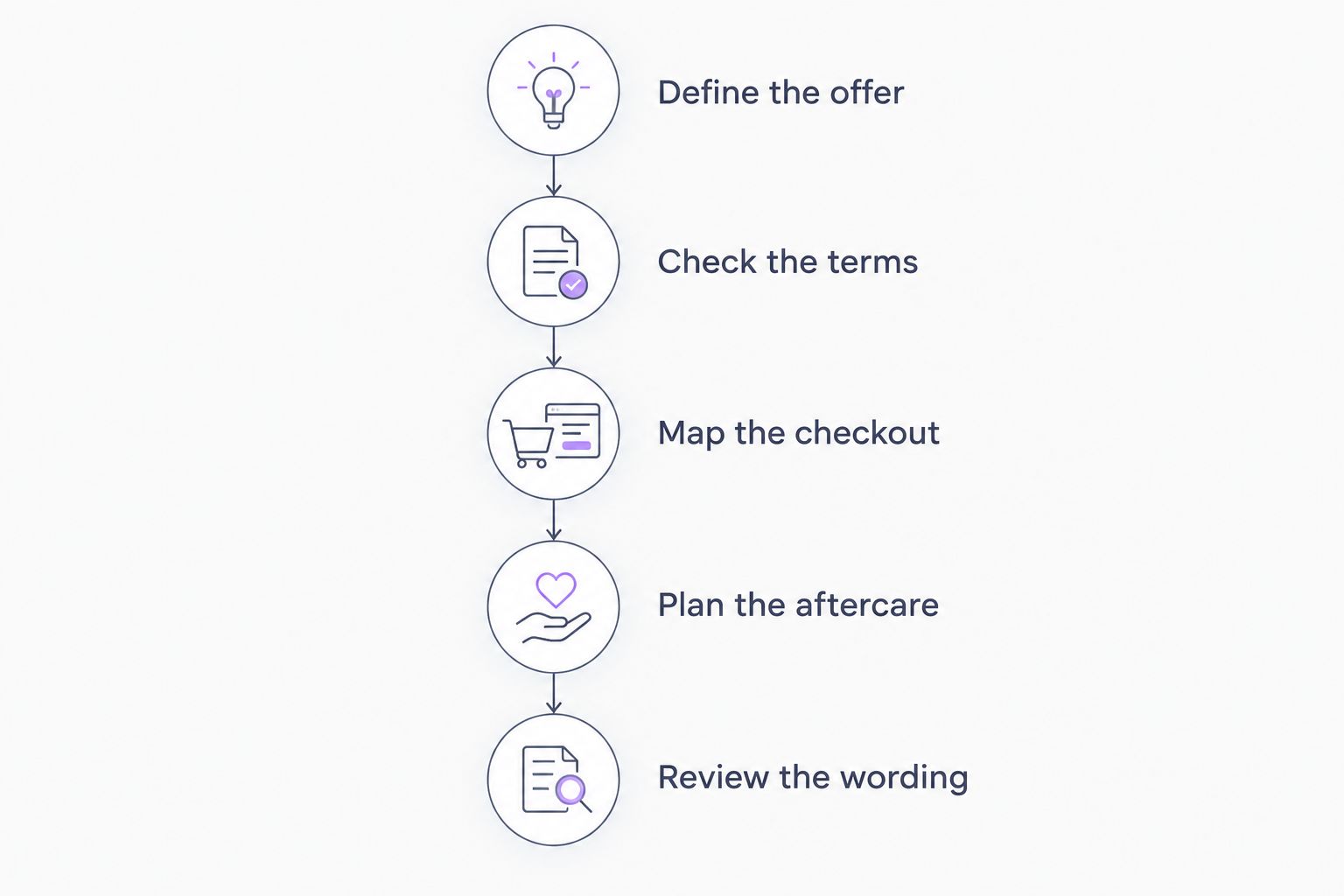
A documented process makes the comparison useful beyond the initial provider decision. You can use it when training staff, changing your checkout or reviewing a new agreement.
Where does PayItMonthly fit?
PayItMonthly suits UK merchants seeking BNPL with interest-free monthly instalments. Its stated offering lets customers spread purchases through a platform serving retailers and merchants of all sizes.
That description establishes the core use case. It does not replace checking the current merchant agreement, supported checkout arrangements, eligibility process or handling of financed returns.
The customer benefit is spreading repayment without interest on the stated instalment offering. The limitation is equally important: scheduled payments remain commitments, and merchants still need a clear process for explaining the agreement.
Explore monthly instalments for your business
Review an interest-free BNPL platform for UK retailers and merchants.
Does buy now pay later mean no credit checks?
No. BNPL does not establish whether a provider performs a credit check. Eligibility assessment, credit-reference searches and reporting are separate features of the specific arrangement.
Ask what checks occur during the application and how the provider explains them to customers. Do not advertise “no credit checks” or “no effect on your credit score” because an offer is labelled BNPL.
Does interest-free finance mean the customer has no repayment risk?
No. Interest-free finance still requires the customer to meet the agreed payment schedule. Removing interest from the stated plan does not remove the debt or make every purchase affordable.
Your explanation should distinguish the benefit from the obligation. Tell customers how repayment works and where to find the consequences of missed payments, using the provider's current terms.
Can you use the terms interchangeably in sales material?
You can describe a qualifying arrangement as both BNPL and point of sale finance, but the phrases are not identical. Point of sale finance is broader; BNPL describes the buy-now, repay-later aspect.
Use whichever phrase helps the customer understand the offer, then add the specific repayment information. Your wording should remain accurate when read without a salesperson nearby to explain it.
FAQ
Is point of sale finance the same as buy now pay later?
No. Buy now pay later offered alongside a purchase is a form of point of sale finance, but point of sale finance covers a broader range of credit arrangements. Compare the agreement rather than relying on the label.
Is point of sale finance only available at a shop till?
No. Point of sale finance can be arranged at an online checkout as well as alongside an in-store purchase. The provider's supported sales channels determine how a particular offer works.
Is buy now pay later always interest-free?
The BNPL label alone does not establish the interest terms. Read the specific agreement before describing an offer as interest-free.
Does buy now pay later always mean monthly payments?
No. Buy now pay later does not specify the payment frequency or repayment structure. The agreement sets when payments begin and when they fall due.
Do BNPL customers still have to repay after returning an item?
A return must be handled through the applicable purchase and finance processes. Customers should follow the provider's instructions and confirm how the return changes their payment obligations rather than assuming payments stop automatically.
Does buy now pay later mean guaranteed acceptance?
No. The BNPL label does not guarantee that an application will be accepted. Explain the provider's eligibility process without promising an outcome.
What does PayItMonthly offer UK businesses?
PayItMonthly provides UK retailers and merchants with a buy-now-pay-later platform for interest-free monthly instalments. Check the current agreements and operating requirements when assessing it for your business.
One last thing
Before publishing your checkout finance wording in 2026, ask someone unfamiliar with the offer to explain when they would pay and who they would contact about a return. Give them only the information your customer will see.
If they cannot answer, the label is doing too much work. Fix the explanation, not the terminology. A clearly described BNPL agreement is more useful than a technically correct category name that leaves the commitment unclear.


