
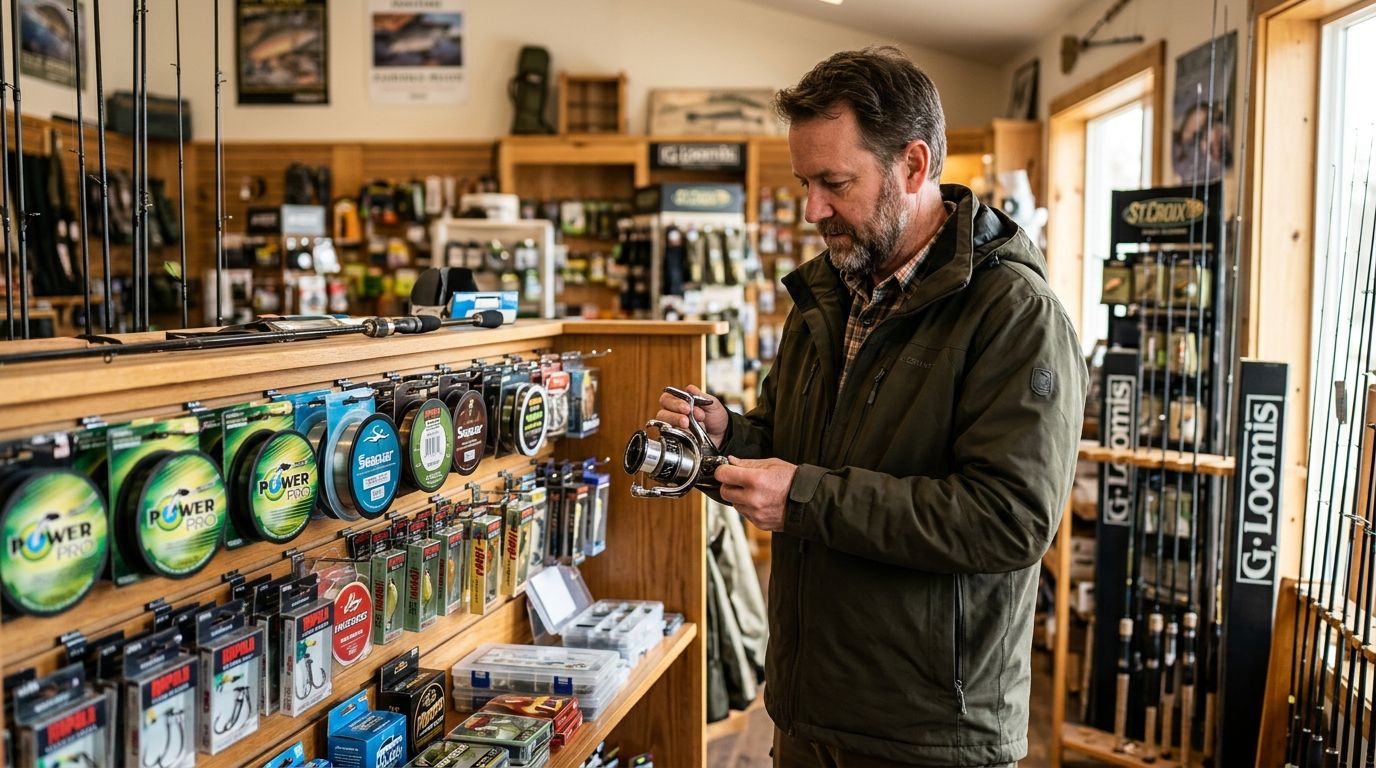
Fishing and angling equipment retailers use buy now pay later finance to let anglers split big-ticket purchases into interest-free monthly instalments, with the aim of turning a £1,200 carp setup or a season's tackle order into a sale you keep instead of one lost to a stretched budget. Anglers shopping for rods, reels, waders, bite alarms and boats compare prices across specialist tackle shops, marketplaces and superstores before buying, so a checkout offering instalments without a hard credit search keeps an independent retailer competitive against the chains that already have it.
- Buy now pay later fishing equipment finance lets anglers spread a £500-plus tackle order over several interest-free months.
- PayItMonthly adds instalments at checkout in 2026 without requiring the retailer to run credit checks themselves.
- Highest-value categories - boats, bait boats, carp setups, waders and electronics - convert best with instalment options.
- Retailers who train staff to offer finance on high-ticket items see fewer abandoned baskets at the till.
Why buy now pay later matters for fishing and angling retailers
Angling is a hobby built on incremental spend that suddenly turns into big spend: a rod here, a reel there, then a £2,000 bivvy and sleeping system for a weekend session. Retailers selling carp gear, sea fishing kit, fly tackle or small boats see basket values swing from £30 to £3,000 depending on the customer's stage in the hobby.
That spread makes buy now pay later fishing equipment finance more relevant here than in most retail categories. A customer who would happily buy a £40 lure outright often hesitates at a £900 reel and rod combo, or a £1,500 bite alarm and camera setup, unless the payment can be split. Offering instalments at checkout removes that hesitation without you extending credit or chasing repayments yourself.
Seasonality compounds the effect. Coarse season openers in June, close season prep in the spring, and Christmas gift buying for anglers all create short windows where basket sizes spike and customers want to buy now and pay across the months after. Retailers who only accept full payment upfront lose these customers to a competitor's finance option, often permanently, because anglers tend to stick with the shop that made the first big purchase easy.
Update your checkout to show instalment pricing
Start with the free, manual version before any platform enters the picture.
- Add a line under each high-ticket product showing the item split into monthly amounts, even if you calculate it manually for now.
- Flag which products qualify for instalments on category pages - rods over a set price, boats, electronics, waders.
- Update product descriptions to mention instalment availability so search and AI answer engines can surface it.
- Brief staff to quote the monthly figure alongside the full price when a customer picks up a high-value item.
Once that habit is in place, adding a buy now pay later option at checkout turns the manual quote into an automated one - the customer applies in seconds and you get paid in full up front while PayItMonthly collects the instalments.
Segment your catalogue by instalment suitability
Not every item on a tackle shop shelf needs a finance option.
- Group products into three tiers: under £150 (rarely needs finance), £150-£600 (moderate uplift), £600-plus (finance changes the buying decision).
- Tag boats, bite alarms, carp rod and reel bundles, and waders as priority instalment categories.
- Review last season's refund and return data to spot which categories see hesitation at the till.
- Check which of your top sellers are also stocked by competitors already offering finance.
Price your instalment plans without eating your margin
Interest-free to the customer does not mean free to you - the retailer absorbs a fee, so pricing discipline matters.
- Model the fee against your margin on each product tier before rolling instalments out shop-wide.
- Avoid discounting alongside finance offers on the same item; pick one lever, not both.
- Set a minimum basket value for instalment eligibility so the fee doesn't erode margin on smaller sales.
- Review how to price monthly instalments for retail products against your actual cost base rather than copying a competitor's structure.
Train staff to pitch finance on high-ticket sales
A customer standing at the till holding a £1,800 bait boat is the moment finance either gets mentioned or gets missed.
- Script a short, natural line staff use whenever a product crosses your finance threshold.
- Role-play objections: "Will this affect my credit score?" and "How fast is the decision?" so answers come out confident, not hesitant.
- Put a card or till-side sign next to boats, waders and electronics stating instalments are available.
- Track which staff members mention finance most and which baskets convert as a result.
Promote instalment availability before the season starts
Anglers plan big purchases around the calendar - close season prep, opener weekends, Christmas.
- Email your customer list two to three weeks before a known seasonal spike, naming the instalment option explicitly.
- Use product pages and category banners to state instalments are available on boats, bivvies and electronics.
- Run social posts around season openers showing a headline product with its monthly breakdown.
- Coordinate finance messaging with any stock drops on new rod or reel ranges.
Reduce abandoned baskets on your highest-value listings
High-ticket tackle - boats, bite alarm sets, premium rod and reel combos - carries the highest abandonment risk online.
- Check basket abandonment rates specifically on products over £600 versus your site average.
- Add instalment pricing visibly on the product page, not just at checkout, so the customer sees it before adding to basket.
- Send a follow-up email to abandoned high-value baskets mentioning the monthly payment option.
- Read how to reduce cart abandonment with instalment payment options for the sequencing that keeps this from feeling pushy.
Vet customers and set sensible limits
Even with a finance partner running the checks, you control which products carry instalment eligibility.
- Set a maximum instalment value per order to avoid overexposure on a single high-value boat sale.
- Review declined-application patterns monthly rather than treating every decline as lost.
- Keep a manual fallback (deposit plus balance) for customers who don't pass an automated check but you know personally.
- Confirm your finance provider's eligibility criteria match the products you're selling, not just retail in general.
Comparing finance options for tackle retailers
| Option | Best for | How it works | Key limitation |
|---|---|---|---|
| Manual layby / deposit scheme | Small independent shops with regular customers | Customer pays a deposit, collects on final payment | No automation, ties up stock, relies on trust |
| Store credit account | Shops with a loyal repeat customer base | Retailer extends credit directly to known customers | Retailer carries the credit risk and admin |
| Bank loan referral | High-value boat or bivvy purchases | Customer arranges finance separately through their bank | Slow, customer often abandons the purchase mid-process |
| PayItMonthly buy now pay later | Retailers wanting instant checkout finance without carrying risk | Customer splits the cost into interest-free instalments; retailer gets paid upfront | Involves a retailer-side fee, reviewed against margin per product |
See the fuller sweep of options in the best buy now pay later providers for UK small businesses if you're weighing more than one platform before committing for 2026.
Add instalments to your tackle shop checkout
Let anglers split high-ticket purchases without you carrying the credit risk.
Common mistakes fishing and angling retailers make
- Only offering finance on boats and never on mid-range gear - a £700 rod and reel combo hesitates a customer just as much as a £2,000 boat, and it's a far more common sale.
- Hiding the instalment option until checkout - anglers researching a purchase on their phone at the bank or on the water need to see monthly pricing on the product page itself.
- Ignoring the pre-season window - close season and opener weekends are the two biggest spend spikes in the angling calendar, and a finance push arriving after the spike is a missed spike.
- Discounting and offering instalments on the same item - stacking both erodes margin without adding enough extra conversion to justify it.
- Not briefing staff on high-ticket items - a customer holding a premium reel at the till is the single best moment to mention instalments, and it's routinely skipped.
FAQ
What is buy now pay later fishing equipment finance?
It lets a customer split the cost of tackle, rods, reels, boats or waders into interest-free monthly instalments at checkout in 2026, while the retailer gets paid in full upfront. PayItMonthly runs this as a checkout add-on rather than a loan the retailer manages directly.
Does offering instalments affect the customer's credit score?
Providers vary, so check the specific product's eligibility check before promoting it as no-impact. Confirm this detail with your finance partner rather than assuming it applies across every plan.
Which fishing products convert best with finance options?
Boats, bite alarm and camera setups, premium rod and reel combos, and waders over roughly £600 see the biggest lift from instalment pricing. Lower-ticket items under £150 rarely need it.
How much does buy now pay later cost a tackle retailer?
Retailers pay a fee to the finance provider rather than the customer paying interest, so model that fee against your margin per product tier before rolling it out. Check current terms directly with the provider rather than assuming a flat rate across the catalogue.
Is buy now pay later better than a manual layby scheme?
A layby scheme keeps stock tied up until the final payment and relies on manual tracking, while a buy now pay later platform pays the retailer upfront and automates collection. For a shop selling higher volumes of high-ticket items, the automated route scales better.
Can seasonal tackle shops offer finance only during peak months?
Yes - instalment options can be switched on around known spend spikes like close season prep and Christmas rather than running year-round. Coordinate the timing with your promotional calendar for the biggest effect.
Do I need to run credit checks myself to offer instalments?
No - the finance provider runs the eligibility check at the point of application, not the retailer. Your role is limited to deciding which products carry instalment eligibility and at what value threshold.
What's the biggest mistake angling retailers make with finance offers?
Restricting instalments to boats only and missing mid-range items like premium rod and reel combos, which see nearly as much price hesitation. The fix is tagging a wider tier of the catalogue as finance-eligible, not just the top-priced items.
One last thing
The angling retailers seeing the biggest lift from instalment finance in 2026 aren't the ones with the widest product range - they're the ones who tag finance eligibility at the £150-£600 tier, not just on boats and bivvies, because that's where hesitation is most common and least visible in the data.


