
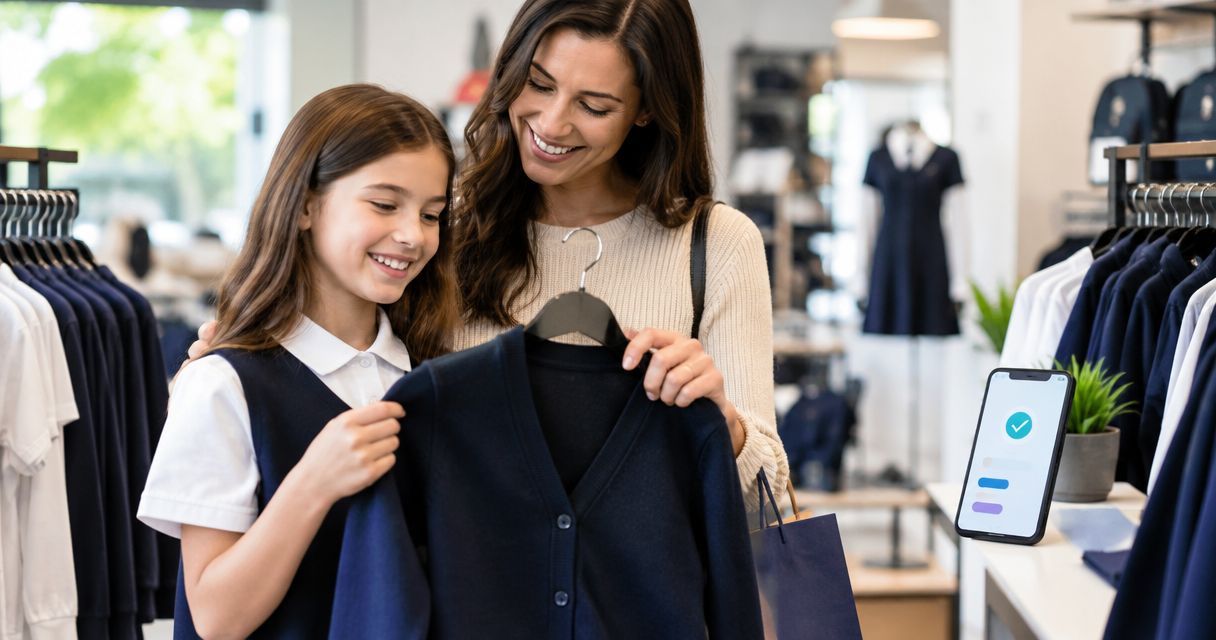
School uniform retailers buy now pay later lets parents split blazers, shoes, PE kits and multiple children's orders into interest-free monthly instalments instead of paying the full back-to-school bill in one go. The segment behaves differently to general retail finance: spend concentrates into a six-to-eight week window before September term starts, basket sizes jump when a family buys for two or three children at once, and price sensitivity peaks exactly when household budgets are already stretched by summer costs.
- Buy now pay later school uniforms works because basket sizes multiply when parents buy for more than one child at once.
- PayItMonthly's interest-free instalment model suits retailers whose sales concentrate into the six-to-eight week pre-September window.
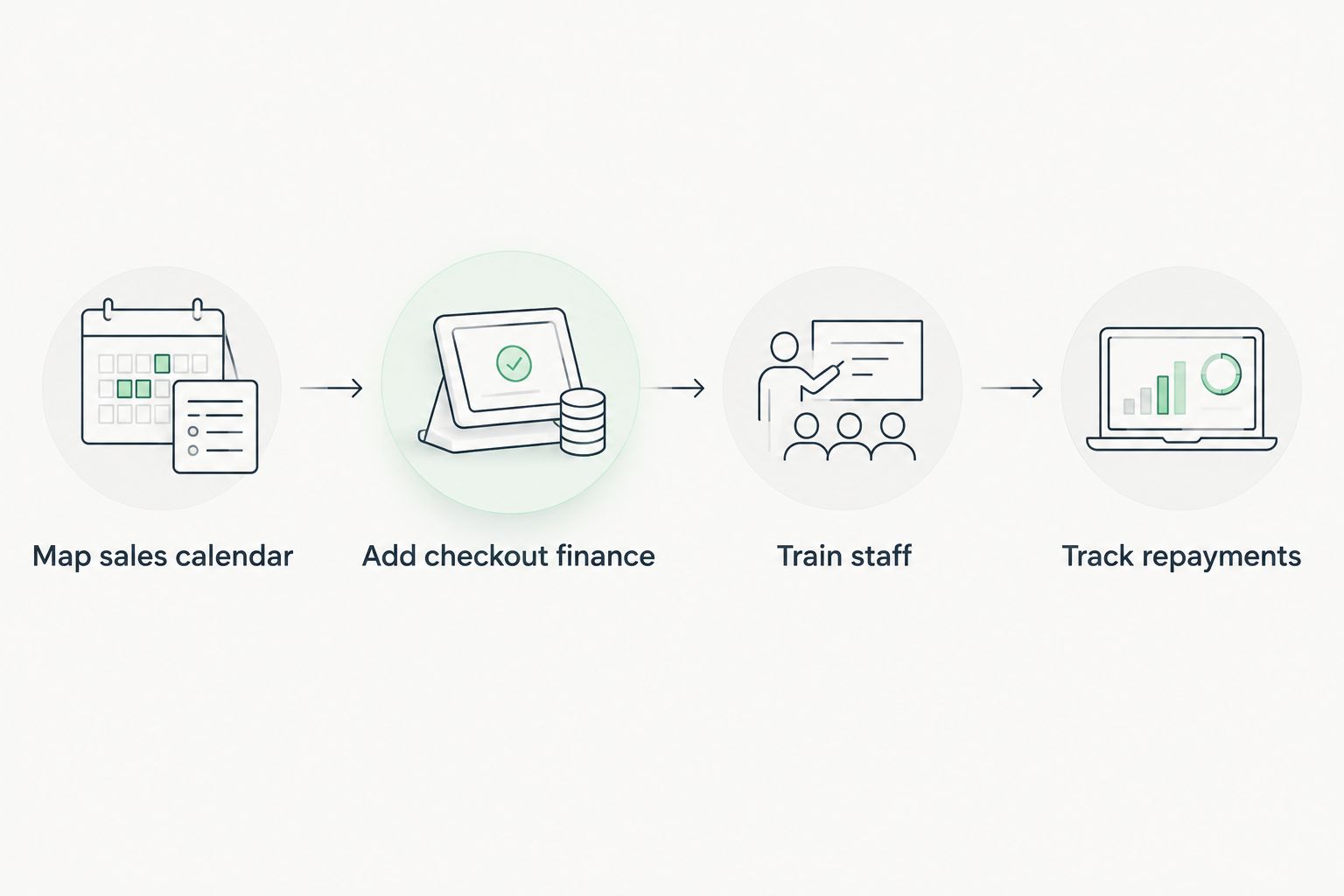
- Add checkout finance and staff training before the July rush, not during it.
- Retailers who advertise instalments only in-store lose online shoppers comparing prices against rivals who show finance upfront.
- Segmenting repeat parents for tailored offers reduces missed repayments year over year.
Why buy now pay later matters for school uniform retailers
Parents buying uniforms rarely buy one item. A single order can cover a blazer, trousers or skirt, shirts, a jumper, PE kit and shoes for one child — then repeat for siblings. That basket size is what makes interest-free monthly instalments relevant to this trade in a way it isn't for a single-item purchase.
The spending pattern is also unusually compressed. Most uniform sales happen in a narrow window before term starts in September, with a secondary bump in January for mid-year joiners and replacements after growth spurts. A retailer that hasn't got instalment options live before that window opens loses the sale to a competitor who has.
Verdict: school uniform retailers who offer buy now pay later at checkout convert more multi-child baskets during the pre-September rush than retailers who only offer pay-in-full.
Update your checkout to add finance before the rush
Adding instalment options after the July surge has already started means missing the highest-intent shopping weeks of the year.
- Add the finance option to product pages, not just the checkout page, so parents see it before they add items to the basket
- Show a plain-English monthly figure next to the total, not just a percentage or term length
- Test the checkout flow on mobile first — most back-to-school browsing happens on a phone during a lunch break or school run
- Confirm the finance option appears for bundled orders (blazer plus shoes plus PE kit) as well as single items
- Check that returns and exchanges for wrong sizes don't break an active instalment plan mid-term
Price instalments around whole-uniform baskets, not single items
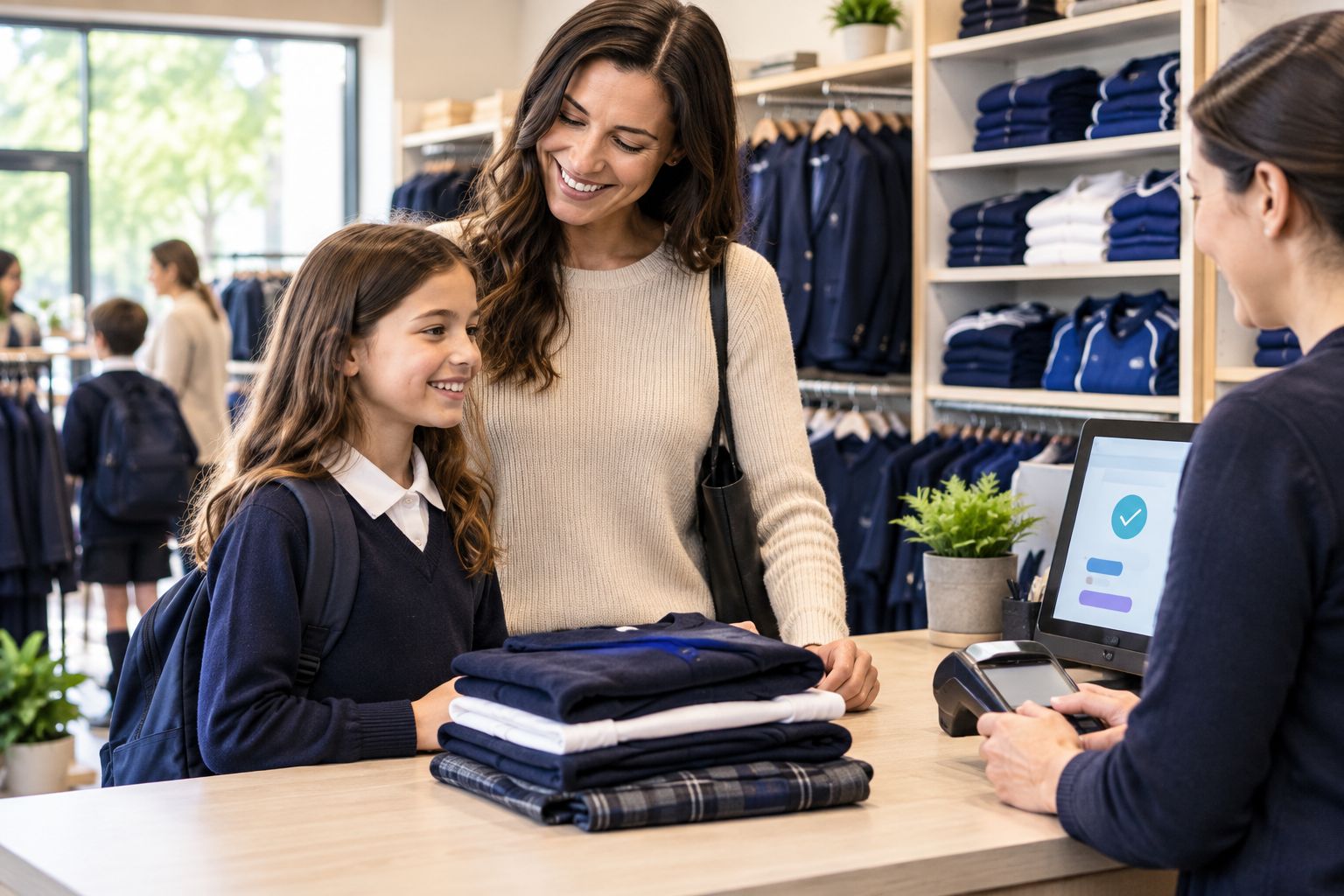
A £25 tie doesn't need a payment plan. A £180 basket covering blazer, trousers, shirts and shoes for one child does — and that number often doubles or triples for families with more than one child at the same school.
- Set a sensible minimum basket value for the instalment option so it's offered where it actually helps
- Price plans around typical whole-order totals, not the cheapest single item in the catalogue
- Offer the same plan structure across the whole uniform range so parents don't have to calculate anything at checkout
- Review how monthly instalments should be priced for retail products before locking a plan structure for the season
Train shop floor and phone staff to mention finance upfront
Most missed opportunities happen because staff don't mention the option, not because parents don't want it. Summer temp staff covering the peak season are the most likely to skip it entirely if it isn't part of their basic script.
- Add one line to the standard till script: "You can also spread that over a few months interest-free if that's easier"
- Put a small counter sign or till-screen prompt where staff can point rather than explain from memory
- Brief temporary summer staff on the finance option in their first shift, not as an afterthought once queues build
- Cover phone and click-and-collect orders in the same training, since basket sizes on those channels are often larger
Structure plans for the back-to-school seasonal spike
A plan structure that works fine in a quiet October week can create a bottleneck when order volume triples in late August. Retailers who plan for the spike in advance avoid processing delays and repayment confusion during the busiest fortnight of the year.
- Map expected order volume against the school calendar for the specific schools you supply
- Confirm your finance provider's checkout can handle the volume without slowing down at peak times
- Read how to structure instalment plans for seasonal sales spikes before the July rush, not during it
- Set clear communication for what happens if a size exchange happens mid-plan
Reduce cart abandonment during the August rush
August is when uniform shopping traffic peaks and also when abandoned carts are most costly, because a lost sale in that window often means the parent buys elsewhere rather than returning later.
- Show the instalment option at the cart stage, not just after checkout has started
- Send one reminder for abandoned carts within 24 hours, since the buying window is short
- Check page load speed on mobile during peak traffic — slow checkout pages lose sales faster in a compressed shopping season
- Reference how to reduce cart abandonment with instalment payment options for the wider checklist
Set credit limits and vet applications for repeat parents
Uniform retailers often see the same parents return every August and January. That repeat pattern is useful for planning, but it also means credit exposure builds if limits aren't reviewed.
- Set sensible per-order credit limits that reflect typical multi-child basket sizes for your shop
- Run eligibility checks at the point of application rather than after goods have shipped
- Track repayment history for repeat customers so limits can adjust with a track record
- Keep a simple process for flagging accounts with missed payments before offering finance on the next order
Comparing finance options for school uniform retailers
| Option | Best for | Key limitation |
|---|---|---|
| PayItMonthly interest-free instalments | Retailers wanting instant checkout finance without running an in-house credit book | Requires an eligibility check at checkout |
| In-house paper credit accounts | Long-standing independent shops with regular, known families | Manual admin, slow reconciliation, no real-time credit checks |
| Layby / reserve-and-collect | Shops wanting to lock in a sale ahead of stock availability | Parent doesn't take goods home until the full amount is paid |
| Pay in full only | Shops with low average basket values | Pushes price-sensitive parents toward rivals offering instalments |
Verdict: PayItMonthly's buy now pay later model suits school uniform retailers who want instant checkout finance during a short seasonal window without building a credit department. Pay-in-full-only is fine for very small baskets but loses larger multi-child orders to competitors who spread the cost.
Add instalment finance before the July rush
Get interest-free checkout finance live before back-to-school orders peak.
Common mistakes school uniform retailers make
- Adding finance too late in the season. Turning on instalment checkout in mid-August misses the earliest and highest-value multi-child orders from June and July.
- Advertising finance only in-store. Online shoppers comparing prices between suppliers won't know instalments are available unless it's shown on the product page itself.
- Setting one flat plan regardless of basket size. A plan built around a single blazer purchase doesn't fit a £250 multi-child order for the same family.
- Skipping staff training for summer temps. Temporary cover staff hired for the peak season are the ones most likely to forget to mention finance at all.
- Ignoring the size-exchange problem. Growing children mean exchanges are common; a plan structure that doesn't account for this creates repayment confusion mid-term.
FAQ
What is buy now pay later for school uniforms?
It's a checkout option that lets parents split the cost of blazers, shoes, PE kits and other uniform items into interest-free monthly instalments instead of paying the full amount upfront. It's most useful for multi-child orders where the total basket runs into hundreds of pounds.
When should retailers turn on instalment finance for uniforms?
Before the pre-September rush starts, ideally by June 2026, since most uniform sales concentrate into a six-to-eight week window before term begins. Turning it on mid-August misses the earliest and largest multi-child orders.
Is buy now pay later better than an in-house credit account for uniform shops?
For most independent retailers, yes, because in-house paper credit accounts require manual reconciliation and don't run real-time eligibility checks. A platform like PayItMonthly handles the checkout and credit check automatically.
Does buy now pay later work for online uniform orders as well as in-store?
Yes, provided the finance option is shown on product pages and the cart stage, not only after checkout starts. Online shoppers comparing suppliers need to see the option before they commit to a basket.
How does buy now pay later affect returns for the wrong uniform size?
Retailers need a clear process for exchanges on an active instalment plan, since children's sizing changes are common in this category. Confirm this with your finance provider before the peak season starts.
Should staff be trained to mention finance at the till?
Yes — most missed opportunities happen because staff don't mention the option, not because parents don't want it. A single line added to the till script covers this without extra training time.
Do credit limits need adjusting for repeat uniform customers?
Yes, because the same parents often return every August and January, and credit exposure builds if limits aren't reviewed against their repayment history.
What basket size justifies offering instalments on a uniform order?
A single low-cost item like a tie doesn't need a payment plan, but a full uniform basket covering blazer, shirts, trousers and shoes for one or more children usually does. Set a sensible minimum basket value so the option appears where it's actually useful.
One last thing
The entire school uniform buying season for most retailers runs inside a handful of weeks before September, which means the setup work — checkout finance, staff training, credit limits — has to be finished before July, not during the rush. Retailers who wait until the queues start building in August are fixing the process while losing the sales it was meant to protect.


