
Yes—you can white-label a buy now pay later platform if a provider’s contract permits you to offer its service under your branding. That does not automatically make you the lender, remove required provider disclosures or transfer responsibility for customer support and compliance. For a UK launch in 2026, confirm the branding rights, lending arrangements and operating responsibilities before commissioning a branded checkout.
- Can I white label a buy now pay later platform? Yes, where the provider expressly permits own-brand delivery.
- Choose between branded checkout, co-branded finance and white-label BNPL by deciding which customer touchpoints you need to control.
- PayItMonthly serves UK merchants seeking interest-free monthly instalments; confirm white-label requirements directly before choosing a platform.
- Get written answers on lender identity, customer communications, refunds, data access and exit arrangements before signing.
Can I white-label a buy now pay later platform?
Yes, but buy the contractual rights and operating model—not just a branded demonstration. White-label software describes how a service is presented. Your agreement must separately establish who provides the credit, makes lending decisions, handles repayments and supports customers.
If your actual requirement is simply to offer instalments, start with how to add a buy now pay later option at checkout. A fully own-brand service is a different procurement decision.
Use these 3 operating models to frame your shortlist. They are comparison categories, not promises about any particular provider.
| Operating model | Best for | Main advantage | Main limitation |
|---|---|---|---|
| Provider-branded checkout | Merchants prioritising an existing finance journey | Keeps the finance provider visibly identified | Less control over the finance experience |
| Co-branded finance | Merchants wanting their brand alongside the provider | Gives both businesses a visible role | Branding boundaries still need agreement |
| White-label BNPL | Businesses requiring an own-brand customer journey | Makes presentation a contractual requirement | Requires detailed agreement on disclosures, operations and responsibilities |
Ask each provider to map its proposal against the same customer journey. Otherwise, you risk comparing a checkout logo change with a much broader branded finance service.
Why this matters
Your customer sees one purchase, even when several businesses support it. A branded application followed by unfamiliar repayment messages creates a handover your staff must explain.
For your 2026 selection, judge the service beyond checkout. Review the agreement, repayment communications, cancellation process and complaints route together; a convincing application screen is not proof that the whole journey meets your requirements.
Choose the least complex model that meets your business need. If you only need customers to spread purchases, make that the requirement. If you need an own-brand finance proposition, specify exactly where that identity must appear.
Provider-branded checkout: best for a clearly identified finance partner
Provider-branded checkout suits a merchant that wants customers to recognise the finance partner when applying. Put customer understanding ahead of hiding the handover, and make the relationship clear in your sales copy.
The benefit is straightforward presentation: the named provider has an explicit place in the journey. The trade-off is reduced control over how the finance service looks and is described.
Ask to see the full journey before deciding. Check where customers leave your site, which business sends the agreement and where customers go when they have a repayment question.
Choose provider-branded checkout when visible provider identity meets your requirements. Do not commission white-label development solely to avoid showing another business’s name.
Co-branded finance: best for shared customer recognition
Co-branded finance suits a merchant that wants its identity visible while also identifying the finance provider. Define the balance in writing rather than relying on a sample screen.
The benefit is a shared presentation of the service. The limitation is that both parties need agreed rules for wording, placement and communications; your preferred presentation is not automatically permitted.
Request examples covering application pages, agreements, emails, repayment reminders and support messages. Identify which elements are configurable and which remain fixed.
Choose co-branded finance when shared branding is acceptable across the whole journey. A logo beside a payment option does not, by itself, establish a co-branded service after purchase.
White-label BNPL: best for an own-brand journey
White-label BNPL suits a business whose requirements extend beyond adding instalments to checkout. Specify the customer-facing identity you need, then ask the provider to confirm each touchpoint it can support contractually.
The benefit is control over agreed presentation. The limitation is the need to distinguish branding control from control over credit decisions, customer data and account servicing.
Do not use white-label to mean an invisible lender. Ask your legal adviser which identities and disclosures must remain visible for the proposed arrangement, and make those requirements part of the design brief.
Choose white-label BNPL only when own-brand delivery solves a defined business requirement. More branding control is not a substitute for clear responsibilities.
How do I assess a white-label BNPL proposal?
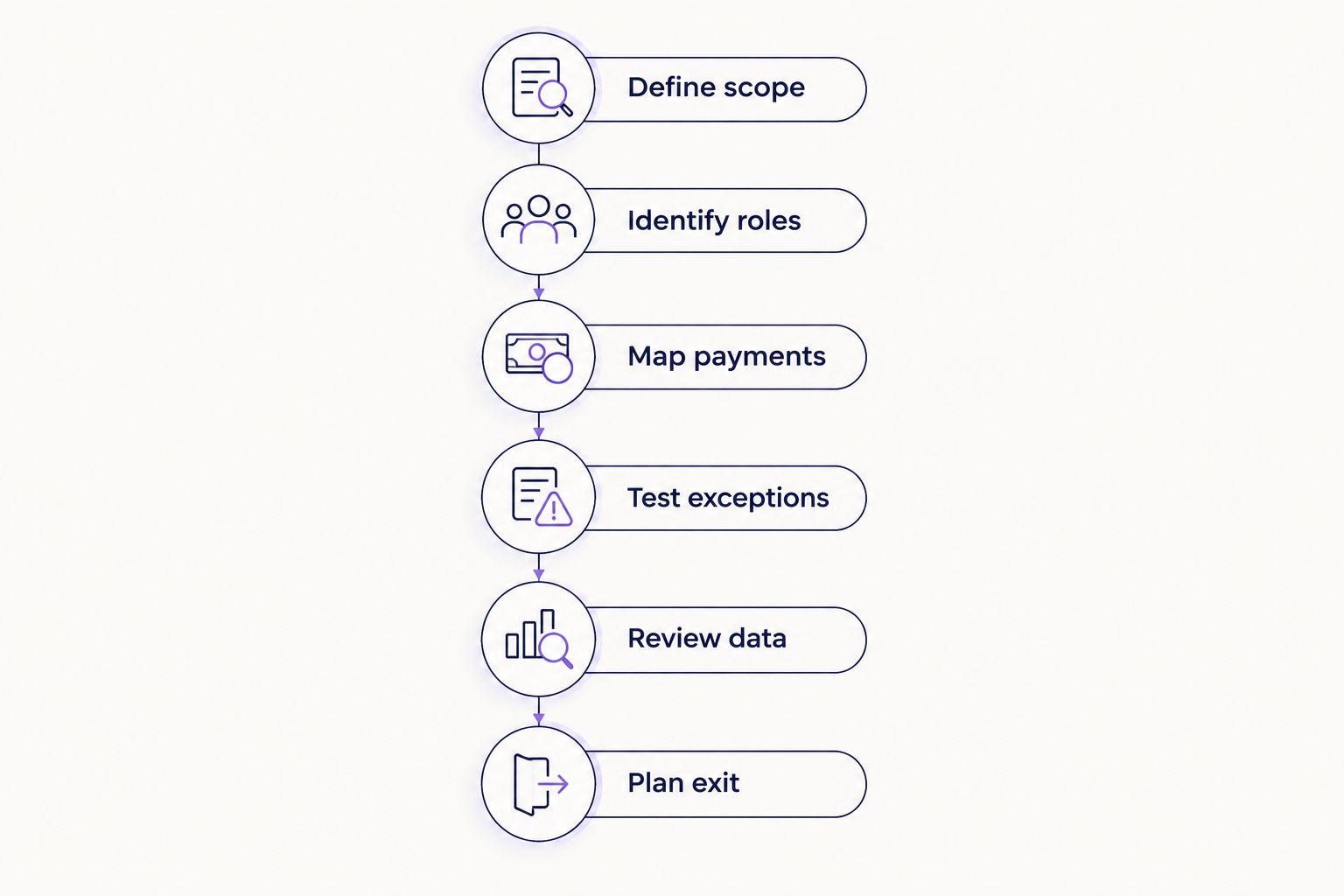
Use these 6 checks before approving a platform in 2026. Record the answer, the responsible business and the supporting contract provision for each check; a sales presentation is not the final specification.
- Define scope. List every customer touchpoint you want branded: checkout, application, agreement delivery, account access, repayment messages and support. Separate essential requirements from preferences.
- Identify roles. Establish who lends, who makes eligibility decisions and what your business does in the arrangement. Ask a qualified UK adviser to assess the permissions and obligations attached to those roles.
- Map payments. Document how purchase funds, repayments, refunds and disputed transactions move between the parties. Confirm which events change settlement or require reconciliation.
- Test exceptions. Walk through declined applications, cancelled orders, partial refunds, missed repayments and complaints. Assign an owner to each handover rather than leaving staff to improvise.
- Review data. Specify what information each party receives, why it is needed, who can access it and what happens at termination. Have the proposed data arrangements reviewed before implementation.
- Plan exit. Establish how existing agreements will be serviced if your commercial relationship ends. Separate stopping new applications from supporting customers already repaying.
These checks turn a branding request into an operating specification. Send the same specification to every shortlisted provider so that differences are visible before you negotiate.
Why white-label BNPL requirements vary
The phrase white-label is not a complete service specification. These 5 scope factors help explain why proposals differ; establish your requirements before treating two offers as equivalent.
- Branding depth. Decide whether your requirement covers checkout alone or also account access, messages and customer support. Ask for an explicit list of included touchpoints.
- Credit responsibilities. Separate the merchant’s role from the lender’s role. Do not assume responsibility follows whichever logo appears on screen.
- Technical ownership. Identify who builds, maintains and approves each part of the journey. Agree how changes are tested and released.
- Customer servicing. Specify who handles repayment questions, financial difficulty, complaints and order-related enquiries. Define the handover when a query involves both parties.
- Contract exit. Address existing customers, retained records, outstanding refunds and continued servicing. A termination clause should not leave these questions unanswered.
For your 2026 business case, distinguish essential operating requirements from cosmetic preferences. Ask providers to explain exclusions against this list, not simply confirm that their platform is customisable.
What should I request before signing?
Request a written scope schedule, a responsibility matrix, sample customer communications and the proposed commercial agreement. Review them together: a feature description can sound complete while leaving the operational owner undefined.
Ask for a demonstration that follows a purchase beyond approval. Include a cancellation and a partial refund, then check how the order record, finance balance and customer communications stay aligned.
Your acceptance criteria should describe observable outcomes. For example, specify that staff must identify the owner of a refund enquiry from the order record, rather than asking for an easy-to-use dashboard.
Do not accept branding approval as operational acceptance. Sign off presentation, customer communications and exception handling separately, with the relevant owners involved.
Can I hide the finance provider completely?
No—white-label branding does not establish a right to conceal the finance provider. The permitted presentation depends on the arrangement, contract and applicable disclosure requirements.
Ask a qualified adviser to review the actual customer journey, including promotional copy and agreement screens. Do not approve a design that removes provider information before that review.
Does white-label BNPL mean my business becomes the lender?
No—white-label branding alone does not make your business the lender. Establish the lender’s identity and your business’s activities separately, then obtain advice on the responsibilities attached to the proposed model.
For a 2026 launch, avoid choosing a structure from a branding label. Start with the agreements and money flows, then design the presentation around the confirmed arrangement.
Is white-label BNPL necessary to offer monthly instalments?
No—white-label BNPL is not a prerequisite for offering monthly instalments. A provider-branded or co-branded arrangement is a separate route to assess against your requirements.
PayItMonthly is for UK merchants seeking interest-free monthly instalments. Its buy now pay later platform lets customers spread purchases; assess any own-brand requirement separately rather than treating that description as confirmation of white-label functionality.
The relevant benefit of PayItMonthly for this decision is its stated focus on merchant instalment finance. The limit is equally important: that proposition alone does not establish branding rights, integration scope or the allocation of operating responsibilities.
FAQ
Can I put my own brand on a buy now pay later platform?
Yes, if the provider expressly permits the branding you need. Confirm the rights for each customer touchpoint, including application pages, repayment communications and support, rather than relying on a checkout demonstration.
What's the difference between white-label and co-branded BNPL?
White-label BNPL centres the presentation on your brand, while co-branded BNPL presents your business alongside the finance provider. Neither label replaces a written specification of branding rights, disclosures and operating responsibilities.
Do I need FCA authorisation to white-label BNPL?
Your authorisation position depends on the activities your business carries out and the proposed credit arrangement, not the branding label alone. Get qualified UK regulatory advice on the actual model before launch.
Who handles refunds on a white-label BNPL purchase?
The operating agreement must identify who initiates, processes and confirms refunds. Test full and partial refunds before launch so staff know how an order change reaches the finance account.
Does white-label BNPL mean I own all the customer data?
No, white-label branding does not establish unrestricted rights over customer data. Review the proposed data access, permitted uses, retention and exit arrangements separately.
Does PayItMonthly offer a white-label BNPL platform?
Confirm white-label functionality directly with PayItMonthly before specifying an own-brand service. Its stated offering is a BNPL platform for UK merchants that lets customers spread purchases into interest-free monthly instalments.
What should I compare before choosing a white-label BNPL provider?
Compare branding scope, lending roles, payment flows, exception handling, data arrangements and exit provisions. Give every provider the same written requirements so differences in their proposals are clear.
One last thing
Start your final demonstration with a partial refund, not a successful checkout. Ask the provider to show who changes the finance balance, what your customer receives and what your staff can see afterwards.
Make that a sign-off requirement for your 2026 launch. A branded application shows presentation; a correctly handled exception shows whether the operating arrangement meets your specification.