
Buy now pay later improves merchant cash flow when the provider pays you before your customers finish repaying, but the benefit depends on the settlement terms. Merchant fees, refunds and any contractual deductions reduce the cash you keep. For your 2026 cash-flow forecast, use the expected bank receipt date and net settlement amount—not the customer's repayment schedule or the checkout approval date.
- How does buy now pay later affect merchant cash flow? Settlement timing determines when sales become spendable cash.
- PayItMonthly provides UK retailers with buy now pay later that lets customers spread purchases into interest-free monthly instalments.
- Earlier settlement supports working capital, but merchant fees and refunds reduce the cash retained.
- Check payout triggers, deductions and liability before treating an approved finance order as money available to spend.
How does buy now pay later affect a merchant's cash flow?
Buy now pay later changes the timing and net value of the money reaching your business. The customer's monthly payments and your merchant settlement are separate schedules. Your agreement determines whether you receive money before, alongside or after those repayments.
PayItMonthly provides interest-free monthly instalments for customers of UK retailers and merchants. That customer benefit does not, by itself, establish when your business receives payment. Confirm the merchant settlement terms separately.
| Payment arrangement | Cash-flow benefit | Cash-flow drawback | Best for |
|---|---|---|---|
| Provider pays before customer repayments finish | Brings receipts forward relative to collecting each instalment yourself | Fees and settlement conditions still affect usable cash | Merchants seeking earlier receipts while customers spread payments |
| Merchant receives money as instalments are collected | Spreads incoming receipts across the repayment period | Leaves the business funding costs while it waits | Merchants able to match outgoings to staged receipts |
| Customer pays in full at purchase | Avoids a customer instalment collection period | Does not offer the customer a monthly payment option | Merchants comparing BNPL against their existing checkout receipts |
These are payment structures to check, not stated terms for any named provider. Compare each proposal with your actual payment arrangements rather than assuming every BNPL agreement works the same way.
Why this matters
A sale and a bank receipt are different events. You still need cash to pay suppliers, wages and other bills between accepting an order and receiving settlement.
For a 2026 retail budget, the useful question is whether BNPL receipts arrive before the costs attached to those orders fall due. A higher order total does not solve a funding gap if you must buy stock or complete work before payment becomes available.
Keep profitability separate from liquidity. An order can contribute profit while leaving you short of cash until settlement; an early payout can improve liquidity while merchant fees reduce the order's contribution.
Earlier settlement: check when money becomes available
Where a provider settles before the customer finishes paying, your business does not have to wait for every customer instalment to receive that settlement. This brings cash forward compared with collecting the same purchase in monthly payments yourself.
The practical benefit depends on the starting point. Compare BNPL with your current checkout settlement if customers already pay in full, or with your current collection schedule if you already offer instalments.
Earlier than the customer's final repayment does not necessarily mean earlier than your existing payment method. Ask what triggers settlement and when the money is expected to reach your bank account.
Check whether the trigger is an accepted agreement, dispatch, delivery, completion or another contractual event. Do not commit to supplier payments using an assumed payout date.
Staged receipts: check the funding gap
Where you receive funds over time, your business must cover any costs due before those receipts arrive. The instalment schedule becomes part of your working-capital planning rather than simply a customer payment feature.
Match expected receipts against the costs of fulfilling each order. Stock, materials and labour can fall due before the customer has finished paying, creating a gap that your existing bank balance must cover.
Staged receipts suit a business only when that timing fits its obligations. Predictable incoming payments are useful, but predictability is not the same as having cash available now.
Why the cash-flow effect varies
The same sales volume can produce different bank balances under different merchant agreements. Check these factors before judging the benefit:
- Settlement timing: Identify the event that releases payment and the expected bank receipt date.
- Merchant deductions: Establish which fees or other agreed deductions reduce the settlement reaching your account.
- Fulfilment costs: Match stock, materials and labour payments to the dates you expect to receive money.
- Refund treatment: Confirm how full refunds, partial refunds and cancellations change future settlements or create repayments.
- Contractual liability: Check your responsibilities for customer non-payment, disputes and failures to supply.
- Sales mix: Separate genuinely additional orders from customers switching away from an existing payment method.
Read the guide to how merchant fees work for buy now pay later providers alongside the settlement proposal. A fee comparison alone cannot tell you whether the arrangement fits your cash requirements.
How to build BNPL into your cash-flow forecast
Use the merchant agreement and your own order records to build the forecast. Keep the customer's repayment schedule separate from the dates on which your business expects to receive funds.
Map receipts
Record the order reference, settlement trigger, expected receipt date and expected net receipt. Keep approved orders separate from settled orders so a successful application does not inflate the cash available to spend.
If an order requires a further action before settlement, record that action and its owner. Your forecast should show the dependency rather than treating the receipt as unconditional.
Match costs
Attach supplier, stock, delivery and fulfilment payments to the orders that generate them. Then compare their due dates with the expected settlement dates.
This identifies the funding gap. Assess the gap against the cash already available, not against sales that have been approved but remain unpaid.
Allow for adjustments
Include expected refunds and any deductions established by the agreement. Use your own trading records for assumptions; do not import a generic returns rate into a business with a different product mix.
Avoid counting a fee twice. If a settlement figure already includes a deduction, do not subtract the same deduction again when forecasting the bank receipt.
Reconcile deposits
Match each bank deposit to the relevant settlement statement and orders. Explain any difference between the amount forecast and the amount received.
A combined settlement needs an order-level record behind it. Otherwise, a refund or deduction can be mistaken for a missing payment, making the next forecast less reliable.
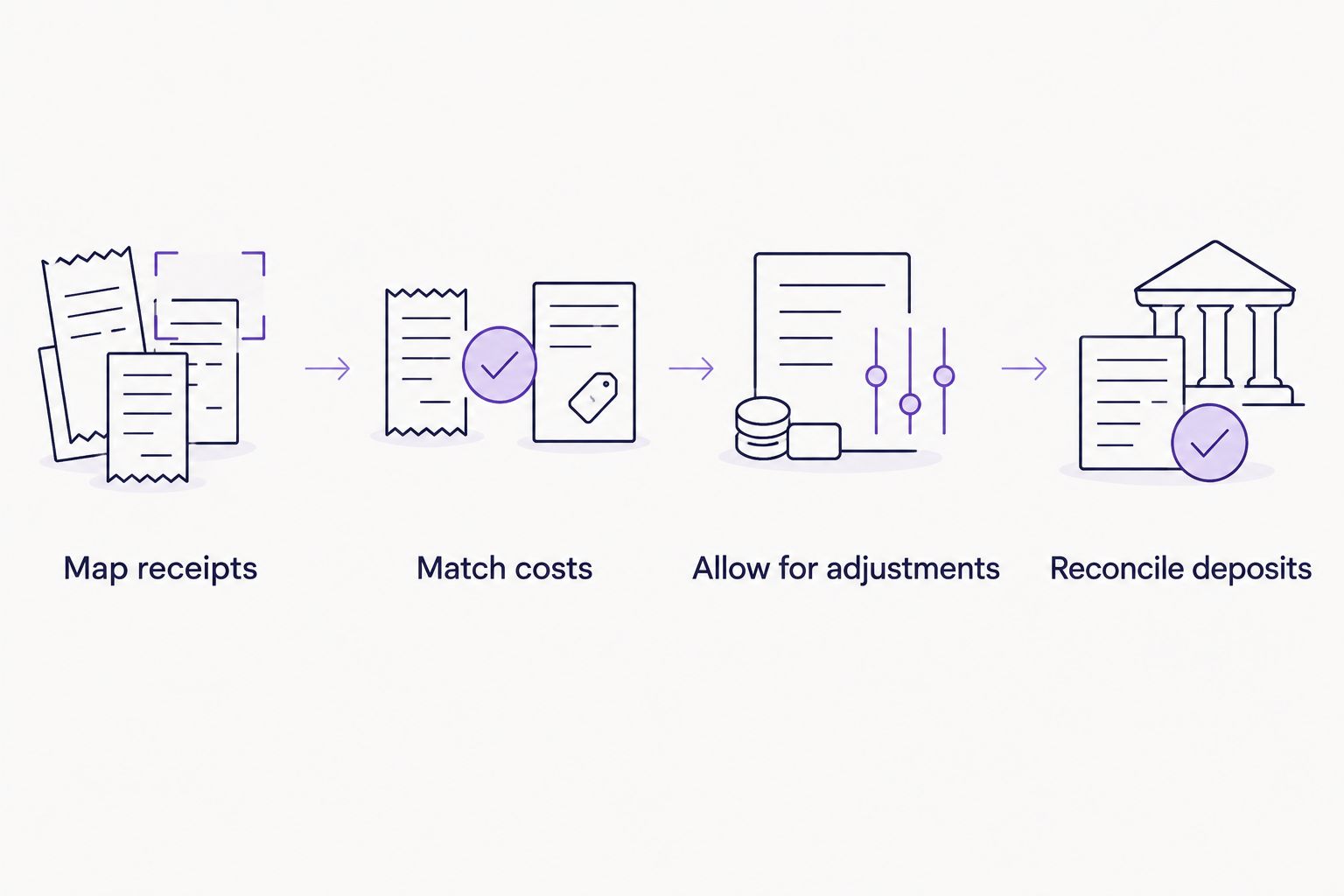
For your 2026 forecast, keep expected and actual receipts in separate columns. Replace estimates with confirmed amounts as settlements arrive, while retaining the original expectation so you can identify recurring differences.
Does buy now pay later improve working capital?
Buy now pay later improves working capital when its receipt timing reduces the gap between paying your costs and collecting money from sales. It does not automatically improve working capital simply because the customer receives longer to pay.
Compare the proposed arrangement with what happens today. If an existing customer switches from full payment to BNPL, assess the difference in net receipts and timing without assuming the sale is additional.
For a genuinely additional order, include the cash needed to fulfil it. Extra demand still requires funding when suppliers or staff must be paid before settlement.
Judge the change by cash retained and cash timing, not financed sales alone. Both measures need to work for your business.
Can more BNPL sales leave my business short of cash?
More BNPL sales can leave your business short of cash when fulfilment costs fall due before settlements arrive. Merchant deductions and refunds also affect the amount available to meet those costs.
Before expanding a campaign, check whether your cash balance covers the orders already accepted. A busy order book is not a substitute for a receipt schedule that matches your payment commitments.
Am I still exposed if a customer misses an instalment?
Your merchant agreement determines your exposure when a customer misses an instalment. Do not assume that offering finance transfers every payment risk to the provider.
Review non-payment separately from disputes, cancellations and failures to supply. Ask which circumstances allow a payment to be withheld, deducted or reclaimed, and what evidence your business must retain.
What should you ask a provider before signing?
Ask for written answers that your finance team can use in a forecast. A general statement about getting paid is not enough to schedule supplier payments.
- What event makes an order eligible for settlement?
- How is the expected bank receipt date established?
- Which deductions appear on the settlement statement?
- Can any amount be withheld, and under what contractual conditions?
- How are full and partial refunds handled after settlement?
- What happens to merchant payments if the customer stops paying?
- Which records connect each bank deposit to its underlying orders?
- What must the merchant do before payment is released?
For a 2026 provider review, compare the answers using the same order and fulfilment process. This prevents a faster-sounding payout claim from hiding a later settlement trigger.
Where PayItMonthly fits
PayItMonthly is for UK merchants that want to offer customers interest-free monthly instalments. Its relevance is the customer payment option; the cash-flow decision still requires the merchant terms.
Assess PayItMonthly buy now pay later against your existing receipts, fulfilment costs and refund process. Confirm settlement timing, deductions and contractual responsibilities before putting the expected receipts into your spending plan.
The benefit is a way for customers to spread purchases. The limitation is that customer flexibility alone does not establish better merchant liquidity or a larger profit contribution.
Explore monthly instalments for your customers
Review PayItMonthly, then confirm the merchant terms against your cash-flow requirements.
How should you measure the cash-flow result?
Compare your forecast with actual bank receipts after introducing BNPL. Track settlement timing, net receipts, refunds and the costs incurred before payment arrives.
Keep payment-method switching separate from additional trading. A customer choosing BNPL instead of another checkout option changes payment economics, but it does not prove that BNPL generated the order.
Use your 2026 results to assess whether the arrangement reduces funding pressure. If receipts arrive after the related bills fall due, address that gap before increasing the volume of financed orders.
FAQ
How does buy now pay later affect merchant cash flow?
Buy now pay later affects merchant cash flow through settlement timing, merchant deductions and later adjustments. It improves liquidity when net receipts arrive in time to cover your obligations; customer instalments alone do not establish when you get paid.
Do merchants get paid upfront with buy now pay later?
Upfront payment is not a term you should assume for every BNPL agreement. Confirm the settlement trigger, expected bank receipt date and deductions in the merchant contract.
Does interest-free finance mean the merchant pays nothing?
Interest-free customer instalments do not establish that the merchant pays nothing. Check the merchant fee schedule and settlement deductions separately from the customer's repayment terms.
Will BNPL automatically improve my profit margins?
BNPL does not automatically improve profit margins. Assess the contribution remaining after merchant fees, fulfilment costs and refunds, and separate additional orders from payment-method switching.
What happens to merchant cash flow when a customer gets a refund?
A refund changes the cash retained from an order, with the settlement effect determined by the agreement. Confirm how refunds are funded and reconciled before forecasting the proceeds as available cash.
Is the merchant responsible if a BNPL customer stops paying?
The merchant agreement determines responsibility for customer non-payment. Check that responsibility separately from contractual obligations concerning disputes, cancellations and delivery.
What should I check before offering PayItMonthly?
Before offering PayItMonthly, confirm the merchant settlement schedule, deductions, refund process and contractual responsibilities. Compare those terms with your own fulfilment costs and payment deadlines.
One last thing
Check the settlement trigger before comparing the payout speed. A short payment interval measured from delivery can still leave you funding the period between ordering stock and completing the sale.
Put that trigger beside your supplier due dates. This comparison shows whether the arrangement solves your cash-flow problem or simply changes when the waiting begins.